Driving School Costs – What Are The Extra Fees?

Extra fees. Hidden fees. They seem to sneak into the price of most products and services, including driving school costs.
Although you may think these prices are “made up” and only serve the purpose of increasing a company’s profit margin, usually the fees are legitimate and go to outside vendors and merchants.
Driving School and Behind-the-Wheel Classes
Gasoline
Driving school prices will fluctuate depending on the state and city of the school. One of the main reasons behind the behind-the-wheel course cost is gasoline prices. If you live in a city with expensive gas prices, then it may be worth it to consider taking a driving class in a different city, which has lower gas prices. Also, some cars have better gas mileage than others. It may be beneficial to find a behind-the-wheel course that will allow you to drive your own car during the class (especially if your own car gets great gas mileage). You may also want to avoid
the worst cities for traffic in the US when choosing where to go to driving school.
Instructors
Driving school instructors also charge varying prices. Their hourly rate depends on experience, and again, also city and state.
Do not be tempted to choose a driving school based solely on their price! Make sure the driving instructor is qualified and the school’s curriculum is up to date.
Driving courses could end up costing you hundreds of dollars. If your state doesn’t require taking a driving school to receive a driver’s license and will allow you to practice driving with a family member at home, then it could save you a lot of money if you’ve got the time to train with parents, or with your children.
Online Driver’s Ed
DMV Reporting Fee
Some states will allow individuals to take the written portion of the driver’s ed training online. Prices are competitive for each state, but you may see extra fees added on to these courses as well. You may notice a DMV Certificate Processing Fee tacked on to the course price. This is how much the state’s DMV charges the online school to report their completion to the DMV and to have them add it to the student’s driving record. This amount of money goes straight to the DMV. The online driving school does not get to pocket any of it.
Mailing Fee
You may also see mailing fees added to your online driver’s ed receipt. This, of course, goes to the post office for stamp costs if you choose to have your certificate mailed to you. Some schools offer free downloads, where you can print the certificate from a home computer. Check to see if your school offers this benefit.
Online Defensive Driving Courses
State Fees
Online defensive driving courses are driving courses that can either help remove points off of one’s driving record, stop points from being added to one’s driving record, or give you a reduction on your auto insurance. Because they are dealing with driving records, they are dealing with the state’s DMV or a state’s driver’s license office, and online schools may charge state reporting fees. These fees differ depending on the state. As of 2020, the
NY DMV charges $8.00 per certificate, and the Michigan Department of State charges $17.50 for their reporting fee.
Postal Fee
Physically mailing a completion certificate may be mandatory in some states. For those states where it is mandatory, you will see a regular mail fee from $1.00 and up. If you are in a hurry to turn in the certificate to your court, expedited shipping along with extra shipping costs may appear on your bill.
Extra Options, Extra Fees
Online defensive driving schools also may offer various bonus options to make their courses more fun or easier to complete. They may offer an audio read-along or a video option for an additional cost. Extra sample test questions and expedited shipping have also been popular add-on items students will pay extra money to receive.
Online Traffic School Courses
Online traffic schools are driving courses for those who wish to stop the points from a traffic ticket going on their driving record. You may see additional fees for DMV reporting, mailing, audio, video, and expedited shipping on the receipt depending on the online school. Please note that some COURTS will actually charge additional fees for giving you the opportunity to take traffic school. You will pay that fee to the court when you pay your ticket; you will not pay that fee to the traffic school – with one exception:
Arizona Traffic School Exception
Arizona is the only state where you WILL pay the traffic school the court fees if you are eligible to take traffic school. In other states, you will pay the traffic ticket fine and any additional court fees to the court and the traffic school fees to the traffic school. For Arizona, you will pay ALL fees to the traffic school.
The traffic school does not KEEP the court fees, however. They are responsible for paying those fees to the court for you, from your payment.
If you recently received a traffic ticket, need a defensive driving course, or want to take a driver’s education course, click here for the prices and the lowest fees:
www.MyImprov.com
Disabled Drivers: Understanding Handicap Driving
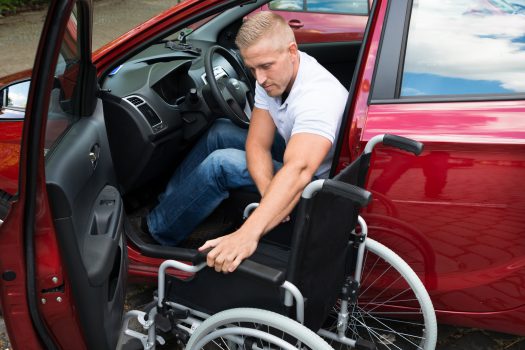 With some special adjustments and teaching it is possible for those with disabilities to navigate the roads just like able-bodied drivers. Living with a physical disability does not have to mean you are grounded. The ADA, American Disabilities Act) amended the law in 2008 so that the DMV could not deny someone a license based only on their disability. If you want more answers to your burning questions to continue to read. If you go on to enjoy this post check out our other article on Epileptic Drivers.
Can You Drive if You Are in a Wheelchair?
Yes, thanks to many advances in technology, disabled drivers who use wheelchairs are able to drive. Wheelchairs can be customized to match the motor skills of each individual driver for handicap driving. They are tested by the department of motor vehicles in their home state and when appropriate, restrictions will be noted on their driver's license. Disabled drivers will also need to be trained at a conventional traffic school or online traffic school.
Can a Paralyzed Person Drive?
While the way in which they learn and tools which are needed might be different, it is still possible for a paralyzed person to drive. Things that are taken into consideration include the severity of paralysis and vehicle the person is operating.
In What States Can a Disabled Person Drive?
State DMV's are prohibited from denying disabled drivers from securing a driver's license. Vehicles must be equipped with proper modifications and drivers must still pass a drivers test. Drivers licenses issued in one state are also valid in all other 50 states. You should also check to see if you qualify for a disabled placard in your state. In Florida, you might be eligible for a disabled placard if you suffer from a cardiac condition, can't walk more than 200ft without resting, as well as other qualifiers.
How Much Does it Cost to Modify a Car for Handicapped?
According to the National Highway Traffic Safety Administration (NHTSA), costs to modify an existing car for handicap driving range from as little as $50 for special mirrors to a few hundred dollars for special hand controls. Specially equipped vehicles with ramps and raised ceilings range from $20,000 - 80,000. You can download a PDF file from the NHTSA website that provides additional information. Some vehicles let disabled drivers actually stay in their wheelchair while driving. Other vehicles allow wheelchairs to fold up for easy storage and transportation. Other possible modifications to existing vehicles include installing wheelchair lifts, raised ceilings and special floor mounts. These modifications tend to be expensive and they must be approved by state DMV's.
How Long Does Online Traffic School Take

Taking an online traffic school can be an easy way to keep points from getting on your license and can help your insurance rates stay low too. But don't forget that you have to choose a school the DMV accepts, or they won't give you credit for it. So, if you're asking yourself how long does a
defensive driving course take, make sure you consider more than just the time involved. Here's how long each state requires you to complete traffic school according to their state law.
California
In California,
traffic school is 8 hours. However, if you take it online there are no timers, so actual course time will depend on the individual. It could take one to two hours or the entire eight. There
is a mandatory 25 question multiple choice quiz at the end in which you need to get 70% correct to pass. Make sure you study!
New York
Traffic school in New York is best known as a
defensive driving course. It can stop points from being added to your driving record due to a recent traffic ticket and it can also get
NY residents a 3-year auto insurance discount. It will take six hours to complete online. You can finish the course at your own pace.
Texas
When you receive a traffic ticket in Texas you can take a Driving Safety Course which is very similar to
traffic school. The course is 6-hours, but the online version includes 60 minutes in mandatory breaks, so you only have to spend a total of 5 hours taking it.
Florida
Most FL traffic violators can attend a 4-hour
online traffic school or basic driver improvement (BDI) course instead of receiving points on their driving record. However, due to allowance for breaks, students will only have to spend 3 hours and 15 minutes in the BDI online version. Offenders who have taken the 4-hour course in the last 12 months or are habitual traffic offenders may be designated by the court to take an 8-hour course. There are no timers for this online program, which means students will be able to finish more quickly.
Arizona
It could take up to 48 hours for an online traffic school to verify your eligibility to take the online course, but once you are deemed eligible, you are required to spend a minimum of 4 hours in the traffic school/
defensive driving program.
Kentucky
Once you receive an eligibility letter from the Kentucky Transportation Cabinet you can sign up for an online
KY traffic school or 4-hour Aware Driver Course. You must spend a minimum of four hours in the course to obtain your proof of completion certificate and point reduction from the state.
Indiana
Online
Indiana defensive driving school is also four hours long. You can do the entire course in one sitting or log off and back on as often as you like until the four hours have been accumulated.
Nevada
In Nevada, you are required to spend at least five hours in
traffic school online. There is also an 8-hour online DUI course available to those who were ordered by a NV court to take a “Driving Under the Influence” course. The online requirement for this course is six hours.
Virginia
Virginia traffic school is one of the longest online driver improvement courses in the country. It is an 8-hour course, but actual online course time allows for an 80-minute break, which means there is a 6-hour and 40-minutes study time requirement.
Georgia
Like many states, Georgia has a self-paced online
traffic school. You can take it at a time that works for you, complete it all at once, or do it in stages. You will however, must spend a minimum of 6 hours in the course.
New Jersey
New Jersey requires you to spend at least six hours in traffic school. You can actually remove two points from your NJ driving record by taking the MyImprov NJ MVC approved
defensive driving course.
Tennessee
Four hours is the time you'll spend taking an online
traffic school in Tennessee. You can complete it at a time that's convenient for you, but you'll need to spend that length of time to have the course count.
Idaho
Idaho requires a six-hour
defensive driving program or traffic school for their point reduction program. Many sites offer a 10-chapter course that is 36 minutes each. Students can log off and back on as often as they wish. Fortunately, with online traffic school, you can take the course when it's convenient for you.
What Else Should You Know About Online Traffic School?
There's usually a final exam to take, and you'll also have to make sure the course completion certificate finds its way to your insurance company if your state and insurance company gives auto insurance discounts for those who complete the online course.
So, how long does traffic school take? From around one or two to more than eight hours, depending on the state you're in. Knowing the laws and regulations for
DMV approved traffic school in your state is important, make sure you are getting the right program for your needs.
2-Second Rule Saves Lives

You’ve likely noticed law enforcement cracking down on distracted driving in the last year or so. That’s because the National Highway Traffic Safety Administration found that in 2015 alone, 3,477 people were killed and at least 391,000 were hurt in accidents involving distracted drivers. So, it’s no surprise that the Associated Press reports the average ticket for distracted drivers in New York is $93.
Understanding Distracted Driving: Rules, Risks, and Prevention
If you’re one of those unfortunate drivers to get such a ticket, there is hope. By taking CA
traffic school online, you can have your ticket dismissed without having points go on your driving record. Plus, it helps you hone those skills you need to be able to stay focused when behind the wheel. That’s vital for preventing the possibility of there being a “next time” as far as your distracted driving goes.
It Could Happen To You
If all you get is a ticket and the opportunity to take traffic school online, consider yourself fortunate. It’s far too easy to get distracted when you’re behind the wheel of a vehicle.
New York Times reporter Eric A. Taub can attest to that. He recently used his journalistic platform to recount how the simple act of turning to speak to his wife, who was seated in the front passenger’s seat during a supposedly average day, sent him careening down a Los Angeles highway at 80 miles per hour. He also recounts his car’s front right wheel spinning toward parts unknown with the left said metal front wheel that was now rolling down the pavement sans tire, sending sparks flying with no Fourth of July or any other cause for pyrotechnic celebration in sight.
The time it took for Taub and his family’s drive to turn into a harrowing experience was four seconds. That’s twice as long as the National Highway and Safety Administration’s two-second rule, meaning that you should never take your eyes from the road when driving for more than two seconds at a time.
Past Mistakes Reoccur
Before you roll those hopefully responsible, road-watching eyes, let’s look back on a major, yet avoidable, disaster that made national headlines in the spring. Remember in March 2018 when the first self-driving Uber car in Arizona struck and killed a pedestrian? It was at night and the pedestrian had the right of way at a crosswalk. That person likely saw the car coming but presumed it would stop while they make their way across the street. After all, they were walking with their bike, which was equipped with reflectors and they’d likely come to rely on – even trust – the fact that nothing would happen. They had probably made that same journey many times before without any problems, whatsoever, and never even gave a thought to doing so that time. Safe assumption, right?
We all know the tragic reality was that this assumption was fatal to that poor cyclist. Sure, the car was still in the testing stages and obstacle-detecting mechanisms that would signal the vehicle’s brakes wasn’t working. But there was someone behind the wheel who could have stopped the vehicle. Instead, they didn’t – because they were glued to their mobile device.
It Doesn’t Have to Happen to You
This is an extreme case that shed light on the fact that today’s drivers are way too easily distracted. It doesn’t have to be a mobile device or even a severe error in judgment. The National Highway and Safety Administration simply describes distracted driving as anything that takes your attention away from driving. So, if this is an issue for you, traffic school online can help you become a focused driver.
Worst Traffic Accidents in California
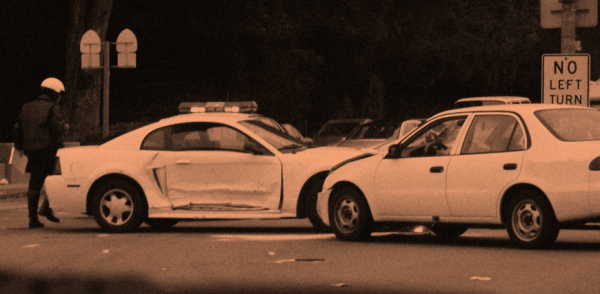
California can already claim one of its own regions as the most traffic-congested in the nation, certainly not due to lack of the residents going to
traffic school online. Los Angeles and the surrounding area’s dreadfully perfect combination of limited rail infrastructure and public transit systems, heavy driving culture, and sheer local and commuter population size all contribute to the hour-long drive to work (even though many morning commutes are under 6 miles). The cityis so jam-packed with single-passenger vehicles to the point that taking public transportation is almost taboo.
It comes as no surprise, then, that California, particularly due to the densely populated Los Angeles county region, has a long history of terrible automobile accidents. There were 3,435 traffic-related deaths in 2015 with motorists dying every day in southern California alone. While efforts are being made to alleviate traffic and minimize the number of vehicles on the road, the problematic area has a long way to go before it can help lower the amount of automobile deaths it contributes to the state’s record.
With the above statistics in mind, and with a heavy concentration on the southern part of the state, here are some of the worst accidents in the Golden State’s history.
November 29, 1991 - Interstate 5
A massive 93-car pileup, including 11 semi-trucks/big rigs occurred about halfway between Los Angeles and San Francisco on the state’s main north-south freeway during a traffic rush around Thanksgiving. Drivers blamed poor visibility due to dense fog and breezes of loose dirt during the drought season. Warped, charred, and crunched metal littered the scene as highway patrol officers shut down a 150-mile portion of the freeway, reporting that the accident claimed 17 lives; some of the victims burned so badly it would take days to identify them.
November 3, 2002 - Los Angeles
An early morning fog hung thick over the 710 freeway south of Los Angeles, causing a semi-truck to crash into the center concrete divider and begin a whopping 216-car collision over a two-mile stretch of highway. While injuries were reported, there were surprisingly no fatalities, only a daunting, expensive cleanup, a highway shutdown, and a long list of auto insurance claims.
November 3, 2007 - Fresno
Another dense seasonal fog caused poor visibility of about two feet, resulting in a 100-car pileup injuring a few dozen and leaving a 5-year-old boy and a 26-year-old man dead on highway 99. Though nowhere near the beginning or end of incidents like this, these driving conditions demonstrate a trend in California’s seasonal accident rates. California’s coastal regions form thick fogs in the fall and winter months, greatly increasing the accident rate for that time of year.
While the accidents explained above are only a few specific incidents, California (and again, southern California) is plagued with an above-average rate of automobile accidents and fatalities. Alongside the 3,435 automobile fatalities in 2015, 254,561 drivers were injured. The two highest age groups for fatalities were young; 15-24 and 25-36, with a total of 1,354 deaths that year.
Some accidents and conditions are beyond the control of the driver. But in especially unsafe conditions, particularly those mentioned above, it is never unreasonable to wait out the weather. Take your time! Find a coffee shop nearby and play it safe; make a mini destination out of it. California’s beautiful highways and long coastal stretches allow for a plethora of interesting tourist stops and destinations along the way to your final stop.
How to Stay Safe While Driving Near Hurricane Florence
I'm sorry, but there is no text provided for me to rephrase. Could you please provide the text you would like rephrased?
Natural disasters come at a moment’s notice. You can predict oncoming hurricanes, tornadoes, and storms, but can’t do anything about unexpected wildfires. When natural disasters do happen, try to remember what your online defensive driving course has taught you as well as the tips below.
What do you do whenever a natural disaster strikes?
Depending on the circumstance, there’s a standardized step-by-step action guide to steer you to safety when you’re driving during an unfortunate event. You can turn the natural disasters into natural good fortune. To stay prepared and ahead of the storm, we’re prepping you on your safety protocol when on the road during a natural disaster.
Hurricanes and Tornadoes
If you live on the coast or somewhere in the Midwest, you could be subjected to hurricanes or tornadoes. These vats of swirly winds can be memorizing to look at, but dangerous to drive through. When driving through a hurricane or tornado, finding shelter is important.
Staying inside your car will be helpful only to drive to the nearest safety location. Stores or houses serve as excellent shelter during these disasters. If those options aren’t available, your next best option is to find shelter under a highway overpass.
Moreover, you should avoid driving through water as it can damage your car. This will leave you susceptible to being stranded. Also, be on the lookout for debris and downed electrical wires. Driving through these disasters are dangerous, you don’t want to be caught off guard with manmade disasters.
Hail Storms
Hail falls at high speeds. Sometimes these chunks of ice can be as large as a golf ball. With that massive at a high enough velocity, you could damage your vehicle when driving it on the road during a storm. When you’re on the road during a hail storm, you should pull over immediately.
Try to find a sheltered area where your car can park to be out of the line of fire. If you can’t find an overhead structure to shield your car, try angling it in the direction of the hail path. This will create a smaller target and less damage to be accrued.
Wildfires
The best way to drive during a wildfire is: don’t. Wildfires are extremely dangerous when you’re stuck in your car. However, there is a safety procedure in the even that you are trapped in a car during a wildfire.
Roll up all the windows of the vehicle, close the air vents, and keep the engine running. Doing so will prevent smoke bellowing into the vehicle. The next step is to lay down in the flooring of your car. Smoke rises to the top, so staying as low as possible is the only way to avoid the breathing in the harmful air.
If you must drive, do so with your high beams on. Driving slowly will help you catch any debris that could damage your vehicle. The next thing to remember is to remain calm.
Floods
Blockbuster films like to dramatize tidal waves sweeping cities and causing mayhem in its path. This could be farfetched, but flooding isn’t an impossibility. When driving during a flood, try your best to not use your car as a boat.
In fact, try to avoid all water the best of your ability. Especially moving water. Driving through the water could cause your car to become stuck or get swept away in an unseen current. You may have the urge to drive through the water like you’re on Splash Mountain but try your best to fight that urge. Drive slow through the water to protect your engine and brakes.
Driving Age By State
Woah, there! Slow down. Everyone knows that you’re ready to get behind the wheel of a car and hit the rough roads. The only problem is you’re 14 years old and that’s too young… in most states.
There are a few states out there that have lower learner’s permit ages, which will allow you, a 14-year-old person, to drive on the roads.
You don’t even have to prove you’re a defensive driver by enrolling in
traffic school online. You can grab that learner’s permit and go! So long as you live in that state as driver. To help you figure out if you’re eligible to drive, we’ve put together a list of which states it’s legal to drive at 14.
Where should I move to?
Every state has a different set of laws when it comes to driving ages. Living in one state could mean you’re not full licensed driver until the age of 18. Other states will make you a master driver by the age of 16. Below, you’ll find the complete list of states that give you a learner’s permit as early as 14 years of age:
● Alaska
● Arkansas
● Idaho (14 years and 6 months)
● Iowa
● Kansas
● Michigan (14 years and 9 months)
● Montana (14 years and 6 months)
● North Dakota
● South Dakota
Looking at this list, you could begin to think that the driving ages are design completely arbitrarily. The only reason these rules exist is because there was a group of older people in government who wanted to free the roads from young whippersnappers. That might be true, but there’s also other reasoning behind the age restrictions on driving.
Age Restrictions and Why They Exist
The main reason why these age restrictions exist, is because the brain is still maturing. A study published in the Journal of Safety Research showed raising the age needed to receive your driver’s license reduces the number of accidents that young teens are in. Therefore, prohibiting teenagers, under the age of 16, from receiving their learner’s permits will account for less accidents on the road.
That’s why some states have held tight to the 16 or over regulations that we’re so very familiar with. It’s not because they’re trying to oppress your 14-year-old-who-knows-everything-about-the-world voice. The DMV and government bodies are trying to decrease the number of incidents on the road.
Prepping Your Teen for Driving
To help reduce the number of accidents on the road, it’s important to be safe and know how to be prepared as a driver. You might be a 14-year old in South Dakota who just got their learner’s permit, but that doesn’t mean you’re not prone to being in accidents. Here’s a few tips on being secure while behind the wheel.
Getting sleep is dire. You want to be well rested while traveling. If not, your reaction time is diminished, your vision is impaired, and… you’re a bit cranky. Be well rested enough to drive, especially for a growing teen!
Don’t be distracted while driving. Putting the cell phone away is another important trait of a good driver. It’s easy to fall victim to checking the phone when you’re at a stoplight, in traffic, or just bored. Whether texting and driving or having a drama filled conversation on the phone doesn’t matter. Distracted driving is just another reason why 14-year-old drivers might be too immature to operate a moving vehicle.
Finally, learn from teachers, instructors, and parents. They’re here to teach you how to be a safe driver. That’s why it’s important to learn from their lessons.
Best Routes to New York Hotels

You may have thought the vacation started the moment you step foot into your hotel. But, you couldn’t be more wrong. The hotel starts the moment you put the key in the ignition. Sight-seeing and taking in the natural surroundings are the best ways to experience a vacation in serene state of New York. away from your favorite
traffic school online.
Hotels don’t hold all the fancy virtue. It’s the luscious forests, windy roads, and tranquil lakes that will captivate you. If there’s one thing you learn in traffic school online, it’s that the best part of any trip is the journey. That’s why we’ve compiled a list of the best routes to New York hotels. It’s
Mirror Lake Inn Resort & Spa
Mirror Lake Inn Resort & Spa is based off the shore of Lake Placid in New York. Despite the comfortable lodging overlooking a peaceful lake, the best part hasn’t even been mentioned. Of course, it’s the drive to this resort & spa tucked away in the trees.
The Mirror Lake Inn is located on the outskirts of a small village south of McKenzie Mountain Wilderness. In other words, you’ll have to take a winding interstate 86 through the rural side of New York to reach this hotel destination.
The Whiteface Lodge
During the winter, you’ll get to experience a similar drive through the forests and national parks of New York, when you visit the Whiteface Lodge. They call it Whiteface Lodge as a reminder to visit it when there’s snow on the ground.
Sure, you can experience the ski slopes, warm cabins, and secluded nature that surrounds the area. But, you’ll also have the fantastic opportunity of taking a drive through a winter wonderland. The Whiteface Lodge is a perfect getaway destination when the city life become too much. The drive will also help you decompress as you get lost in the beauty - hopefully not in the literal sense.
The Lodges at Cresthaven
Tucked just off of highway 87 in the northern section of New York, you’ll find a retreat that’s also a great treat. The Lodges at Cresthaven overlook Lake George. There, you can go on boating adventures and partake in fishing. But, that’s not the best part.
The opposite of boating is driving, and, as we know, driving is the best part of any vacation stay. To get the lodges, you’ll have to drive off the main highway to take a few secluded roads around Lake George. You’ll get to lay your eyes on plenty of boats, lodges, and the surrounding mountains.
Mohonk Mountain Resort
Speaking of mountains, the Mohonk Mountain Resort is cliffside getaway with a view. This translates to you taking the beaten roads through rocky hills, burly mountains, and thick forests. Well, just according to New York standards.
Getting to the Mohonk Mountains is enough pleasant adventure to keep you feeling engaged with the drive. When you arrive, you’ll get to stay in a resort hotel off the lake. The drive, combined with the destination, creates a perfect vacation trip for you and the family.
Villa Vosilla Resort
After climbing upwards to a breathtaking elevation, you’ll have the opportunity to stay in one of the most regal resorts in New York. At least, you’d think it was based off the name.
The Villa Vosilla is located in the Catskills Park region. If you aren’t swept away by the regions hills and peaks, you will by the gardens and plains. This drive, secluded from the busier sections of the state, is scenic in every sense of the word. Not to mention, you’ll get a whiff of that clean mountain air.
CA Teen Drivers: Are They Better Drivers?
Traffic build up is caused by reckless and selfish drivers trying to shave off a few minutes in their commute. California driving is no joking matter. But, that doesn’t stop us from throwing out the few satirical comments about inexperienced drivers - especially teenagers.
But, are they really that bad?
Teenagers may have just picked up the driving manual, but they could be the superior driver in relation to other, more experienced drivers. That’s why we’ve dusted the dust off our magnifying glass and did some investigation on the matter. The best
traffic school California has to offer has the answers. Therefore, here’s our finding on who’s the best driver.
The Ultimate Driving Test
In an investigation that was led out of UCLA, researcher and vice-chancellor, Nancy Wayne, tackled this same idea with cold-hard data. With the help of a driving instructor from a local driver’s ed school, they put the pedal to the metal on teen drivers versus adult drivers. As a result, what they found would change ours, and maybe your perceptions too, of who makes the best driver.
The test assembled “100 novice drivers who had less than five hours of driving experience before their first driving lesson.” Moreover, the group was divided equally by their gender and the average age was roughly 18 years old. This mixed-match team represented teenage drivers with little experience.
The other group of Guinee pigs were male and female adults in their mid-20’s, who had accumulated years of experience, especially when compared with the fresh new drivers. Paring the two groups allowed Wayne to fully understand the scale of expertise and precision the newbies had.
The test took place in the wonderful, car-friendly city of Los Angeles, California. Subjects would engage in the standard testing environment, experiencing the same type of pressure one may feel during any other driver’s test. That includes the sweaty, older driving instructor who judged each turn of the wheel. The instructor would rank the performance of the driver on a scale of 1 to 4.
After the testing was complete, Wayne found herself questioning the fabric of reality itself in a shocking reveal of the data. Maybe it wasn’t that dramatic.
Teenage Trouble
The results of the experiment concluded that teenage drivers scored higher on the test than their adult competitors.
In other words, one could determine that teenagers perform better as drivers on the road than other age groups. It lays to rest the age-old myth that teen drivers are worse than others. It doesn’t end there.
Wayne discovered that students who participated in sports scored the highest on the test. This shows a connection between sport engagement and good driving engagement. It was also found to be similar across both genders of subjects.
The hacky comedy shtick of “men drive like this while women drive like this” is apparently not true. Who would have guessed?
Should Teenagers Drive Everyone Around?
Probably not. Teenagers may be deemed as the most competent drivers on the road, however that doesn’t make them qualified to drive people around. This journey wasn’t just a vain test to see if adults were as good as everyone said they were at driving. There are some actionable results coming from it.
More specifically, Wayne released a statement encouraging, “The Department of Motor Vehicles in California and across other states [to] consider extending mandatory driver’s education to all new drivers and not only teens.”
The goal is to, hopefully, cut down on the number of accidents by increasing the duration of education that drivers have while on the road.
Why Comedy Traffic School Online Is Better
I'm sorry, but you haven't provided any text to rephrase. Could you please provide the text you'd like rephrased?
The truth is traffic tickets can happen to anyone. Unsafe drivers receive them more often, of course. But even great drivers can receive the occasional traffic ticket. Sometimes the laws change, and people need to review the material every so often. Luckily, the court can give you the option for comedy
traffic school online. You’ll still need to pay your ticket, but traffic school keeps points off your license. That way, you won’t still be paying for that ticket through your insurance, years down the line.
When the time comes to choose your traffic school, there are a lot of options out there. Let’s take a look at some reasons why comedy traffic school is superior.
[framed_box]
You Laugh
Everyone who has ever been through standard traffic school will tell you the same thing. They will tell you that it is long, and it is boring. It was meant as a punishment (unless you’re taking it for insurance), and it feels like one. However, comedy traffic school seeks to change all that. It is written by professional comedians, so the content is entertaining. As an added bonus, many states allow students to take traffic school online. You don’t have to be sitting in a hot classroom for six to eight hours, bored out of your mind. Instead, you can be laughing in the comfort of your own home.[/framed_box]
[framed_box]
You Learn
The simple truth is you learn more when you’re interested and entertained. The logic there is easy to understand. You absorb a lot more information when your mind isn’t constantly wandering to what you’d give up to be done with your traffic school. Your shoe collection? An arm? Your soul? There’s no need to barter such necessities. When the material is fun, you learn it better. Comedy traffic school makes the course as entertaining as possible, while still meeting state requirements. The course is broken up with comics and videos. All of that added up means students spend more brain power learning the material, and less counting the seconds on the clock.[/framed_box]
[framed_box]
You Remember
Do you happen to remember the exact rules for passing another vehicle on a two-lane highway in California? Probably not, but you may remember the awesome comic you read about it. That memory can lead your brain back to the proper rules. Many scientific studies have been conducted on this issue, all of them leading back to one simple fact: laughing helps you learn.
The only caveat seems to be that the comedy has to be relevant to the material, which makes sense. A classic “man walks into a bar” joke isn't likely to help anyone learn about street signs. For that to work, the author would need to come up with an appropriate, relevant punchline. In fact, humor that is not relevant to the topic is completely counter-productive. It distracts students and makes it harder for them to remember the material later.
When done right, humor lowers stress, allowing students to focus on and even look forward to learning. When people laugh, the brain releases a neurotransmitter called dopamine. Many activities can release dopamine, but laughter is among the easiest, safest, and most affordable. (That's because other options include, but are not limited to, gambling or high-risk activities like skydiving). Without getting too bogged down in the science, dopamine is an important part of how the reward center in the brain works. In short, when dopamine is released into the brain, a person retains whatever information they're receiving better.
All in all, science (and simple logic) agree: if you have to go to traffic school, comedy traffic school is better.
[/framed_box]
Are Driving Skills Inherited?
Back in October of 2009, a bunch of articles were published with a single divisive topic. A study had recently been completed, and the results implied that bad driving skills may be hereditary. The study sparked some debate and then faded back into obscurity, but it did present an interesting question. It’s time to take a look at it again and see if any conclusions can be drawn.
[framed_box]
The 2009 Study
The original study was conducted by a group of neuroscientists from the University of California Irvine. They tested a group of 29 individuals on a virtual track designed to simulate difficult driving conditions. Of the 29 people tested, 7 had a certain gene variant.
• This gene variant causes the brain to produce less of a protein called brain-derived neurotrophic factor (BDNF).
• This means a smaller part of the brain is stimulated during certain types of activity, such as driving.
• During the test, the 7 people with the gene variant did not do as well on the simulated track as those without the gene variant. The test was repeated a few days later with similar results.[/framed_box]
[framed_box]
Proof?

This may cause some people to believe their genes are to blame for their bad driving habits. However, there are a few issues to address before they can really jump to that conclusion.
• For one thing, this was a very small test. To really trust the results, the sample size would have to be much larger.
• Secondly, the test hasn’t been repeated, or if it has, the results haven’t been reported.
• If we want to be sure of results, the study should be completed again with a different sample group.
• Finally, there doesn’t seem to be a reliable test available commercially to find out if people have that gene variant. It’s hard to claim a genetic predisposition to drive badly when there’s no way to be sure a person actually has that gene.
In short, it might just be more cost effective to take
online traffic school instead of doing a full gene mapping. ? [/framed_box]
[framed_box]
Nature Versus Nurture
Despite the lack of concrete evidence from the study, there may be another way in which driving skills are passed down. Most new drivers are taught how to drive by a parent. If that parent has some bad driving habits, those can easily be passed down to the teenager.
For example, imagine a man named John learned to drive in 1935. That was before turn signals were standard equipment on cars. John never got used to the turn signals once he had a car with them. Because of that, he might not have taught his son Jack in 1960. Jack then thinks turn signals are unnecessary and doesn’t teach them to his son James in 1985. Finally, James neglects teaching turn signals to his son Jimmy in 2010. Now there’s a guy driving around in 2018 without using his turn signal, all because his great-grandpa James never learned about them.
That’s an extreme hypothetical example, but the point still stands. Driving skills may not be genetic, but they can definitely be passed down. Bad drivers are not going to be the best teachers for their children. All those little habits that make them dangerous on the road are what their kids will learn. On the other hand, good habits can also be passed on. Safe drivers can teach their kids all their good habits, and those lessons will stick with those new drivers for life.
[/framed_box]
Ultimately, we need more proof before we can be sure genetics are linked to bad driving. Driving skills may or may not be hereditary, but they can definitely be inherited.
CA Driving and Traffic School Online Best Kept Secrets

In a state with over 14 million registered cars, it’s easy to assume that driving is a skill perfected by
California traffic school online graduates. The average CA driver will experience their fair share of roadside tribulations in their lifetime. This endows them with a wealth of knowledge to withstand any difficult, car-related disaster. That’s why we’re pulling back the curtain and revealing the best kept secrets in California driving.
[framed_box]
Travel the speed limit
There’s no better way to avoid a
speeding ticket than by driving the speed limit. Doing so will help you avoid road collisions. It may seem obvious, but, judging the number of people who do it, traveling the speed limit is apparently one of the best-kept secrets in California.[/framed_box]
[framed_box]
Watch your blind spot
Watching your blind spot helps you avoid a collision when switching lanes. Drivers sneak-up on you. The best way to avoid this from happening is to check your blind spots before merging lanes. You don’t want people to think you’re mentally blind.
[/framed_box] [framed_box]
Dock your phone
In the state of California, using your phone is illegal while driving. However, don’t let that stop you from failing at navigating with your phone’s GPS like the rest of us. To use a phone while driving, use the Bluetooth feature, while your phone is docked to the dashboard or windshield of your car. You must keep your hands off your phone, despite that desire to chuck it out a window. [/framed_box]
[framed_box]
Pack water during the summer
In the summer, the desert side of California starts to show. Cities and rural areas experience high heat and harsh sunlight. If you don’t want to barricade inside your house, taking traffic school online all summer, there’s an easy solution. Packing water will keep you cool and refreshed in case your car breaks down or overheats. It’s also helpful when you’re a little parched. [/framed_box]
[framed_box]
Read parking signs carefully
California is notorious for its incomprehensibly convoluted parking signs. Certain areas of the state require extraneous circumstances for you to park. Paying attention to signs is a beneficial way to avoid expensive citations. To park in California, you need a PhD. in English. [/framed_box]
[framed_box]
Maintain your suspension and brakes
California’s rocky environment and salty ocean fronts can leave tear on the infrastructure of your car. This means bumpy roads, constant construction, and deep potholes. Maintain your brakes and suspension otherwise you’ll have a suspenseful drive. [/framed_box]
[framed_box]
Pass drivers in the left lane
3-lanes of traffic doesn’t mean you get to pass people in the right lane. Road etiquette has no meaning when nobody follows it. The left lane is used for passing, the middle is for cruising, and the right is for exiting.[/framed_box]
[framed_box]
Keep traffic momentum
Momentum is important when you’re in a heavy traffic area. Keeping a steady flow helps ease everyone out of congested highways and roads. The secret to keeping the momentum is giving other cars plenty of space as you cruise through the traffic - just like every healthy relationship. [/framed_box]
[framed_box]
Prepare for the rainy days
A light drizzle causes destruction and mayhem. At least that’s how some overdramatic drivers react to rain. The best way to prepare for rainy days is by keeping your headlights on, driving the speed limit, and giving others room while driving. [/framed_box]
[framed_box]
Keep your cool
Getting heated behind the wheel is easy. Drivers are, at times, reckless to a point you would think it’s intentional. With so much traffic, there’s no space for irrational driving. Save the heat for those summer days and stay cool while driving.
[/framed_box]
Top 10 Places to Live in Florida

Florida is home to beaches, breathtaking sunsets, and… you? If you’ve ever wanted to live in a state with amazing national and state parks, vacation destinations, and Disneyworld, then consider living in the Sunshine State. Below, we’ve created an extensive guide on the best places to live in Florida.
[framed_box]
Sanibel Island

You have a chance to live out your deserted island fantasy while having all the perks of a nearby town if you move to Sanibel Island. White sand beaches without a person in sight and beautiful sunsets await you on this secluded island. It even has a lighthouse! [/framed_box]
[framed_box]
Tampa
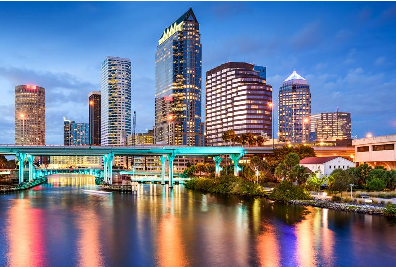
Tampa is Florida’s favorite midsize city. With comfortable neighborhoods, a sprawling business district, and a diverse art culture, Tampa is a fantastic place to live for people of all ages. Who could say no to the home of a Busch Garden's theme park? [/framed_box]
[framed_box]
Destin
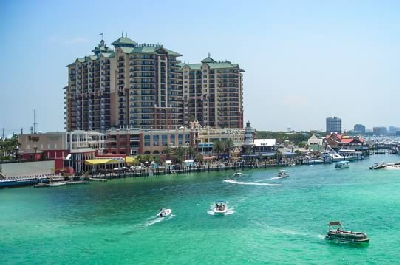
Destin, Florida is a popular vacation spot for most American families. This large town offers wildlife centers, luscious golf courses, and scenic leisure trails. You won’t have to wait for your spring break getaway every year, because you can just vacation here forever. [/framed_box]
[framed_box]
Dogtown

Dogtown is known for its old mines, a few dinosaur fossils, and having the name of “Dogtown.” This small town offers a change of pace from what you’re used to in Florida. A major benefit here is the bragging right you'll have from living in a town named after man’s best friend. Despite the name, it’s apparently NOT a town ran entirely by dogs. [/framed_box]
[framed_box]
Key West

Located in a grouping of small islands, Key West stands out as a major destination for vacationers. There’s good reason for it, too. The relaxing atmosphere makes living conditions stress-free no matter what the circumstances. Be careful thought, you may get a traffic ticket for being anxious here. [/framed_box]
[framed_box]
Jacksonville
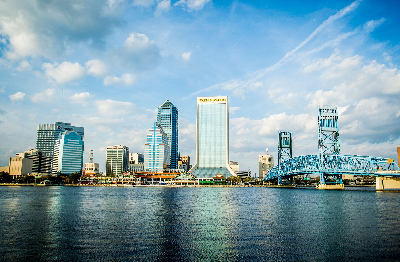
Forbes has ranked Jacksonville as the fifth fastest growing city in the U.S, making it a perfect location for young, business-minded people. At night, you’ll find electrifying nightlife, vibrant arts & culture, and the best restaurants in Florida. During the day, the city-wide hobby includes “watersports.” [/framed_box]
[framed_box]
Naples

Naples is a retirement trap destination. Residents must cautiously avoid blowing their retirement savings on the high-end shopping centers and golf courses. However, residents over 55 can save on a mature driver
traffic school Florida course for a lovely car insurance discount. [/framed_box]
[framed_box]
South Palm Beach
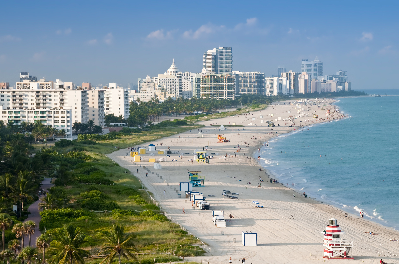
One quaint town that stands out among the rest is South Palm Beach, Florida. The entire town’s district is less than one mile long. The best thing about working in South Palm Beach is not using your car - ever. You can walk or bike anywhere you go. If you need to drive, you can take the single road that travels through the whole, entire town. [/framed_box]
[framed_box]
Cassadaga
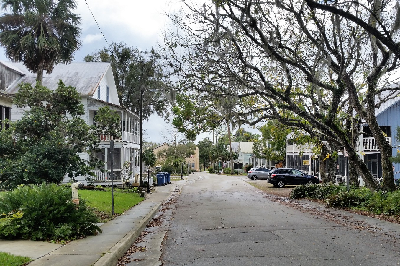
If what you’re missing from life are ghosts, then this is the town for you. Cassadaga is the unofficial psychic capital of the world. The town's entire economy is built on the backs of psychics and ghost hunters. Instead of going out for brunch, you can indulge in a late morning palm reading. [/framed_box]
[framed_box]
Osprey

Osprey, Florida is a town district off the Gulf of Mexico. It’s located south of Sarasota and has just about everything you need in a town. With high-grade educational systems, parks, and recreational areas, Osprey is a lovely town that will be great for everyone. The most challenging part about Osprey is starting a family.
[/framed_box]
The Volkswagen Bus and California
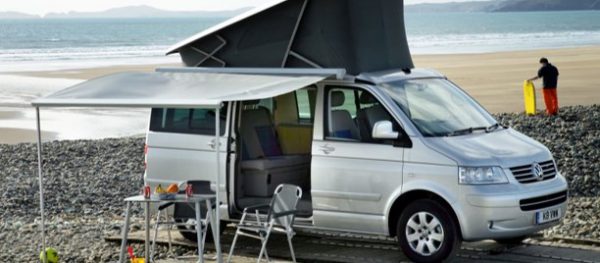
Volkswagen published big news for fans of microbuses and the film Little Miss Sunshine. The 1970’s VW Bus is getting a modernized makeover for its return to the roads. Set to be released in 2022, the Volkswagen Bus I.D. Buzz is an electric microbus that will be a popular choice for road trippers across the country. It’ll definitely be the number one pick if you’re living in a coming of age road trip movie.
However, if you’re going to be a proud owner of your very own Volkswagen I.D. Buzz, you better know how to show it off. Nothing will be more heartbreaking than buying a microbus just to watch it collect dust in your driveway. You gotta hit the road! But, not just any road - the Californian road!
Here are fun things to do when you’re driving your Volkswagen Bus in California:
[framed_box]
PCH Road Trip
The Pacific Coast Highway is a staple of any road trip in California. Driving along the coastline during sunset, playing your favorite music, and a montage of your friends laughing isn’t the opening scene to a luxury car commercial. It’s just what happens when you’re driving along one of the most beautiful highways in the country.
[/framed_box]
[framed_box]
Visit the Golden Gate Bridge
One great thing about driving the Volkswagen I.D. Buzz is its fuel economy. When you’re traveling to far away destinations, like the Golden Gate Bridge, you won’t drop an erroneous amount of money on gas. You can say, an electric microbus is the golden gate to the future of innovative automotive experiences.
[/framed_box]
[framed_box]
Surfing at the Beach
With all the rooftop space that comes with the Buzz, you can pack up all your gnarly surfboards and visit the beach. Malibu, Huntington, Santa Cruz, and Santa Barbara have some of the best beaches in California. Be sure to “hang ten” and add these hot spot destinations to your beach journey across the Golden State. That’s how you use “hang ten,” right?
[/framed_box]
[framed_box]
Cruise Control
The least popular and not recommended thing to do with your Buzz is to receive a traffic ticket. To avoid getting a speeding ticket you can use the wagon's cruise control feature. You can also make sure you are going the speed limit when you see a police officer in any of the mirrors. Either option will help you not get a ticket. You do not want to get a traffic ticket during your drive and come back home to see a spike in your annual insurance rate. If you do a get a ticket, do not stress, you can take
traffic school online to dismiss the ticket and avoid getting points on your record.
[/framed_box]
[framed_box]
Camping at Big Sur
The minibus can seat up to 8-people or it can collapse the seats to give you space for luggage. Such as camping gear for your next trip to Big Sur. Being one of the popular locations in California to camp, Big Sur is a great way to celebrate the spacious benefits and fuel economy of your I.D. Buzz. When you roll up to the camp grounds in your fancy future bus, people will call it a Big Sur-prise.
The hype behind Volkswagen’s latest vehicle concept is growing. Within the next four to five years, you’ll be a witnessing a modern resurgence of these classic relics. So, get in on the hype and be on the lookout of purchasing your own I.D. Buzz.
[/framed_box]
Remember, if you receive a traffic ticket when you’re driving the latest and greatest microbus, you don’t have to break the bank paying it off - especially since you just bought the new car. If you enroll in online traffic school, you can prevent your annual insurance rate from increasing.
Will California Bullet Train Travel Be Worthwhile?
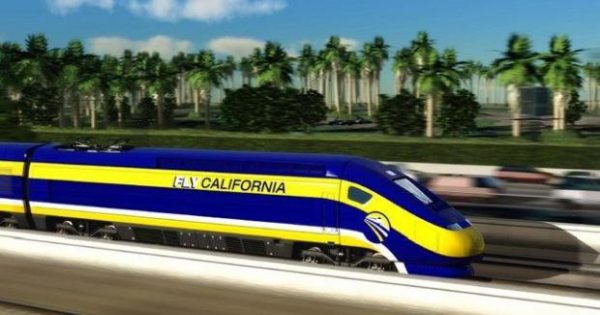
They were first seen in farmers markets. Next, they were asking for signatures outside big-box stores. Finally, the young idealists successfully rallied the people behind the idea of the California High-Speed Rail, also known as the California Bullet Train, a massive project that would allow passengers to ride between Los Angeles Union Station and San Francisco's Transbay Transit Center in a mere 2 hours and 40 minutes. They also plan to build extra tracks going down through Anaheim, all the way to San Diego in the south, and an alternate track running to Sacramento in the north. For many, this sounds like a dream come true. However, it might be time to admit that the project may only work in theory.
How Off-Track Has This Gone?
Earlier this year, it was announced that the cost of building 119 miles of track in the Central Valley has already surged beyond the original estimate of $6 billion. It is now $10.6 billion, and the project has barely begun, despite construction being approved by California's Governor Jerry Brown in 2012. These cost estimates are just for the Central Valley. The current conservative estimates of the total cost of the project are now at $98 billion, more than double what the voters approved in Proposition 1A back in 2008.
Possibly worst of all, the project won't be completed until 2029, when those young idealists will be in or near their forties, and Jerry Brown, the governor who made this all possible, will be at least retired and might even, by then, be riding the great train tracks in the sky. With the astounding speed new technology develops these days, the California High-Speed Rail might even be obsolete before they're done building it.
How Will the Train Be Worth This Hassle?
Let's take a step back from all the insane statistics of failure. What do we want from a California bullet train, in the beautiful, hypothetical future where the undertaking is successful? Is there any one thing, aside from the massive convenience of the quick travel time, that will make riders choose a train over an even shorter flight? Many airlines have been offering cheap in-state flights for years, so how can the California High-Speed Rail compete?
One option is to give the passengers room to breathe. While those who stand to profit from the train may want to pack riders in like sardines, much like the coach section on most commercial flights, the ability to stretch their legs out could certainly sway even devoted members of Frequent Flyer's programs. However, there may be a rush to recoup all the money spent on the project. Those at the top might think the easiest way to do this would be to cram as many seats as possible onto the train, then charge as much as they think people will pay for them. If they do this, the whole endeavor could fail, wasting billions of taxpayer dollars and two decades of planning and hard work. Very few people will choose a longer travel time if both cost and comfort are comparable to the less time-consuming option.
As an alternative, to both boost income and attract riders, the California High-Speed Rail needs to have Wi-Fi, or whatever new internet connectivity may be available in 2029. They can charge a usage fee, just like most airlines do. This way, people can while away the commute on their phones, playing their games, reading their emails, or even completing their
traffic school online. Many people hate flying, for a variety of reasons. If they are given a traveling option that is almost as fast as flying but more comfortable and just as secure, they will be happy to pay an extra five or ten bucks for the Wi-Fi. This will allow the project to remain financially feasible, and all the critics will have to admit the trials and tribulations were worth it in the end. Ultimately, California will remain a leader in new and innovative technology.
What’s Better: Ride Cabin or Driving?
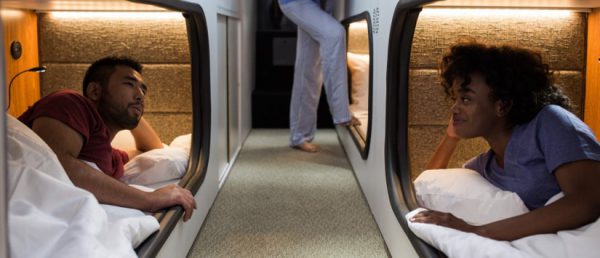
You may be familiar with the revolutionary mode of transportation that recently sprung up in California. Ride cabin is a unique travel experience where passengers rent out private pods known as “cabins” while they ride between Los Angeles and San Francisco in a giant mega bus. What sounds like a perfect setting for a Black Mirror episode is a convenient way to travel between metropolitan areas.
But, is it better than driving?
As always, we ask the hard-hitting questions that plague everyone’s mind. Especially when it comes to futuristic modes of transportation. We’re weighing the pros and the cons of whether it’s better to drive between Los Angeles and San Francisco or to sleep travel in a Cabin.
Driving Between Los Angeles and San Francisco
[framed_box]
Pros:

When you’re driving, you can take your time. You can cruise and enjoy the environmental beauty by taking the PCH or take I-5. Driving your own car allows you take as much freedom as you want between your destinations. You can even take a pit stop to make conversation with the crazy mountain cannibals.
You also won’t need to worry about luggage room. At least, you’ll have more room to fit your clothes, necessities, kitchen sink, or other important travel goods. You will even have the option to pick up a hitchhiker along the way.
Finally, you’ll be able to rock out to your own playlist. It’s nearly a 7-hour trip between the cities, so you have plenty of time to practice your singing, air drums, or choreographic seat dancing during your exhausting drive.
[/framed_box]
[framed_box]
Cons:

It’s a 7-hour trip. Did you read that correctly? 7-hours. Do you want to drive for 7-hours? That’s only one way! You’ll have to make that drive again when you’re returning.
You’re driving roughly 800 miles round trip. That’s road trip worthy preparation before you even start driving. Not to mention the wear and tear your car will accumulate during the 14-hour drive. There’s also the chance for bumping into reckless drivers, natural disasters, and other incidents that could occur while driving.
You’ll also have to fork up a bunch of money for gas, food, and other necessities along the way. If you get ticketed for violating a traffic law, you’ll be looking for “
traffic schools near me” quicker than a Cabin bus en route to San Francisco, to dismiss the ticket and avoid points going on your record.
[/framed_box]
Taking a Cabin Btwn. Los Angeles and San Francisco
[framed_box]
Pros:

7-hours is the perfect amount of sleep you need every night. Coincidentally, it’s also the amount of time it takes a Cabin bus to travel between Los Angeles and San Francisco. While everyone else is driving through the night, you can have a full night's rest on the bus in your private sleeping cabin.
With the large amount of accommodations Cabin offers, you’ll be able to read, work, stream shows or movies, and just about anything else instead of driving. You can even bust out the air drums while listening to your favorite song.
Cabin is moving a hotel. Therefore, you’ll get the hospitality benefits of staying in a hotel while also getting the transportation benefits of a bus. You’ll have access to restrooms, you’ll get evening and morning refreshments, Wi-Fi access, USB plug ins, lounge areas, and luxury bedding.
[/framed_box]
[framed_box]
Cons:

The only major con we can think of is interacting with people. But, the Cabin staff are exceptionally patient and kind. Paying money is always a con, but it’s nowhere near the price you’ll be paying for an 800-mile journey. One major con is not seeing all your crazy mountain friends, who only come out at night to hunt their human prey.
[/framed_box]
When taking a trip between cities, choose the means of transportation that is the best investment for your money and health. If you do end up driving, just remember that enrolling in a traffic school can prevent your annual insurance rates from increasing when, or if, you get a traffic violation. Also, don’t forget to bring raw meat for the crazy mountain cannibals!


 Live Chat