How To Get an AZ Driver License

If you have recently moved to Arizona or have not obtained a driver license in the state, you must obtain the license before you can legally drive a vehicle. Thankfully, the state's Motor Vehicle Division (MVD) makes it quite easy to obtain an AZ driver license. Here is how to do it.
Your Complete Guide to Obtaining an AZ Driver's License
The Basics of Arizona Driver's Licenses
Those who have moved to Arizona from another state and have a valid driver's license will likely be able to bypass the written knowledge test as well as the driving test. Military members who have moved to Arizona from another state can transfer their home state driver's license in a streamlined manner. There are several different types of Arizona driver's licenses.
The so-called “normal” driver's license is referred to as the Class D Arizona driver's license. The state also provides Class M motorcycle licenses. Those who are interested in a license to operate a commercial vehicle will need a Class A, Class B or Class C commercial driver's license, typically referred to with the acronym of “CDL”. Teen drivers have different testing and licensing requirements including instruction permits and diver's education.
Where to Start: The Issue of the Permits and the Application
The state of Arizona does not mandate that adult driver’s license applicants obtain a permit before applying. However, if the applicant is applying for his first driver's license in any state, he will need a permit in order to practice driving in a legal manner. More information about permits can be found on the Arizona MVD Driver's Permits in AZ web page.
One can apply for an Arizona driver's license by completing the Driver License/Identification Card Application, referred to as Form 40-5122. The Arizona MVD should be commended for allowing driver's license applicants to start the license application process on the web. This online service empowers applicants to fill out the application, figure out the necessary ID requirements and print the completed package that must be brought to the MVD office. The information the applicant enters online is transmitted in an electronic manner and subsequently stored for reference upon his visit at the brick-and-mortar Arizona MVD office.
Completing the Process
To complete the driver's license application one must submit the above referenced application. If he hails from another state, he must surrender his out-of-state license. He must provide proof of identity as well as age and his legal presence in the state of Arizona. An apartment lease, mortgage document, or utility bill will likely suffice to prove Arizona residency. To prove one's identity, the applicant must provide a birth certificate, U.S. Passport, a Social Security card, I-94 or two other accepted documents. One of these documents must show a clear photograph of the applicant.
All driver's license applicants must successfully complete the vision exam. If the applicant has not obtained a driver's license from any state yet holds a permit, he will not be required to take Arizona's permit test. Finally, the applicant must pay the applicable fees. These fees differ by the applicant's age as well as the type of license he seeks.
• Those between 16 and 39 years of age must pay $25.
• Those between 40 and 44 years of age must pay $20.
• Those between 45 and 49 years of age must pay $15.
• Anyone 50 years of age and older must pay $10.
Once all of these steps have been completed, the applicant will be provided with a temporary license with his photo. It will likely take several weeks for the permanent driver's license to be mailed to the applicant's residence. Be careful once you start driving!
Arizona traffic schools stay in business due to those nonchalant drivers and help them dismiss their costly traffic tickets.
How to Not be a Good Defensive Driver
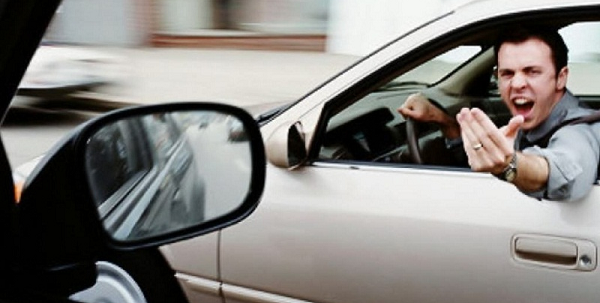
Believe it or not, our defensive driving school has a number of students who call in and ask us how not to be a good defensive driver. Here are the steps:
Common Risky Driving Behaviors to Seriously Avoid
Step 1: Do not use a seatbelt.
Who needs them? They don’t save lives! If anything, they tether us to these death machines called vehicles!
Step 2: Use your cell phone while driving.
Life is too short to waste any valuable phone time while you are driving. Bonus points if you can take a call, listen to your music, text your boyfriend, and/or update your Facebook / Instagram / Snapchat all at one time. You are a multi-tasking aficionado!
Step 3: Do your makeup while driving.
Life is a runway, so we all need to make sure to look pretty all the time and some days you just don’t have time to get ready in the morning, before leaving the house. Go ahead and do your makeup in the car. This is what car mirrors were made for – looking at your beautiful face and doing makeup!
Step 4: Eat food while driving.
Doing just about anything while driving is pretty amazing because multi-tasking is awesome, but eating is the absolute best because food! Bonus points if you can hold your burger in one hand and an ice cream in the other hand and you can steer the steering wheel with your knees.
Step 5: Live the Fast & Furious life.
Life is too short to get anywhere slowly! There is a reason the Fast & Furious movies were so popular. Faster is always better! Going fast gets your heart beating faster and the adrenaline going. Who cares if you got a meaty speeding ticket that only
traffic school will be able to dismiss! Now, you feel so alive! That’s what YOLO is all about! Bonus points if every time somebody pulls up next to you at a red light, you propose a race down the street. A little friendly competition never hurt anybody.
Step 6: Drive the normal speed limit or faster during inclement weather.
There may be water on the road, due to heavy rain, but that doesn’t mean that you should drive slower or have to spend more of your very valuable time getting to the places that you need to go. Nobody has time to slow down. Who cares if you start to hydroplane and lose control of your vehicle! That’s all a part of living life on the edge!
Step 7: Flip off and bad mouth all the bad drivers.
Did somebody cut you off or pull in front of you and drive extreeeeemely slow? Of course, the logical thing to do is stare them down to make sure they know that you have an issue with them, blow your horn at them for about a minute or two non-stop to make sure that they are aware that they did something wrong, flip them off, and say every single curse word that you have in your repertoire. Bonus points, if you get them to pull over and proceed to get into a fist fight with them. Nothing like road rage to wake you up in the morning!
Step 8: Always tailgate the person in front of you.
There’s no such thing as being too close to the vehicle in front of you. Who cares that they might slam on their breaks at any point, causing you to rear end them.
Step 9: Never use your turn signal.
Change lanes as much as your little heart desires and never use your signal ever. Why warn other drivers about where you plan on maneuvering your giant squishable metal machine? You got to keep the rest of the drivers on their toes! Bonus points if you never look in your blind spot before changing lanes. That way other drivers can dodge you, too!
Step 10: Drive during the night time without your headlights on.
Two words: Ninja mode!
Afternote: Please be a good driver and DO NOT do anything on this list.
How to Get a Traffic Ticket Reduced

To put it bluntly, traffic tickets are hell. You wind up paying exorbitant fines because some municipalities are increasing the amounts to raise revenue. Moreover, the police are more vigilant than ever about catching motorists in the wrong. If all of this is not bad enough, never forget about the cameras that photograph your car speeding and send the pictures to you in the mail, along with a large bill.
So what can the average driver, such as yourself, do to survive in this age when “Big Brother” is watching their every move on the roads? Well, the answer is to enroll now for a
defensive driving course. Not only will you receive pertinent information on how to remain safe behind the wheel but also a possible reduction of license points and having your ticket reduced or dismissed.
The Driving School of Today

You might at first be a bit wary of the advice to attend driving school. After all, you are probably a busy person. When do you have time to sit in a classroom?
Well, scheduling classes is no longer an issue. The driving school of today can take place either in a traditional brick and mortar building or online. You can have online class wherever and whenever convenient. In fact, many families and coworkers enroll in group classes to motivate each other to complete the courses.
Ticket Reduction

Most states allow those who completed a defensive driving course to have their traffic tickets dismissed.
The school should be recognized by the state. Moreover, the instructor must be certified by the authorities and the course most be for a certain number of hours. Check with your driving school to ascertain the specific requirements in your jurisdiction.
Upon completion of the course, motorists may receive ticket dismissal, license point reduction and automobile insurance discounts.
Defensive Driving vs. Traffic School

Be careful when enrolling. Some states define the two kinds of schools differently. In New York and Florida, you will be taking a
defensive driving course to have your traffic ticket points reduced.
Arizona dismisses certain traffic violations after a motorist completes an approved defensive driving course. In contrast, traffic school is for serious violators ordered to take classes by the courts.
Meanwhile, California uses the two names interchangeably.
Going to Court

Americans have the right to defend themselves in a court of law. Some choose to do so when presented with a traffic ticket. They want to fight it out with the city to get the infraction removed from the record.
In certain cases, these challengers are successful. A California physicist was able to use scientific principles to win. He demonstrated that a police officer, situated at a certain angle, perceived his car to have run a stop sign when in fact it had stopped. In other instances, an alleged violator can win by default when the officer who presented the ticket does not show up in court.
Nevertheless, these victories are few and far between. Motorists usually wind up having to pay the fine and possibly some court costs.
Defensive driving school is the easier route without a doubt. Just enroll, finish the course and the violation disappears.
Enroll and Get on With Life
Everyone wants to save money. One way you can do so today is by enrolling in a state approved defensive driving school. You can have your ticket dismissed, removing the fine. Better yet, your driving record will be wiped clean, leading to a reduction in your insurance premium rate.
Perhaps best of all, you will learn some driving skills that can help you avoid getting tickets in the future.
Defensive Driving Course vs. Driver’s Education
As one of the top online schools that offer Defensive Driving courses, Traffic School and Driver’s Ed classes, we get a lot of students calling to ask, “Wait, what do I need to take?”
Defensive Driving vs. Driver's Ed: What You Need to Know
Defensive Driving Course
A defensive driving course is meant for individuals that have received a ticket and would like it dismissed or to avoid the points accumulating on their driving record, received a court order to take a course, received a letter from the DMV requiring that they take a course, or have an insurance company that offers a discount on their premium for taking a course.
The course content, length, and time requirement vary from state to state, but each one is designed to teach students important rules of driving and laws of the road, directly from each state’s driver handbook, which are necessary to know to be a responsible and safe driver.
A student may take the defensive driving course in a classroom or they can take the course conveniently online from the comfort of their own home with online companies, such as Improv Traffic School. Typically, with classroom courses, they will spend a day in the classroom and do it all in one day. With online courses, they can log in and out as much as they would like, as long as they complete the course by the due date designated by the court/DMV/insurance company. Typically, this course is taken as a punishment for a moving violation and therefore can be anticipated as a negative experience.
For Example
The typical defensive driving course for Florida for minor moving violations is the Basic Driver Improvement course. It is a 4-hour course made up of several chapters, covering the content of the DMV driver handbook, and at the end of the course, the student must pass a final exam.
Once they complete the course, their completion is reported to the DMV and they must submit a copy of their certificate to the court. If a course is not taken, points may be applied to their driving record and if enough points add up, the individual may lose their license. It is beneficial for that person to take the course. For more severe infractions, there are also intermediate and aggressive driver improvement courses. Random Fact: an individual that is licensed in Florida can only take a
defensive driving course to dismiss a ticket up to 5 times in their whole lifetime!
Driver’s Education Course
Driver’s Ed or Teen Drivers Education is designed for brand new teen drivers that have never been behind the wheel before and are starting the process of getting their license. Driver’s education is typically a requirement to earn a learner’s permit and driver’s license prior to turning 18 years old. The driver’s education course is designed specifically to prepare an individual to pass their permit test and eventually get their driver’s license.
Each state typically has a different requirement regarding how long the course must be (can range from 4 hours and all the way up to 30 hours) or when a teen can take the course. Like the defensive driving course, a driver’s education course covers all the important information from the DMV driver handbook, which is information that a new driver must know to operate a vehicle and drive safely. Typically, the course is taken in conjunction with a behind-the-wheel class. Since this course is a stepping-stone towards getting what they want (their license), it is seen in a much more positive light than a defensive driving course.
For Example
The teen driver course for Florida is called the Florida Traffic Law and Substance Abuse Education (TLSAE) course, which is a 4-hour course and its focus is on driving responsibly and the many problems that can arise due to abusing drug and alcohol. Once the course is completed, the student’s completion is reported to the DMV and they are then eligible to take the permit test. Like the defensive driving course, the course and permit test can be done in person or online, for their convenience. Once the student obtains their permit, they can proceed with behind-the-wheel training and practice with a licensed driver over the age of 21 years old.
For any questions you may have regarding the differences of the courses, please feel free to call Improv Traffic at 1-800-660-8908 for extremely helpful answers!
Texas History of Road Evolution

During the pre-European era, Texas was mostly comprised of many different Native American tribes. In the 1500’s, Spanish explorers came to the area, but not many people settled there and it was not heavily populated, due to the “hostile natives”. After the Mexican War of Independence from Spain in 1821, Texas became part of Mexico. Mexico allowed immigrants from the United States and native Mexicans to populate the area, which eventually led to tension, battles, and Texas independence. Texas was later annexed into the United States in 1845 and borderlines were established after the Mexican-American War. As you can see, Texas has a very long and rich history.
From Trails to Superhighways: Texas Transportation Evolution
Trails for Spanish Explorers
The history of the roads is just as rich. Many of the earliest roads in Texas were developed from early Native American trading trails and the trails of the Spanish explorers. They were developed out of necessity, in order for individuals to travel from Mexico to San Antonio and the various missions throughout the state. Throughout the long history of Texas, there have been many different means of travel. It wasn't until just recently that Texas needed to invent
traffic school to help dismiss TX traffic tickets.
Horseback
In early history, the most common and innate mode of transportation was walking by foot (of course!), but after that, the main means of travel was by horseback. Horses have been domesticated for centuries and are easily trainable, so they are naturally man’s second best friend. They are such strong and fast creatures, allowing them to gallop into the distance for hours. There is a reason we judge a car’s power by horsepower! In addition, they can carry a sizeable load and endure all sorts of terrain, making them perfect for cross-country travel and trading. They usually travelled along game trails and over time, these trails had to be widened to prevent traffic among the travelers, which was the basis for early highways. Horses are still often used today on farms and for horseback riding for fun.
Horse & Buggy
Horses also have a great capacity for towing, which led to the horse & buggy, horse-drawn carriage, or horse-drawn wagons. Originally, when carriages were developed, it took multiple horses to pull the carriage, as the wood alone could be very heavy. As lighter woods became more readily available to make the carriages, only one horse was required to pull the load. The horse-drawn carriage was a great advancement for society, as it allowed a whole family or small group to travel with only the use of one horse. Some carriages were very simple, while those individuals that were more well off had very fancy and ornate carriages, just as it is today with cars. During this time, the roads were mainly dirt roads or cobblestone.
Bikes
The next advancement on the roads were bicycles. Bicycles were originally invented in the early 1800’s and they gave people a lightweight, relatively cheap, and efficient means to get around. For those that could not afford a horse or a horse-drawn carriage, a bicycle would be the best option for them. Anybody can learn to ride a bike, young or old, and they could get around town relatively quickly with just their own leg power. During the this period in history, dirt roads began to be replaced more and more by tar roads and pavement, making way for more modern roads.
Early Autos
Next up is the automobile. The first gasoline-powered combustion engine car was created in the late 1800’s for the transportation market, but at the time, it was only considered a toy for the rich. It was not yet attainable to the mass public until Henry Ford mass produced the Model T, which was meant to be an economical car for the average American. In its first year of business, they produced 1700 cars and by 1920, Ford had sold over 1 million cars. As all of us who have ever sat in traffic know, cars are everywhere and they are not going anywhere anytime soon.
Super Highway
Going back to Texas’ history, the oldest and most frequented road of the past was the Old San Antonio Road, which was previously one of the old Spanish missionary trails. It was frequented by horseback riders, carriages, and wagons. Today’s roads and highways are much busier and filled with cars and motorcycles, the busiest of which is the I-35 in Austin, Texas. On that stretch of highway, a typical 30-minute commute turns into 150 minutes during rush hour, so alternative routes are recommended or find a bicycle to get around!
Celebrating St. Patrick’s Day? Five American Cities That Celebrate Big.
Looking to make St. Patrick's Day unforgettable? Head to some of the biggest celebrations in the country! These five cities pull out all the stops to make the festivities truly spectacular!
Discover America's Top St. Patrick's Day City Celebrations
St. Patrick’s Day Eve in Boston

The parade begins at 1 p.m. and is about 2 ½ hours long. It is on Sunday, March 16th and you won't be lonely. Attendance is somewhere between 600,000 and one million. The best place to see the parade is somewhere on Broadway. The parade begins at Broadway’s MBTA station and finishes at Andrews Square. Instead of driving, take the T’s Red Line and get off at Broadway or Andrews Stations. This is the biggest St. Patrick’s Day event in the Boston area every year.
Chicago St. Patrick’s Day

In Chicago, beginning at 10:45 a.m., you can witness the 45 lbs. of green vegetable dye being dropped into the river. This event has attracted thousands for many years. Around 400,000 people come dressed in their best green attire to watch. Make sure you attend at the beginning because the dye disappears after 5 hours. After the dyeing of the river, at noon, there is a parade that features everything Irish and goes on rain or shine.
St. Patrick’s Day in Savannah, Georgia
The festival has been compared to Mardi Gras and lasts for several days and ends with the parade. This event attracts 400,000 visitors and is the 2nd largest celebration in the US. It is also Savannah’s biggest yearly celebration. This year, the parade will be on Monday, March 17th, and they also have an annual “Greening of the Fountain” which is in Forsythe Park the Friday before St. Patrick’s Day. There are many other religious and cultural festivities.
St. Patrick’s Day in New Orleans

This has got to be one of the best ways to celebrate St. Patrick’s Day. There are events planned for each day March 13th through March 23rd including six parades! When the largest of these take place, those in the derby hats not only throw beads they also throw ingredients so you can make your own Irish stew! Make sure you bring a heavy bag to carry cabbage, potatoes, carrots, onions and more!
St. Patrick’s Day in New York City
New York City has been celebrating St. Patrick’s Day with a parade each year. They began this annual event in 1762 which makes it the oldest parade in the United States. It is the largest St. Patrick’s Day parade in the whole world! There are over 150,000 participants in the parade and the parade route is 1.5 miles long on Fifth Avenue, in Manhattan. It takes a whopping 5 hours for the entire procession to finish the route. The parade is on March 17th and begins at noon
Be sure to drive defensively if heading to one of this big celebrations and enjoy your St. Patrick's Day safely!
Don’t Let This Be You!
IMPROV Traffic School and Defensive Driving
How to Sell a Car in Texas
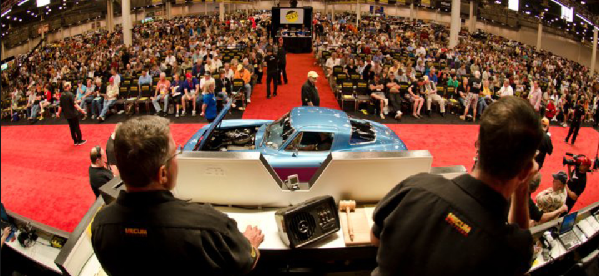
If you are planning on selling a vehicle in Texas, you will have to fill out some paperwork. Sweat the subtleties of the transaction now and you won’t have to deal with them down the road.
With nearly 30 million residents and over 26 million registered vehicles, Texas is one of the largest car markets in the United States. As such, ensuring that the sale of a vehicle is smooth and legally compliant is essential for both the seller and the buyer.
However, Filing a Vehicle Transfer Notification within 30 days of the sale is crucial to protect the seller from being held responsible for any parking tickets or toll violations incurred by the new owner.
Let’s look at the paperwork that must be submitted to the Texas Department of Motor Vehicles to officially transfer ownership of your vehicle. We’ll also touch on additional documents necessary to sell a vehicle in Texas.

Preparing to Sell Your Car in Texas
Before listing your car for sale, it is important to prepare the vehicle and ensure it is in good condition for potential buyers. The following steps will help you get started:
1. Clean and Inspect the Vehicle
First impressions matter, and potential buyers are more likely to consider a well-maintained and clean vehicle. Clean both the exterior and interior of the car thoroughly, paying attention to detailing, removing personal items, and ensuring the vehicle is presentable.
- Exterior: Wash and wax the car, ensuring there is no visible damage or major scratches.
- Interior: Vacuum and clean the upholstery, dashboard and any surfaces that may have accumulated dirt.
- Mechanical Inspection: Conduct a basic vehicle inspection or visit a mechanic to ensure that the car is in proper working order. Address any minor repairs that could increase the value of the vehicle.
2. Determine the Value of Your Car
To set a fair and competitive price for your vehicle, you will need to determine its market value. Several factors influence a car’s value, including its make, model, year, mileage, condition, and the current demand for similar vehicles in Texas.
You can use online tools such as Kelley Blue Book or Edmunds to get an estimated value of your car. Alternatively, visiting dealerships for a trade-in offer can also provide a benchmark for pricing.
Additional Documents Necessary to Sell a Car in Texas
As a seller of a vehicle, you must provide specific documents to the buyer. These documents include the bill of sale, a valid vehicle title, the completed title assignment with signature and odometer disclosure.
Additionally, the motor vehicle sales tax is a mandatory fee for individuals purchasing a vehicle from a private seller. The sales tax is calculated based on either the purchase price or the vehicle's standard presumptive value.
Be sure to make copies of these documents to store in your records. You never know if any technical or legal challenges will pop up in the future.
At this point, it is the buyer’s responsibility to complete the remainder of the required documents and pay the fee necessary to register the vehicle in his name in the state of Texas.
Gathering Paperwork and Documentation
Gathering all necessary paperwork and documentation is essential when selling a car in Texas. You’ll need to provide the buyer with a signed title, a Vehicle Inspection Report (VIR), and a Bill of Sale. Make sure to fill out the original title correctly, including the odometer reading and sales price. You’ll also need to provide proof of liability insurance and a registration sticker. If you’re selling to a dealer, you may not need to provide all of these documents, but it’s still important to have them ready.
Title Transfer
The state of Texas requires that your vehicle’s title be transferred to the new owner. To make this transfer, you must fill out the title assignment found on the back of your vehicle’s official title certificate.
If you fail to perform a legal title transfer when selling your car, there will be consequences. As an example, it is possible that you will be held responsible for subsequent crimes and violations committed in the vehicle.
In Texas selling or trading in a vehicle to a dealer, the vehicle stays in the seller's name until it is ultimately sold to an individual. Therefore, it is crucial to file a Vehicle Transfer Notification to protect yourself from liability for any actions taken with the vehicle by the new owner before the title is officially transferred.
It is prudent to go to the nearest county tax office with the vehicle buyer to guarantee that the application for the new vehicle title is filed. If you need a certified copy of your automobile’s title from the Texas Department of Motor Vehicles, fill out the VTR-34 form. You can download this form from the DMV’s online library of forms.
Supplemental Material That Will Help You Sell Your Vehicle in Texas
Texas has nuanced laws concerning vehicle efficiency and safety. Therefore, many buyers ask sellers for an in-depth vehicle history report before agreeing to a sale. Such a report provides information about the vehicle ranging from prior accidents to major repairs, odometer alteration and/or instances of theft.
If you have endured any sort of accident, consider enrolling in a TX driving safety course. This course will enhance your defensive driving skills. Such a course might reduce your automobile insurance rate. It is even possible that this course will remove points from your driving record after a speeding ticket or other violation.
Have your vehicle history report on-hand so you can show it to the buyer immediately after he requests it. Furthermore, having the vehicle history report on-hand makes it that much easier to market your vehicle and ask the highest possible price.
Steps to Complete the Sale
Once your car is prepared for sale and the legally required documents are gathered, you can proceed with the sale process.
1. Find a Buyer
There are several ways to find a buyer for your vehicle. You can choose to sell the car privately through online listings, trade it in at a dealership, or sell it to a car-buying service. When selling privately, consider advertising the car on platforms such as Craigslist, Autotrader, or Facebook Marketplace to reach a wider audience.
2. Negotiate and Finalize the Sale
After finding a potential buyer, it’s time to negotiate the sale price. Ensure that the agreed-upon price reflects the condition of the car and the market value. Once a deal is reached, both parties must sign the Title Transfer and other necessary documents.
The buyer will need to register the vehicle in their name with the Texas DMV, but as the seller, you must ensure that the Title Application (Form 130-U) and the Odometer Disclosure are completed accurately.
3. Transfer of Ownership
To legally transfer ownership of the vehicle, you will need to complete the following steps:
- Sign the Title: As the seller, you must sign the back of the title and provide the buyer with the original copy. Ensure that the odometer reading and buyer’s information are filled out.
- Submit a Vehicle Transfer Notification (Form VTR-346): This form is submitted to the Texas DMV and notifies the state that you are no longer the owner of the vehicle. This step is critical to protect you from future liabilities, such as toll charges or traffic violations, after the sale.
- Provide a Bill of Sale (Optional): While not mandatory, the bill of sale can be used for record-keeping and as a safeguard for both parties.
4. Transfer the License Plates and Registration Sticker
You must remove the license plates from your vehicle before the buyer accepts the keys and drives off. It is possible to transfer these license plates to another vehicle you own. Reach out to your nearest county tax assessor collector's office for details on such a transfer.
Additionally, don’t forget to cancel your insurance policy on the sold vehicle. Contact your insurance provider to terminate coverage once the sale is complete.
Taxes and Fees for Selling a Car in Texas
The buyer is responsible for paying the title transfer fee and state sales tax on the purchase of the vehicle. As the seller, you do not have to pay these taxes, but it's important to inform the buyer of these obligations. In Texas, the sales tax is 6.25% of the sales price or the vehicle's standard presumptive value (whichever is higher).
Don't Forget the Bill of Sale!
It is necessary to document the actual sale of your vehicle. The transaction is recorded on a “bill of sale”. This document should include all essential information about the seller, the buyer, the automobile and the agreed sale price.
Sign and date the bill of sale and request that the buyer does the same. Make copies for yourself and the buyer. Keep this document in your records as it is proof of the vehicle sale transaction.
Conclusion
Selling a car in Texas requires careful attention to documentation and state regulations. By following this guide, you can ensure a smooth and legal transaction, protecting both yourself and the buyer. With thorough preparation and attention to detail, selling your car in Texas can be a straightforward and stress-free process.
Arizona Police Crackdown On DUI
Arizona cops **cranked up** their anti-drunk driving efforts for the holidays and *boy*, did it pay off in a massive way.
Beginning on Nov. 24 of last year, the Arizona Holiday DUI Task Force conducted more than 55,000 traffic stops in their search for drivers who had a few drinks before getting behind the wheel. As a result more than 3,200 drivers were found to be drunk behind the wheel and were arrested.
This is good news for
Arizona defensive drivers who know better than to drink and drive, and bad news for the ones who don't. In Arizona first time drunk drivers will pay hefty fines including the costs for installing and maintaining an interlock device on their automobile. The interlock device requires the driver to self-administer a breathalyzer test before the engine will start. The devices cost a couple hundred dollars and have a monthly maintenance fee of almost $100. First-time drunk drivers are required to use the devices for a minimum of six months.
On New Year's Eve alone officers from 70 different departments around the state participated in a statewide crackdown on drunk drivers resulting in dozens of drunk driving arrests. The state also spent more than $1 million on six new DUI-processing vehicles for use out in the field. In the DUI-processing vehicles, drivers suspected of being under the influence can take a breathalyzer test, provide a blood sample or receive an examination from a DUI-expert. All of this extra effort is meant to show that Arizona definitely has a zero-tolerance plan for combating drunk driving.
In 2010 Arizona had 581 drunk-driving related accidents with 33 fatalities as a result. Their DUI enforcement procedures in that same year result in the arrest of more than 18,000 drivers who were under the influence of alcohol behind the wheel.
No doubt the officers who participated in the 2011 Arizona Holiday DUI Task Force were thinking about this number as they were on patrol, many hoping they could at least bring the number down by one for this year.
Results of the 2011 Arizona Holiday DUI Task Force will not be calculated for at least a few more weeks. No matter what they are
defensive drivers can rest easy knowing every time they get behind they are fully in control of their faculties, as they should be.
Image: xedos4 / FreeDigitalPhotos.net
Back Home In California? Might Be Time For Traffic School
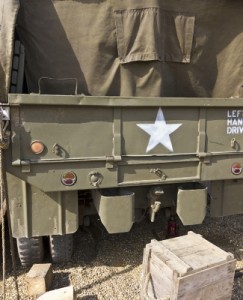
Now that the war in Iraq is at an end, thousands of soldiers will be coming to the spouses; boyfriends and girlfriends; families and life they left behind. With so many soldiers returning to the United States, you can expect that at least a few thousand of these soldiers will be coming home to California.
Given that they have been gone for awhile, in some cases years, now might be a good time to consider an online traffic school.
It is not easy getting accustomed to civilian life. Things are different in the military, especially when you have been serving your country over seas. Adjusting to life back in the states can be difficult. They have enough trouble finding civilian jobs, re-connecting with family and friends and sorting out their new living arrangements without worrying about traffic citations.
That's where an
online traffic school can help you. In California, like every state, you rack up points with every traffic citation you receive. If you only get one or two, that's one thing, but in California four points in 12-months; six points in two years or eight points in three years are enough to earn you a suspended license.
Having a suspended license can make life back in the states a lot more difficult. No car makes finding a job, or keeping a job nearly impossible, especially in California where public transportation is not all that convenient.
An online traffic school can help you keep those points from adding up. It can also help you brush up on skills you might have lost or that have at least become rusty while you were defending the country.
It is no secret that a defensive driving course can help you be a safer driver. Depending on where you live it might also help keep your insurance rates low and help you keep points from adding up on your license. With all this in mind, if you're just getting home from active duty and need an
online traffic school, gives us a call or visit our web site.
You served for us, now let us serve for you.
Image: Stuart Miles / FreeDigitalPhotos.net
Laughing Your Way To Cheaper Auto Insurance Rates
It seems crazy at first, like Earth Shoes, car phones, and kiwi slices as decoration.
In keeping with its commitment of promoting driver safety and providing the state’s motorists with enhanced customer conveniences Arizona Supreme Court approved
Improv Traffic School, an online humor-based
defensive driving program, for
Arizona drivers who are cited for moving violations.
Improv gained its fame in the driver training field in the early 80’s, when its founder Gary Alexander partnered with the famous Improv Comedy Club to create an interactive and fun
traffic school and
defensive driving program for Los Angeles motorists.
Based on a simple notion that when you enjoy the learning process you simply learn more, Alexander has grown Improv to one of the largest and most respected
defensive driving schools in the country. Since then more than a million students have taken Improv’s classes in both classroom and online settings for ticket dismissal, insurance discounts and court ordered
defensive driving. Improv’s teaching methodology has been backed by a number of studies showing that its edutainment curriculum is effective in reducing future crashes and moving violations.
I can’t guarantee none-stop laughs”, Gary Alexander admits, “I will shoot for less painful, simple and effective”.
Eligible Arizona Motorists who successfully complete Improv’s online defensive driving course are eligible to have their moving violations dismissed by issuing court.
The Improv’ s
online traffic school course is available to Arizona motorists at
www.myimprov.com
The online course consists of 10 simple modules featuring a combination of comedic, YouTube style video clips that are supported by easy to navigate text and graphics covering a variety of driving subjects ranging from basic traffic laws to more serious issues like DUI and seat belt use. The real beauty of this course is that it’s not only fun and effective; it can also be completed at your own pace in as little as 5-minute increments. Upon completion of all modules and passing of a simple quiz covering course material you get a certificate of completion that can be submitted to the court.
Good News For Defensive Drivers: It’s Working!
Safe Driving Does Make A Difference
Ever wondered if defensive driving truly matters? Don’t doubt it. **The National Highway Traffic Safety Administration** just revealed the lowest traffic fatalities recorded last year.
With 32,885 traffic related deaths last year, the NHTSA said the number is on a definite downward trend. In fact, that's the lowest number of traffic related deaths since 1949, and a full 25 percent decline from the highest number which was recorded in 2005. All of this is on top of the fact Americans are now driving more miles than ever before.
The NHTSA factors in increased safety features on vehicles for at least some of the decline, but there is no disputing that
safe drivers are having an effect. In fact, as more and more drivers look at improving their driving skills through the use of
online traffic school the roads become a much safer place to be.
Defensive driving schools help you not only understand the rules of the road, but understand your own limitations behind the wheel.
Drivers who have successfully complete a
traffic school online are less likely to take risks behind the wheel and more likely to follow the proper traffic regulations. That makes their journey not only safer for them, but also safer for everyone they pass on the road.
Insurance companies too are waking up to the fact that
defensive driving courses make a difference and many offer a reduction in premiums for customers who have successfully completed a course.
So before you turn your nose up at taking a
defensive driving course, take a look at the numbers. After all, a fact is a fact.
Texting And Driving Do Not Mix

Distracted Driving Kills
You don't need to go far to see that distracted driving causes more accidents. If you've finished an online traffic school, you know how risky it is to take your eyes off the road. **Anything distracting while driving** can be deadly.
Defensive driving courses have been saying it for years: Keep your eyes on the road. That means your eyes cannot be staring at a tiny text screen, watching you scroll through status updates on your smart phone, or even staring at the GPS device that will likely just 'tell' you where to turn. If they do, if your eyes leave the road for even a second, that's all it takes for the driver in front of you to brake suddenly, a deer to cross your path or a pedestrian to step off the sidewalk in the path of your vehicle. If you don't see them, you will hit them.
When it comes to what you learn at
traffic school online the first rule is to keep your eyes on the road. That was probably the first thing whoever taught you how to drive said to you while you weaving your way down some country road or through an empty parking lot. A car is a 4,000 pound missile and you are taking aim every time you step on the accelerator and get behind the wheel. If you don't pay attention to what you are doing you risk your life, the life of whoever is riding with you and the life of everyone who passes you on the road.
Be a safe driver, be a careful driver, be an attentive driver and be a
defensive driver. Put down the smartphone when you get behind the wheel. Turn it off if you have to, but definitely don't try to text while you drive. The life you save might be your own.
Image: scottchan / FreeDigitalPhotos.net
NTSB Wants Complete Ban On Cell Phone Use While Driving

Distracted driving is like playing with fire on the road—it's dangerous and risky. Statistics show that **over 3,000 lives lost** each year because of it. Imagine texting and suddenly hearing a loud crash—scary, right? Even kids know texting while driving is not smart. Every second counts in an emergency. Ever missed a turn because of a quick glance at your phone? Distracted driving does that and more. It’s like driving while wearing a blindfold. **Stay focused, stay safe.** Keep those eyes on the road and hands on the wheel. Don’t let a text be the last thing you see. It’s not worth it.
National Transportation Safety Board this week released a report recommending a complete and total ban on the use of cell phones while driving. The ban would include wired, wireless, hands-free devices and texting devices, but would not include the use of such devices by passengers in an automobile. According to the most recent estimates by the National Traffic Safety Administration, nearly 14 million drivers use hand-held phones, which they consider distracted driving. They also estimate that more than 3,000 deaths last year were directly caused by distracted driving.
This emphasis on distracted drivers is a direct result of the completion of a 10-study of driving habits conducted by the NTSB. The findings showed a direct connection between distracted driving and crashes, which prompted the recent suggested ban.
Drivers who completed an
online traffic school understand the dangers of distracted driving so this should come as no surprise to them. Driving requires your full attention, both on the road ahead of you and the areas all around your vehicle. If your attention is drawn away, whether its toward a cell phone, the radio or even a GPS device, the opportunity is there for you to have a crash. It takes less than a second for someone to step off the sidewalk in front of you; the car ahead of you to brake suddenly, or you to find yourself in the midst of an emergency situation. Anything which draws your attention away from the hazards of driving, is itself a hazard.
At the moment, the use of cell phones by drivers vary from state to state. In 35 states it against the law to text message while driving. Another 30 states ban cell-phone use by novice drivers, and 10 ban all use of hand-held cell phones while driving. If the NTSB has its way this will be the case in all fifty states.
It seems likely that some nationwide rule governing the use of hand-held devices by drivers will be enacted, especially when you consider the strength of the NTSB in past actions. For anyone who has successfully completed
traffic school online course this will hardly come as a shock because they already know just how dangerous it is to let anything come between them and their focus behind the wheel.
Image: Sarunyu_foto / FreeDigitalPhotos.net
MIT: New algorithm may improve defensive driving
CAMBRIDGE, Mass. -- In 2008, **2.3 million car crashes** happened at intersections in the U.S., causing about 7,000 deaths, says the National Highway Traffic Safety Administration. **Running red lights** led to over 700 of these deaths. The Insurance Institute for Highway Safety reveals that half of those killed weren't **red-light runners** but other drivers, passengers, and even pedestrians.
In order to reduce the number of accidents at intersections, researchers at MIT have devised an algorithm that predicts when an oncoming car is likely to run a red light.
Based on parameters such as the vehicle's deceleration and its distance from a light, the group was able to determine which cars were potential "violators" — those likely to cross into an intersection after a light has turned red — and which were "compliant."
The researchers tested the algorithm on data collected from an intersection in Virginia, finding that it accurately identified potential violators within a couple of seconds of reaching a red light — enough time, according to the researchers, for other drivers at an intersection to be able to react to the threat if alerted. Compared to other efforts to model driving behavior, the MIT algorithm generated fewer false alarms, an important advantage for systems providing guidance to human drivers. The researchers report their findings in a paper that will appear in the journal
IEEE Transactions on Intelligent Transportation Systems.
Jonathan How, the Richard Cockburn Maclaurin Professor of Aeronautics and Astronautics at MIT, says "smart" cars of the future may use such algorithms to help drivers anticipate and avoid potential accidents.
"If you had some type of heads-up display for the driver, it might be something where the algorithms are analyzing and saying, 'We're concerned,'" says How, who is one of the paper's authors. "Even though your light might be green, it may recommend you not go, because there are people behaving badly that you may not be aware of."
How says that in order to implement such warning systems, vehicles would need to be able to "talk" with each other, wirelessly sending and receiving information such as a car's speed and position data. Such vehicle-to-vehicle (V2V) communication, he says, can potentially improve safety and avoid traffic congestion. Today, the U.S. Department of Transportation (DOT) is exploring V2V technology, along with several major car manufacturers — including Ford Motor Company, which this year has been road-testing prototypes with advanced Wi-Fi and collision-avoidance systems.
"You might have a situation where you get a snowball effect where, much more rapidly than people envisioned, this [V2V] technology may be accepted," How says.
In the meantime, researchers including How are developing algorithms to analyze vehicle data that would be broadcast via such V2V systems. Georges Aoude SM '07, PhD '11, a former student of How's, designed an algorithm based on a technique that has been successfully applied in many artificial intelligence domains, but is relatively new to the transportation field. This algorithm is able to capture a vehicle's motion in multiple dimensions using a highly accurate and efficient classifier that can be executed in less than five milliseconds.
Along with colleagues Vishnu Desaraju SM '10 and Lauren Stephens, an MIT undergraduate, How and Aoude tested the algorithm using an extensive set of traffic data collected at a busy intersection in Christianburg, Va. The intersection was heavily monitored as part of a safety-prediction project sponsored by the DOT. The DOT outfitted the intersection with a number of instruments that tracked vehicle speed and location, as well as when lights turned red.
Aoude and colleagues applied their algorithm to data from more than 15,000 approaching vehicles at the intersection, and found that it was able to correctly identify red-light violators 85 percent of the time — an improvement of 15 to 20 percent over existing algorithms.
The researchers were able to predict, within a couple of seconds, whether a car would run a red light. The researchers actually found a "sweet spot" — one to two seconds in advance of a potential collision — when the algorithm has the highest accuracy and when a driver may still have enough time to react.
Compared to similar safety-prediction technologies, the group found that its algorithm generated fewer false positives. How says this may be due to the algorithm's ability to analyze multiple parameters. He adds that other algorithms tend to be "skittish," erring on the side of caution in flagging potential problems, which may itself be a problem when cars are outfitted with such technology.
"The challenge is, you don't want to be overly pessimistic," How says. "If you're too pessimistic, you start reporting there's a problem when there really isn't, and then very rapidly, the human's going to push a button that turns this thing off."
The researchers are now investigating ways to design a closed-loop system — to give drivers a recommendation of what to do in response to a potential accident — and are also planning to adapt the existing algorithm to air traffic control, to predict the behavior of aircraft.
NY Cracks Down on Distracted Drivers
Governor Cuomo Approves Law to Crack Down on Drivers Using Handheld Gadgets
New Legislation Makes Using Handheld Electronic Devices while Driving a Primary Traffic Offense; Additional Regulation will Increase Penalty from 2 Points to 3 Points for Cell Phone and Electronic Device Usage While Driving
Albany, NY (July 12, 2011) Governor Andrew M. Cuomo today signed a new law that strengthens the enforcement against drivers who use handheld electronic devices for activities such as texting while a vehicle is in motion. The legislation makes this action a primary traffic offense, giving law enforcement the power to stop drivers solely for engaging in this activity. The Governor also announced today that he will increase the penalty for using a cellular phone without a hands-free device or a handheld device while driving from two to three points through changes in state regulations. "I am proud to sign this bill today, both as the Governor and as a father of three teenagers," Governor Cuomo said. It's plain and simple: distracted driving leads to tragedies that have affected families all across
New York.
This new law will help ensure that drivers keep their eyes on the road and their hands on the wheel. I thank Senator Marcellino and Assemblyman Weisenberg for their hard work on this legislation." Before this law, it was illegal for drivers to use handheld electronic devices while their vehicle was in motion, but it was a secondary traffic offense -- meaning a driver had to be stopped for another violation in order to receive a ticket. The new law makes it a primary traffic offense and it will go into effect immediately. The monetary penalty for a violation of this law continues to be a fine of up to $150. Illegal activity includes holding an electronic device and:
- Composing, sending, reading, accessing, browsing, transmitting, saving, or retrieving electronic data such as e-mail, text messages, or webpages
- Viewing, taking, or transmitting images
- Playing games
The law does not penalize drivers using a handheld electronic device that is affixed to a surface or using a GPS device that is attached to the vehicle. The law also exempts police officers, fire fighters, or emergency vehicle drivers while they are performing their duties. In addition, a driver is exempt from the law if the driver is communicating or attempting to communicate with law enforcement, the fire department, or medical personnel during an emergency situation.
New York State Senator Carl L. Marcellino said, "With this new legislation, New York State driving laws have finally caught up with today's technology. Our new law will strengthen enforcement against drivers using handheld electronic devices and help keep drivers, passengers, and pedestrians safe. I am proud to stand with Governor Cuomo as he signs the bill I sponsored into law and we finally make distracted driving a serious offense." New York State Assemblyman Harvey Weisenberg said, "As a former police officer, I've seen the devastation caused by distracted drivers. Today, we are giving law enforcement the tools they need to keep our roads safe and prevent future accidents. These changes will save lives. I'd like to thank Governor Cuomo for supporting this law and I look forward to our continued work together."
New York State Police Superintendent Joseph A. D'Amico said, "Motorists should now realize the dangers of operating a motor vehicle while texting on mobile devices or talking on a cell phone without an approved hands-free device. This change in the statute will allow law enforcement to continue the battle against distracted driving. Distracted driving is dangerous driving and drivers must reduce diversion and behaviors that take their attention from the road. Attentive, responsible, defensive driving is the key to avoiding crashes and keeping our highways safe." New York City Police Commissioner Raymond W. Kelly said, "It's no secret that violations of the no-texting and no use of hand held devices while driving rules are widespread despite their nexus to accidents, including fatalities. This legislation is a welcome step toward saving lives."
President of AAA New York State Thomas Hoy said, "With nearly 2 trillion text messages sent last year, texting represents the most dangerous form of distracted driving. We applaud the Governor and lawmakers for stiffening the consequences for those who jeopardize the rest of us with their careless conduct." The National Highway Traffic Safety Administration reports that 16% of fatal accidents in 2009 were due to distracted driving and 20% of people injured during a crash were involved in a crash where distracted driving was reported. A study by the Virginia Tech Transportation Institute found that truck drivers who were texting were 23 times more at risk of a crash or near crash.






 Live Chat