What Kind of Car Should I Get?

If you are in the market for a new or used vehicle, you might feel overwhelmed by the number of options. Don't be paralyzed by the seemingly endless amount of information to sort through. The best way to figure out the perfect type of vehicle for your needs and desires is to spend some time reviewing what you require in an automobile and how it will be used.
Think About What You Need the Vehicle For
The type of vehicle you select should suit your specific automotive needs. Be practical with this decision. Always opt for function over form. Think about what you will use the vehicle for. Maybe you have a large family or own a business and need ample space to transport people/cargo. Consider the road conditions of your area and the places where you will venture for road trips. These conditions will partially determine whether you should purchase a vehicle with all-wheel drive. If you have an especially long commute to work or school, fuel efficiency should be a top priority.
If you have been injured in an accident in the past or if you are transporting youngsters, you should key in on vehicles with top-notch safety features. If you plan on taking the vehicle off-road or using it for towing, don't opt for a diminutive sports car or sedan. You can whittle down the field to sport utility vehicles and trucks if you plan on embarking on off-road adventures or performing tows. Finally, consider the amount of space available on your property for parking. If you have a small garage or an especially narrow driveway, purchasing a monster sport utility vehicle, van or truck might not be prudent.
Vehicle Entrance and Exit
Sweat the small stuff when it comes to vehicle entry and exit. Think about who will ride in your vehicle. If you transport senior citizens or especially tall individuals, they will have difficulties entering a large sport utility vehicle or truck that requires the use of a stepladder for entrance. These individuals will also find it difficult to enter a low-slung sports vehicle.
Vehicle Handling
It is important to get a gauge of a vehicle's handling before committing to a purchase or lease. If you have driven a specific style of car for most of your life, it is time to test drive other types of vehicles. Take a sports car, coupe, sedan, truck, sport utility vehicle and/or van for a ride. Get a feel for how each handles. You might find those midsize sedans you have been driving your entire life handle somewhat similar to crossover sport utility vehicles. If you end up getting a vehicle with crisp handling and rapid acceleration, don't let the extra power result in a speeding ticket. If you are ticketed, enroll in a
defensive driving course so you don't end up with points on your driving record and a higher insurance rate.
Be sure to pick the salesman's mind before, during and after your test drive. He will educate you about the ins and outs of each particular vehicle to help you decide on the perfect automobile for your unique needs. The salesman can also point you in the direction of a specific style of vehicle that suits your idiosyncratic requirements for handling, power etc.
Think About What You Desire in a Vehicle
Though automotive needs should always trump desires, this does not mean you should select a vehicle simply because it provides superior utility. After all, a minivan might suit your needs yet disappoint in the looks department. Find the right balance between utility and style, performance and high-tech niceties. Keep in mind that a practical vehicle with an attractive exterior, precise handling and an array of features will likely fetch a better price when the time comes to sell.
Can I Travel with My Driver License?
I'm sorry, but you haven't provided any text for rephrasing. Could you please provide the text you would like me to work on?
One of the biggest and best benefits of having a
driver’s license is the independence that it brings. Once you have acquired your driver license, you’re basically free to go wherever you please. But there are some caveats to consider. Your driver license will only get you so far. In some cases, you may have to have other documentation to travel. So, can you travel with your driver license? Yes and no.
Driver's License Travel: Domestic and International Requirements
[framed_box]
Traveling in the United States with Your Driver License
The way that the United States is set up, you can travel anyplace you want to go with just your driver license. The U.S. doesn’t even have border restrictions between states. So, if you want to travel between Ohio and Michigan, for example, you can do so. You won’t have to stop to display your driver license at the border between Ohio and Michigan. If for some reason you’re stopped by a police office in Michigan, you can show him your Ohio driver license and that be fine. With a driver license, you’re legally entitled to drive anywhere in the United States. You will need a
REAL ID, however, for traveling by plane starting October 2020.[/framed_box]
[framed_box]
Driving a Vehicle in the United States
Now, driving a vehicle in the United States requires different credentials, depending on where you’re driving. Even if you’ve passed a
defensive driving class, there might be other rules. Depending on which state you’re driving in, you may be required to carry auto insurance. Only a handful of states allow you to drive without auto insurance. Remember, even if you’re just driving through, you may be required to show proof of auto insurance if you’re pulled over for any reason.[/framed_box]
[framed_box]
Traveling Abroad with Your Driver License
You won’t be able to travel abroad with just your driver license. Other countries require a passport to get in, and you’ll need your own U.S. passport to return to the United States. In addition, you might need a visa to get into some countries, in addition to your passport. Now, your driver license will help you travel abroad, though. You’ll be able to use it as proof of your identity to get your passport.[/framed_box]
[framed_box]
Driving Abroad with Your Driver License
Your driver license entitles you to drive in your state and throughout the U.S. It also entitles you to hire a rental car, even outside the U.S. Rental companies oversees have agreements with insurance companies that will cover drivers from other countries. But if you want to buy a car and drive it in another country, that’s another story.
You won’t be able to drive abroad with your driver license if you own the car. You’ll have to have an international driver license, in addition to an insurance policy that will cover you for the country you intend to drive in. Bottom line is: if you want to buy a car to drive in another country, be sure you can afford to pay for the insurance and any other additional license you may need. But if you just want to rent a car to drive overseas, the good news is that your U.S. driver license will probably be sufficient![/framed_box]
[framed_box]
Driving a Motor-home or Trailer in the U.S.
Do you have dreams of driving a motor home across the U.S.? You may think that you can only drive one of these if you have a commercial truck license. But you’re entitled to travel in the U.S. with a motor home with only your regular driver license. If you can show proof of insurance, you’ll be able to rent a motorhome or trailer and travel throughout the entire U.S.
Do you have the defensive driving skills necessary to travel safely with your driver license? If so, you can use your driver license to travel anywhere in the U.S., and to rent vehicles while traveling abroad. Bon voyage![/framed_box]
What is a Space Cushion?

A space cushion. This is something they tell you about in
defensive driving class. What is a space cushion? It sounds top secret. Like something, NASA and the government need to keep hidden in order to protect us from beings from outer space. That’s right. Space beings. Aliens. Martians from a distant planet, maybe Mars, who have entered our atmosphere and are looking for a way to relax. After all, space travel must be exhausting. Imagine sitting there, in your UFO spacecraft seat, for millions of miles. Completely tiring. No wonder those men from Mars need a space cushion. A place to lay down their big brainy heads for a little cat nap.
Understanding, Importance, and Creation of a Space Cushion
No, sorry, that’s not what a space cushion is. Although, that is a novel idea. So, what exactly is a space cushion?
What is a Space Cushion?
A space cushion is an area around your vehicle that is just empty space. No other vehicles are in that space. The space cushion area includes the space in front of, behind, and on both sides of your car.
Why Have a Space Cushion?
A space cushion gives you time and opportunity to avoid collision with another vehicle. If you don’t have a space cushion, then any sudden movements by other vehicles can catch you with no way out of the situation. In fact, with no space cushion around your vehicle, you have limited options if you yourself have a sudden emergency or a sudden movement. Consider this: Imagine you’re driving in your car, and one of your tires blows. The sudden drop in tire pressure will likely cause your vehicle to swerve dramatically to one side. You obviously won’t know which side your car will swerve on, because it came out of the blue. You could swerve right into another car, or even a pedestrian. This is why you want to have a space cushion.
How to Make a Space Cushion
First, you don’t need sewing lessons to make a space cushion. We thought we cleared up all that nonsense about aliens needing naps about two paragraphs ago. So please put away the needle and thread. And the thimble. Okay, let’s get down to the business of defensive driving by making a space cushion.
First, you want to have at least a three-second delay from the rear end of the vehicle in front of you to the front of your car. This is the easiest part of the space cushion to make. As you’re driving, pay attention to the signs on the side of the road. If you’re on the freeway, you can use the signs overhead. As the car in front passes by the sign, count to three (yes, you can use Mississippi). Your car shouldn’t pass that same sign before you’ve reached three. If it has, you’re following too closely. Slow down, Speed Racer.
Second, you want the car behind you to slow down so there’s a three-second delay between you. Now, you can’t tell that driver how to drive. But you can let that driver pass if he insists on tailgating you, (maybe he has to get to a bathroom or something. Who knows)? Anyway, just let him go by.
Finally, you don’t want any cars next to you. How do you manage this? By adjusting your speed either up or down so that you aren’t riding along with James Dean's style in some kind of misconceived road race on the highway.
Now that you know what a space cushion in, why it’s necessary, and how to make one, you’d best be on your way. Leave plenty of time between your departure and your arrival so you’re never the one tailgating.
How to Drive in Every State

Almost every kid yearns for the day when they can be old enough to learn how to drive. Getting that driver’s license is a rite of passage that carries so much meaning. For most young drivers, learning how to drive symbolizes freedom and responsibility. It’s a giant leap away from childhood and a small step toward adulthood. Once you learn how to drive, you can go places without your parents, run errands for your parents, get a job that’s beyond walking or bicycling distance, and go on real dates. It’s an amazing time in life that happens only once.
Drivers Ed
How you learn to drive depends on where you live and what your situation is. If you go to a school where they offer
Drivers Ed, you might learn how to drive with a bunch of your friends sitting in the back seat, which is simultaneously a blast and intimidating. If driving school is affordable, you might learn about defensive driving from a stranger. Your last – and sometimes preferable option – is to learn how to drive from your parents or a family friend. However, you officially learn about defensive driving, there’s probably a bunch of stuff you didn’t learn. But don’t worry. We’re here to fill in the gaps. Here’s the guide on how to drive that you’ll never hear from anyone else.
Watch Other Drivers’ Faces
When you watch driving videos, they always tell you to “look out for other cars.” But
defensive driving requires more than that. You can get a whole lot of information about what a car is going to do by watching the driver’s face. Say you’re coming up on an intersection. The driver of the car at the stop sign is laughing and talking to his buddy. Every now and then his car creeps forward. He can’t wait to zip out. Does he see you coming? Keep an eye on that driver to make sure he looks at you. If he doesn’t, there’s a good chance he might pull out right in front of you. To be on the safe side, slow down or move to the next inside lane.
Don’t Double Pedal
Your right foot is for driving, and your left foot is for the clutch if you have a manual transmission. Don’t double pedal with your left foot hovering over the brake and your right foot hovering over the accelerator. This is a bad habit that can lead to a) overuse of brakes, b) an accident. Just don’t do it.
Don’t Eat in the Car
Yes, your mom’s car is full of Burger King wrappers. You grew up at the drive-thru. That’s what drive-thrus are for, right? We’ve heard it all before. But eating in the car is a bad, bad idea. First, you could choke, and trying to maneuver your car out of traffic and danger is a lot harder when you’re also trying to not choke to death. Second, if you’re eating, you’re not holding the wheel with both hands. Third, eating in the car is messy business. You’ll end up trashing your car, getting stains on your clothes and not paying attention to the task at hand, which is, ahem, driving. Eating in the car puts your life at risk. Burger King won’t tell you that, but we will.
Drive Safe!
So now that you know the real secrets to knowing how to drive, we feel confident you’re ready for adulthood. Learning how to drive is something that almost everyone hopes to accomplish one day. But do you want to know the best part of learning how to drive? It’s learning how to drive safely.
Answering common traffic school questions

Are you enrolled in
traffic school and feeling a bit nervous about the expectations? If so, you are not alone. Most people experience some degree of anxiety. It is quite normal.
However, you should calm down. The goal of traffic school is to make you a safer driver. The curriculum is not set up for you to fail. Instead, quite the opposite is true. The institution wants you to comprehend the material as fully as possible. Your success is their success.
This all sounds well and good, but you also know that in the end you have to complete a certain amount of work with a passing score. Keep reading below to find out just where to turn for answers to your traffic school assignments.

Use this information to help get a passing score. Then, enjoy the safe driver record and dismissal of tickets. And, of course, do not forget the mandatory insurance discount.
How can I use the course material to my advantage in the process of completing online traffic school?
Always start here when feeling stumped. You can trust that the school administration has put the relevant answers somewhere inside your course material.
Never forget that they want you to pass. The school gains nothing by playing hide and seek with you. Most likely, the information is right there if you look carefully.
I'm struggling with my online traffic school course, what should I do?
You would be surprised at how easy things can be when you use a little common sense. Just stop trying to make traffic school so difficult and all will be smooth sailing.
When things get tough, just sit back and relax. You have been a driver for some time now. The answer is probably the one that seems right to you. Use your intuition.
For example, the rules of the road exist to protect motorists and pedestrians. You already know this. So, use this knowledge to help you figure out the answers to your traffic school questions. If a choice does not help keep people safe on the road, then you can discard it.
Can I ask friends & family for help with my online traffic school?
The people around you, such as family and friends, are excellent sources of information on traffic laws. Many of them have been driving for decades and know all the rules in your state. Be sure to ask them for help when trying to complete your course.
It may be best to rely on more than one person for the answers. You will want a variety of opinions. Listen to what everyone has to say, check your course material again and then choose the best answer.
How can I use the internet as a source for answers with my traffic school online?
You should search the internet for relevant driving websites. Your state motor vehicle department will have the current rules of the road available online. Likewise, the state insurance department can provide you with information on auto insurance requirements.
Last, the state court website can explain what will happen if you break the laws while behind the wheel.
What about the instructor of the online traffic school course, can I ask them for help?
If truly stuck with nowhere to turn, then ask your instructor for help. Now, you should always be sure to have attempted to find the answer yourself first. Quite often, wayward students will skip the reading material or fail to follow instructions and then expect the instructor to bail them out.
Truly attempt the assignment before asking for the instructor to explain it to you. Doing so will make their explanation that much more comprehensible.
Traffic school success is right around the corner!
You are now prepared to complete your traffic school with flying colors. Just take things easy and you will succeed in becoming an acknowledged safe driver in your state.
Can You Test Drive for Fun?
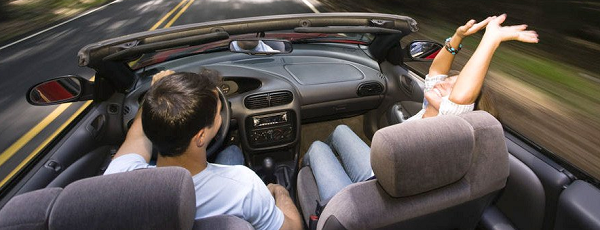
Why Test Drives are Essential for Both Buyers and Sellers
Where would we be without the test drive?
Probably more unsatisfied customers – new owners may discover that a vehicle that looked great and had good reviews didn’t “feel right” once he or she got behind the wheel. This could lead to more buyer’s remorse and owners either changing their minds right away, or hanging onto it unhappily for years, vowing never to return to that dealer again.
Good for Sales
Either way is bad news for the salesperson, since it’s their job to find the right car for the right owner and hopefully build strong relationships that last for multiple vehicles. Making prospective buyers comfortable by letting them try before they buy goes a long way in making purchases happen.
Certainly some enjoy driving several types of vehicles before finding something that appeals to them, or spend the weekend just doing test drives – and that’s OK with most dealership employees, especially if they eventually end up making a purchase.
Good for You
Some people may even visit a dealership or dealerships with the intent of test driving only, not buying. That’s OK too. The biggest challenge for a dealership is getting people to the lot, and once they’re there, it’s potentially much easier to talk them into a super deal.
Though some lot visitors are obvious browsers, they still should be given the same attention as any other shopper even if the pay-off may come later rather than sooner. Most salespeople need to always be focusing on their numbers, and taking time for a ride with another looky-loo can sometimes cut into time helping more serious customers. But from a customer service point of view, you never know which drive will switch a tester into a buyer.
Here’s why test drives are important to the buyer and seller:
1. Buyers remain educated.
Want to learn more about a particular make or model? The best way is to give one a spin and see how it performs. It’s one thing to read the specs online, but more satisfying to feel it, and then remember the experience when it’s time for shopping.
2. One drive may not be enough.
If you’re serious about a particular auto but don’t need to rush, you can test drive multiple occasions. Try it on rainy and sunny days, in daylight or night, or even on daily errands or heavy traffic so more defensive driving skills are required. This gives you more time to learn about other costs, such as different insurance premiums or discounts.
3. It can be fun.
Even if the dealership can offer nice financing and your budget could stretch a little, you might prefer to not take on new debt right now. But testing different cars and doing your homework can still be entertaining, even if the gratification is delayed. You can also try something outside of your price range, just for the experience.
4. It encourages the salesperson to try harder.
As a consumer, you’re likely to want to work with a salesman or saleswoman who you know and trust. And someone who has been patient with your browsing habits is definitely appealing. The better salespeople can even keep an eye out for certain vehicles that may interest you.
5. You can win things.
As a way to get more people visiting, some dealerships offer no-obligation incentives for people who test drive, such as event tickets, gift cards or small appliances. The sales staff is encouraged to work their magic to convert all test drivers into buyers, but legally the promised prize is yours if you satisfy certain conditions like join a mailing list.
The Pros & Cons of Manual vs. Automatic Transmission
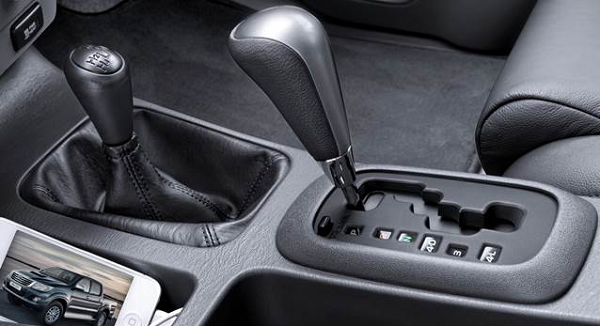
Manual vs. Automatic: Unpacking Transmission Advantages and Disadvantages
Most people do not consider the purchase or lease of a vehicle with a manual transmission. Also known as a “stick shift,” the manual transmission is becoming increasingly rare. However, there are some advantages to driving a vehicle equipped with a manual transmission. Let's look at the positives and negatives of manual vs. automatic transmissions to help you select the style that is best for your particular needs and desires.
The Benefits of a Manual Transmission
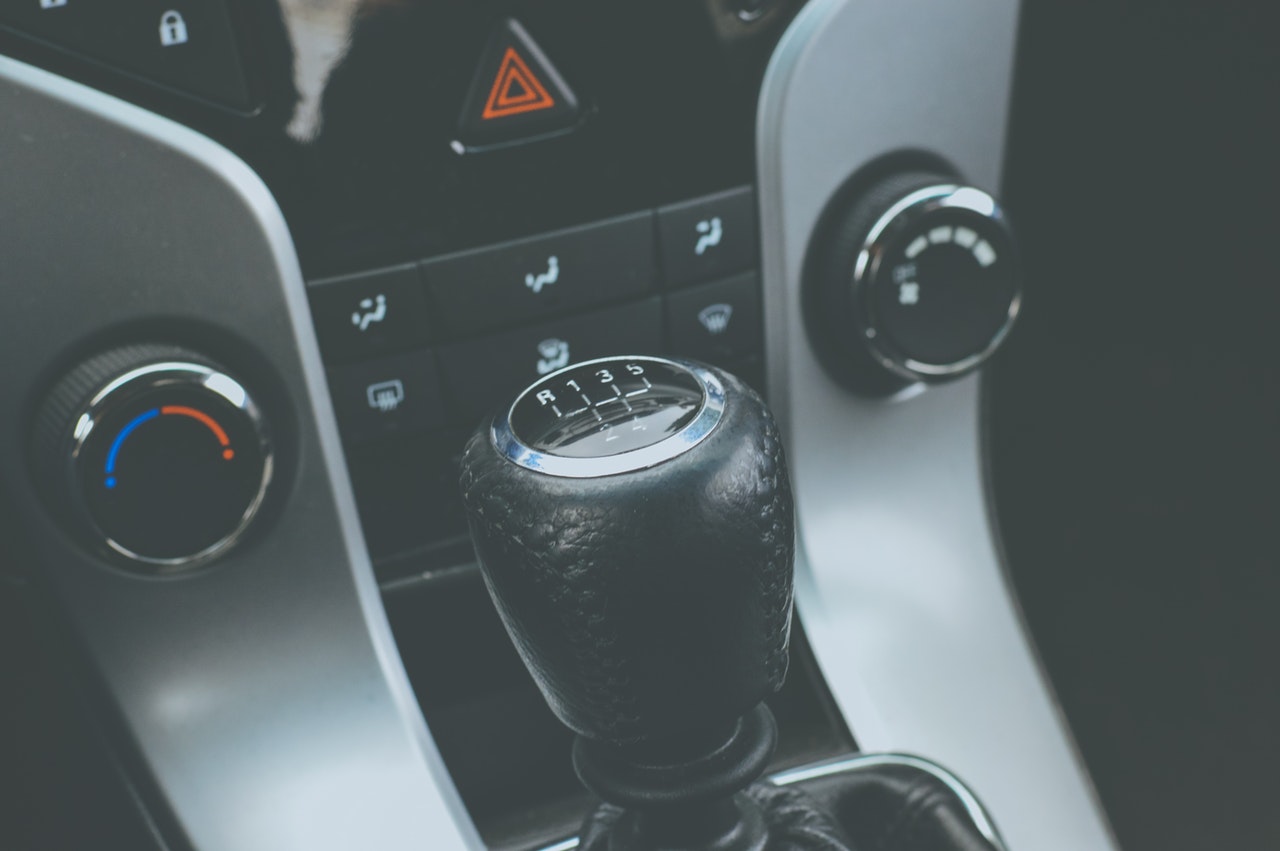
One of the primary benefits of a stick shift is improved fuel economy. Most vehicles equipped with a manual transmission achieve higher mpg than vehicles with an automatic transmission. Furthermore, vehicles equipped with a stick shift tend to cost less than vehicles with an automatic. Another key advantage to owning or leasing a vehicle with a manual transmission is that it is comparably secure. If your vehicle is broken into, the odds of the thief knowing how to drive a stick shift are fairly low. A manual transmission really is an anti-theft device in and of itself.
Yet the primary motivation for selecting a vehicle with a stick is feel. Controlling the shifts between gears makes one feel as though he is a race car driver. It is a ton of fun to upshift and downshift while traversing the roads. If you get a vehicle with a manual transmission, you will likely be tempted to get to fourth or fifth gear as quickly as possible and drive at a high rate of speed. It could result in a speeding ticket. If you are nabbed speeding, enroll in defensive driving for an auto insurance discount. You can also enroll in traffic school to have your ticket dismissed or reduced.
The Drawbacks of a Manual Transmission

The main drawback of a stick shift is the learning curve. Most people do not want to invest the time and effort required to learn this style of driving. Furthermore, constantly shifting between gears is somewhat tedious. If you aren't particularly skilled at operating a stick, you might make a mistake that leads to an accident or a traffic ticket. Those who lack coordination might find it difficult to use both arms and legs in unison on the steering wheel, stick shift, gas and clutch pedals. Another problem with the manual transmission is that few people know how to operate it. If you have one too many drinks, feel sick or are injured, the odds of someone in your group being able to operate a stick shift are low.
The Benefits of an Automatic Transmission

The beauty of an automatic transmission is that the vehicle shifts through the gears on your behalf. There is no need to divert your attention to a clutch pedal or stick shift. You can keep both hands on the steering wheel at all times and consequently, reduce the odds of an accident. Also, consider a situation in which you can't drive your vehicle due to an injury or sickness. If you have a friend or family member with you, this individual can drive your vehicle on your behalf. Another advantage of the automatic transmission is that it makes stop-and-go traffic tolerable. The same cannot be said of a vehicle with a manual transmission that requires a constant pressing of the clutch and shifting between gears to go from a complete stop to forward movement repeatedly during heavy traffic.
The Negatives of an Automatic Transmission

Automatic transmissions cost more than the manual variety. Automatic transmissions also provide less miles per gallon than manuals as they use a torque converter to alternate between gears. Automatic transmissions typically require more maintenance than manuals due to their comparably complex engineering. Thieves are much more likely to steal a vehicle with an automatic transmission as it does not require any sort of specialized knowledge or skill to operate.
How to Choose the Right Helmet

Choosing your motorcycle helmet can almost be as important as choosing the right motorcycle. Because there are so many styles and different types of helmets to consider, we wanted to help you narrow the field! How to choose the right helmet:
Type
There are hemispherical shaped helmets that are designed to protect the head from the ears up and helmets that cover the entire head from just below the chin line. There are also helmets that look like football helmets.
Outer Shell
The outer shell is designed to absorb most of the impact in an accident, lessening the amount of force that will reach your skull. When considering the geometry of the helmet (sphere-like) any impact will be distributed throughout the helmet. In a perfect sphere, an impact (a force) will be evenly distributed. This is the case in a motorcycle helmet, except we ought to understand that the helmet is not a perfect sphere.
Liner
The next level of protection is found in the liner of the helmet. This unit of protective layer is an impact-absorbing liner. This liner will absorb residual forces not absorbed by the outer shell. While the liner is also shaped like a sphere, forces will be, ideally, distributed evenly. The material of the inner liner is usually made of Styrofoam, a material not as hard and impact resistance as the outer-liner.
Padding
The third section of a helmet is called the comfort padding. It functions as what its name indicates. It provides comfort, mainly. The comfort padding also ensures that the helmet fits snuggly on the head. A loose, or ill fitting helmet will not absorb as much of the forces as a well-fitting, snug helmet.
Retention System
The fourth component of the called the retention system, more commonly referred to as the chin strap. Obvious to many, the chin strap helps to ensure that the helmet stays on your head in the event of a crash. The other elements of the retention system are the devices that attach the chin strap to the helmet. A loose chin strip reduces the effective safety designs of the entire helmet.
DOT
Regardless of the type chosen, make sure that they are rated by the Department of Transportation (DOT). Of the four basic components, the most important element is the outer section of the helmet, called the outer shell. Modern technologies have found plastics and fiber reinforced composites that allow for high strength, light weight outer shells.
The DOT sticker and the Snell Memorial Foundation run thorough tests on motorcycle helmets for:
Impact—The helmet's shock absorbing capacity
Penetration—The helmet’s ability to withstand the penetration a sharp object
Retention—The ability of the retention system to fastened to the helmet
Peripheral vision—The helmet’s ability to allow side vision of no less than 105 degrees on each side.
Regardless or the style of helmet or how seasoned you are as a motorcyclist (okay, biker) it is important to check your helmet for the safety features designed to protect you from breaking your head.
SAFETY
No doubt, wearing a helmet while operating or riding on a motorcycle is necessary to reduce the probability of death or life-long debilitating injuries. The National Highway Traffic Safety Administration (NHTSA) studies have determined that deadly accidents are a higher probability when helmets are not worn.
No matter how macho you want to be, wearing a helmet is the thing to do.
What is a Sig Alert and How to Plan Travel Around It?
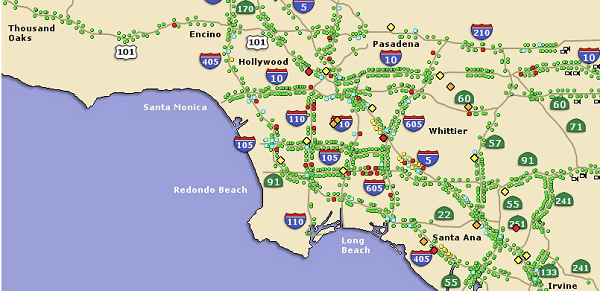
Mastering Sig Alerts: History, Prevention, and Information Sources
It has happened to every Southern California (SoCal) driver at one time or another. You wake up in the morning or get off from a long day at work. All you can think about is getting where you need to go. Perhaps you are even running a bit behind schedule.
Then, the worst possible thing occurs. There is a Sig Alert on the route you are taking! Too late now. You could be stuck for hours in some of the worst traffic in the nation.
Read on to find out how you can avoid this unfortunate fate by learning just what a Sig Alert is and how you can plan your route around one.
What is a Sig Alert?
Sig Alerts are traffic warnings that the authorities issue when they expect a major backup on the roads. They declare a Sig Alert situation when an incident causes two lanes or more to be unavailable for at least two hours.
Despite most SoCal freeways having multiple lanes, these debilitating Sig Alert incidents usually result in serious traffic jams. The first problem is the closed lanes. Vehicles must merge into other lanes, which stalls the flow of traffic. Second is rubbernecking. People always slow down to stare at an accident. The cumulative effect of just a few seconds of staring results in even further congestion.
History of the Sig Alert
The Sig Alert originated in the 1940s. Traffic was becoming worse as more Southern Californians began purchasing cars. Jobs in the burgeoning defense industry had put money into the pockets of many who before did not have disposable income.
Local police would notify Loyd Sigmon, a popular Los Angeles radio reporter, of bad accidents. He would then inform the public on his show. Eventually, the broadcasts became widely known as “Sig-Alerts.” The police then began sending the alerts via electronic devices to Sigmon and other journalists.
Today, the California Highway Patrol (CHP) issues these warnings to both the media and public via a vast array of communication networks.
How to Avoid Traffic Congestion
Always check for ongoing Sig Alerts before leaving your home or workplace. Furthermore, keep checking while on the road. Quite often, you can make a hasty detour before getting into the proximity of a Sig Alert zone.
Where to Get Information
You are very fortunate that in this age of fast communication, the authorities have many ways to broadcast Sig Alerts. In the past, motorists had to be listening to the Loyd Sigmon Show to know what was going on.
These days, to find out about alerts, you can watch the television news. All SoCal news shows have routine traffic reports during the morning and afternoon rush hours. These stations also have websites that update as road conditions change.
The California Highway Patrol posts Sig Alerts on its website as well. If you are driving, look for warnings on the electronic message boards above the highways.
Also, local radio stations still announce Sig Alerts to keep listening to audiences informed.
Last, but certainly not least, you can download a Sig Alert notification program for your mobile device.
Avoid an Accident
The only thing worse than being trapped on a highway in Sig Alert-related traffic is being the source of the alert itself.
You can lessen your chances of causing an accident by attending
traffic school. Be sure that the course is recognized by the state. You may even be able to receive a dismissal of any outstanding traffic tickets.
How Precise Is an Online Auto Loan Calculator?
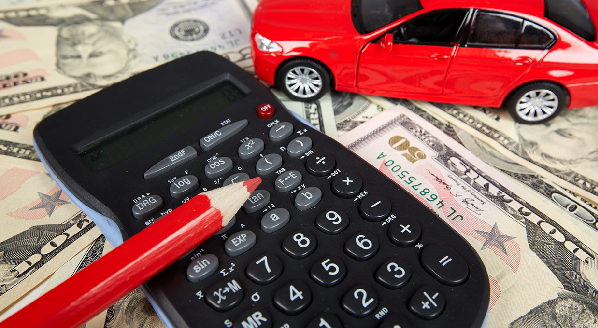
If you are thinking about buying a new or used automobile, you may be looking at online auto loan calculator to determine what you can afford to pay. These types of loans will help you calculate your auto loan payments based on the amount of loan and estimated APR you think you can get on your interest rate, giving you a general idea as to how much car you can afford. But, you may have many questions about basing a loan using these types of systems. Here is some information you will need to know.
Can You Trust an Online Auto Loan Calculator?
Yes and no. An online auto loan calculator is a great way to determine approximately how much car you can afford. If a car is $10,000 and you think you can get approved at 5.9 percent APR, the auto loan calculator will tell you what your payment will be if you take the loan out for three years, four years or five years. However, in reality, your car may be slightly lower or higher than the numbers you ran, you may get a higher or lower APR, your payments may not last a full three or five years or you may not include taxes, fees and licensing into your calculations. As you may learn in
traffic school or a
defensive driving course, they are a great tool but they are not perfect.
Key Factors Influencing Online Auto Loan Calculator Precision
What Factors Cause the Online Auto Loan Calculator to Vary?
As was mentioned above, there are many factors that can cause the online auto loan to vary. The largest is that there is no way to determine how much money you will need to pay for taxes, fees and licensing. As such, there is no way to include this information. This can be a couple of thousands of dollars, depending on the state you live in, and is typically rolled up into your payments. This can drastically affect your monthly payment and the interest you pay.
Another factor is your down payment. You may not include your down payment into the equation when doing one of these calculators. However, it should be. It affects how much you will have to pay over the life of the loan and the interest rate.
Lastly, the features you are guessing on cause the auto loan calculator to vary. When you are using this tool, you often put in whole numbers. You may put in $20,000 for a car, but in actuality, the car may be $21,999 or $18,599. These factors can cause the amount you are shown on the calculator to vary.
How Much Do Payments Usually Change in Reality?
Payment calculators are great at giving you an estimated amount that you will pay for a car. But they don't give you an exact amount. The exact amount can vary heavily if you over or underestimate the amount of interest you are paying on a car or the amount the car will cost. However, if your numbers are relatively close, you can expect that the payment will be within $100 of the amount you are quoted on the screen. If your estimates are extremely off, your payment can vary more than this. Talk with a dealer to get an exact number if money is your primary concern.
If you are looking to obtain an auto loan, you may play around with an online auto loan calculator to get an idea as to how much car you can afford. However, these calculators should be taken with a grain of salt. They can give you a rough estimate as to how much you can expect to pay, but they can't give you an exact amount. There are too many variables that can change and affect your exact monthly price.
How Do Other Countries Dismiss Traffic Tickets?

In the United States, if you are cited for a traffic infraction, this infraction shows up on your driving record. However, depending on where you reside, you may be able to take
traffic school every one to three years to have one ticket, such as a speeding ticket, red light infraction or other similar ticket, removed from your record. This may leave you wondering if this is standard in all parts of the world or how other countries dismiss tickets. Here is more information about dismissing or removing tickets from driving records in other parts of the world.
United Kingdom
In the United Kingdom, they work on a points system that is very similar to those used in the United States. You get a certain number of points and once you exceed that points value, your license can be suspended. However, in the United States, you can take traffic school to remove one of these tickets and the points from your record. This is not an option in the United Kingdom. They only way to prevent points from hitting your record is to
fight a ticket or not to get a ticket in the first place, unless you received a
speeding ticket. Speeding ticket offenders can avoid a speeding fine, points and/or court by taking a 4-hour Speed Awareness Course.
For other traffic offenses, the UK's National Driver Offender Retraining Scheme (NDORS) offers a range of courses which are designed to cover most low level moving traffic violations.
Australia
In Australia, the traffic ticket system is set up like it is in the United States. Each state has their own set of rules and laws. Just like in the United States, most states do have a points system in place. If you get too many points on your driving record for traffic infractions, your license will be suspended. However, just like in the US, in most states, you can
attend traffic school to remove one ticket from your record. Once again, the frequency with which you can attend the school or take the course varies from state to state. Some are two years and others are four. And the number of points dismissed varies by state. However, if a state allows it, it’s a great way to remove unwanted points from your record.
Germany
Germany is another country that issues points based on the citations you receive while driving. These points can remain on your record for 2 1/2 years up to 10 years. If you receive a large number of points, your driving license will be suspended and you
must go through a psychological examination to attempt to get your license back. While this state does not allow traffic school, you can get points removed from your record by taking part in formal training schools that are offered by the government in the country, in certain cases. A judge has to approve the training class and the removal of points based on what your offense was.
Italy
Italy has one of the most unique driving systems around.
Drivers automatically start with 20 points on their driving record. If they drive well for two years, they receive two additional points, up to a maximum of 30 points. If they receive an infraction, they lose points. If they lose all their points, they can have their license suspended. Italy does not offer driving school or any other form of training. The only way to earn your good points back is by driving safely and following all traffic laws.
Every country has different laws when it comes to driving, driving infractions and licensing. Learning about the different country will help you see how strict your area is or how laid back it is compared to various countries around the world.
TOP 3 DRIVING TEST FAILS
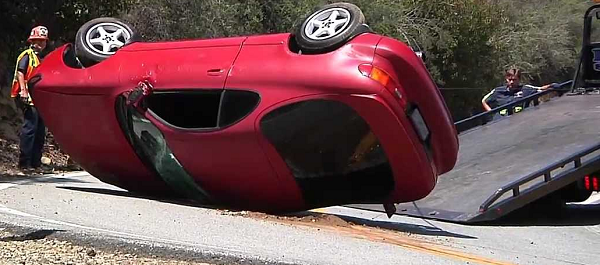
You hold your breath as you carefully turn on your blinker to make a right turn onto a four-lane road. Your passenger helpfully advises, “Get into the left lane,” and you do. And that’s why you flunk your driving test — you should’ve gotten into the right lane, then signaled, looked over your shoulder and changed lanes. Darn it!
Beyond the Fails: Understanding Driving Test Challenges and Solutions
If you were unsuccessful on the first try at your driving test, it probably made you feel like a big old loser. After all the buildup, having to retake an
online driver's ed course or going to work and telling people you failed felt like wearing a “dunce” cap and sitting on a stool in the corner.
You're not alone, if you're one of the many people who didn't pass right away. In the ‘90s, the state of California actually made its driving test easier because so many people — 64 percent! — were flunking on the first try. But anyone who’s failed their driving test for making a simple error can’t hold a candle to some people who have failed their tests in spectacularly bad fashion. Here are the TOP 3 offenders:
Sink or swim
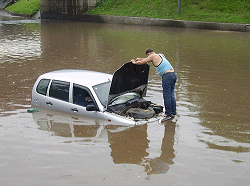
One lady in England reportedly showed up to take her test — for the fifth time — and drove straight into a river. Luckily for her, her swimming skills got her back to shore. The instructor wasn’t so lucky, however. He climbed on the roof of the car and yelled for help.
You can read the full story< a href="https://www.1stdrive.com/funny-driving-lesson-stories/">here.
Take it to the bank
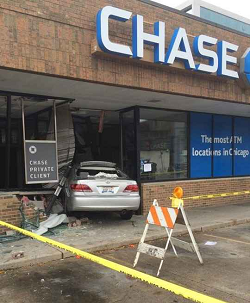
In another widely reported case of flat-out nutty driving tests, a woman failed because within 10 seconds of getting behind the wheel, she drove into a bank and flipped her car on its roof.
For Full Story,
CLICK HERE
If at first…
For some reason, many of the craziest driving tests tend to pop up in England — driving on the wrong side of the road, maybe?
In one widely publicized case, a 42-year-old man reportedly failed his driving test
36 times. But, good news, the 37th time was the charm!
Another 30-year-old man still hadn’t passed after
86 tries...
And another English lady was said to have failed her driving theory test some
110 times...
For Full Story,
CLICK HERE
Why is it so hard for some people?
The requirement of a test to get a driver’s license exists in some form throughout the world, and road tests are designed to test a driver's ability under normal conditions. In the United States, one of the reasons that passing driving tests can prove difficult is that they can vary by state.
Just before the turn of the 20th century,
New York City and Chicago became the first places to require passing a test before being allowed to drive a vehicle. In 1903, Missouri and Massachusetts became the first states to require that drivers have licenses, but Missouri didn’t require a test!
Your mileage may vary
Since then, there’s never been a standardized driving test in the United States, and driving requirements vary. In South Dakota, you must be 14 years and 3 months old to get a restricted license. In
New Jersey, the age is 17. Drivers younger than 18 typically are required to take some type of driver education course before testing for a license. In New York, that restriction also applies to adults driving for the first time.
Driving can be tough
With all the varying restrictions, it’s no surprise that some would-be drivers won’t pass their test on the first go — or maybe even the 10th. But as with many activities in life, practice makes perfect.
For drivers who have received a moving traffic violation or wish to earn a discount on car insurance,
defensive driving courses or traffic schools can be the solution. If you’ve gotten a traffic ticket, traffic court in your county may let you go to traffic school to have the ticket dismissed with no points added to your record. If you voluntarily enroll in
traffic school, you may even earn a safe driver discount from your car insurance company.
How to get a speeding ticket off your driving record

Speeding tickets tend to happen when you least expect them, and when your funds seem to be at their lowest. But there's a much bigger danger beyond just your rapidly shrinking bank account — points on your license. Tally up enough of those points, and you may find yourself not only broke but also on the bus. But there are ways that you can get a speeding ticket wiped entirely from your record completely.
What is the best way to fight a traffic ticket?

Every state in the nation has their own way of handling speeding tickets, with some being more lenient than others. There are certain things that stay the same across the US if you plan to fight the ticket. For all states, you'll have a chance to tell your side of the story if you feel there was a mistake made when issuing the speeding ticket. For example, if you know you were going 55 miles an hour when the officer clocked you at 65, then his radar gun or detection device may have been poorly calibrated or just plain broken. Always plead not guilty in any court of law if you intend to fight. In all states, you'll need to fill out the proper paperwork and pay the court fees to get your record and plead your case.

When you argue your case in either a conference or a court, you need to know the regulations that will help you win. For example, radar units are supposed to be calibrated before every shift, and before and after an officer uses it to clock a speed. These types of stringent requirements are difficult to follow for a busy speed trap, so you may be more in luck than you think. Evidence like camera footage may help you prove that the light was yellow by the time you crossed into the intersection. The court will consider your past driving records to help make their decision, so highlight any good behavior on the road too. You also can hire a lawyer who may be able to use their skills and expertise to get your ticket completely cleared for your record too.
What are the benefits of taking online traffic school?
 Traffic school
 is offered in most states as a way to clear your record. Depending on the severity of your offense, it may be mandated that you take these classes. Typically, you'll want to plead guilty if you intend to take the classes, but you don't have to. For example, in California, you can still fight the ticket and potentially have the option to take traffic school if a judge allows it. However, the judge does not have to justify their decision to you if they don't allow you to take driving school, so bear this in mind if you're weighing your options.

If you live in the states of
Arizona,
Florida,
California or
Texas, you can have the ticket dismissed entirely if you take traffic school. If you live in
New York state, traffic school will take up to 4 points off your license. Arizona, Florida, and Texas will only allow you to take the traffic school option once a year. In California and
New York, it's up to 18 months. You should have had only one moving violation, and it must be for a speeding ticket as opposed to reckless driving to get the points removed. Another major bonus in taking traffic school is that you may be able to reduce the cost of your insurance as well as get the points removed.
How Old Is Arizona in Comparison to the Other States?

Technically the Earth is about 4.5 billion years old, so Arizona has been around for quite a while. But the space on the map didn't technically become official until 1912. If fact, it recently had a birthday in February. We're not certain if households across the state lit 105 birthday candles for it, but we also can't speak for what people choose to do in their own homes. How old is Arizona? How does this birthday stack up to the other states? Find out more about the history, the dates, and the reason why Arizona is so darn young.
The Historical Reasons Behind Arizona's Recent Statehood
Other States
The oldest state is technically Delaware, which became a state in 1787. Though the originally 13 colonies were established around the same time. Of course, that's where our country started, way out there in the East. But states in the south followed pretty quickly. Georgia became a state in 1788, which is a pretty fast takeover for a country that was still trying to get its legs under it.
It took a little while to cross over to different territories, but there was a major upswing in terms of land mass for many years afterward. Ohio was established in 1803, while Minnesota was first named a state in 1858. But it wasn't necessarily a purely east to west venture. Oregon became a state in 1859. So really, when you think about it, Arizona is kind of like the 19-year-old at a party who's sure that 25 is the end of the line when it comes to youth.
So, What Happened?
Knowing the state's history is the key to knowing why Arizona is such a novice when it comes to survival. It was the very last state to be admitted into the union before the outliers Alaska and Hawaii. But there's a reason for this: Arizona was a part of the US land holdings, it was just under a different name and didn't have state privileges. Arizona used to be a part of the territory of New Mexico, before it became a separate territory in 1863. History is still unsure exactly what the name even means. Some people say it's from a phrase about oaks while others say it's about spring. Both features seem uncharacteristic of the dry and extremely hot spot in the US, but to each their own.
It seems like Arizona may not even have become a state if not for a little change in 1854. The discovery of copper was really the main reason why the territory of Arizona separated from New Mexico (which didn't even achieve statehood until just before Arizona did in January of 1912.) It's possible that New Mexico was thinking it just didn't need all that money coming from copper, but it's more likely that certain people wanted to capitalize on the valuable resource. It was the industry everyone wanted to be in until about 60 years ago. Once WWII ended and air conditioners became more common, making it much easier to move to the dessert areas, and the population started to boom in Phoenix. It blossomed so much, that currently Phoenix is one of the top cities issuing traffic tickets which are only dismiss-able by taking
traffic school.
So, What's Next?
Arizona has some spectacular scenery that's much older than the state itself. Between the people, the places and the weather here, Arizona may not have been the first state in the nation, but it will likely age just as well (if not better) than the rest of the states.
How to Get Traffic Ticket Reduced

Traffic tickets are not welcome no matter why you get them, and they will always pose the receiver with a dilemma: to pay, to ignore, or to fight? A ticket can translate to potential points on your license which can increase your chances of having your license taken away. It can even interfere with your job if you get too many of them. And they're not cheap. Just one ticket in California can run you more than $230.00 if you're caught going 15 miles over the limit. Most people will go to
traffic school to stop the points from going on their driving record, however, getting your traffic ticket reduced is an option. It normally starts with the date on your ticket.
Show Up - In Person

It's possible that you could defend your ticket in writing, but it's not always offered and not necessarily recommended. It's much easier for an official to ignore or skim a written request than it is when a person makes the effort to defend themselves in the flesh. Plus, if you write to contest the ticket and lose, you generally can't appeal the decision. Depending on where you live, you may have a traffic court date or potentially a settlement conference to attend to start the process. Taking the time off from work may be a hassle, but if you the costs are high or if you feel like the officer made an error, then it may be worth it. A conference will be a good time to determine if there's a way to get the ticket knocked down to something a little easier on your record.
Going to Trial
Trials will eat up your time and money with court dates and fees, but again, a trial may be what keeps you from having a major black mark on your driving record. Sometimes the officer won't show up, in which case you win by default. You may have to do some research on the officer who gave you the ticket (e.g., when their radar gun was last calibrated, etc.) in addition to having your own arguments. You can also hire a lawyer to fight it for you. Those that specialize in traffic tickets may have more of a chance to get your ticket reduced to a minor parking violation. Lawyer rates vary though, so do some research before going this route. Your case will be a civil case, so the evidence will be about witnesses, statements, and physical evidence (e.g., camera footage.)
Mitigation

Mitigation is a way for you to admit fault, but explain the circumstances. For many, this will become an exercise in their negotiation and people skills, but sometimes it's not even taken into consideration. There are certain judges out there who will reduce a $120 traffic ticket by $30 and extend the deadline — without even asking you to make a case. But most of the time, if you have a good driving record and a decent story, you'll probably see some leniency after giving the details. Whatever deal is offered up is ultimately yours to either take or appeal, but you would need to do so with extreme caution. Any potential sign of disrespect to either the judge or law enforcement in general is not going to be appreciated. (We're sure you're surprised.)
Alternatives
Each state is different when it comes to alternatives for reducing a traffic ticket, so check into the specifics for all the above. Some states will allow you to take traffic school or a
defensive driving course to avoid the points and some states will let you wipe the ticket entirely if you keep your driving record clear for a full year. Regardless of where you live though, there are ways to reduce your traffic ticket if you know where to look.
Other Resources
What Information is on my Driving Record and Who Can See it?

Your driving record can have a major impact on your life. It affects your auto insurance rates, can affect your ability to get a job driving, and can even impact whether a police officer gives you a ticket or not. Unfortunately, most people do not know a lot about their driving record. Here are some of the questions you may have about that important piece of paper and the answers to these questions.
Who Can See My Driving Record?

Your driving record is public record. As such, anyone who requests to see your driving record has access to it. However, most often, your insurance company, a potential employer, a current employer you do driving work for, and law enforcement request copies of and look at your driving record.
What Type of Information is on a Driving Record?

Your driving record contains information about your past driving offenses. This includes traffic infractions, accidents and criminal driving offenses, such as driving under the influence charges. Your record will also detail how many points are on your driving record. Every state uses a point system based on the severity of an infraction you received. For example, if you ran a stop sign, you may get one point on your record, whereas an accident you were at fault for is two points. If you reach a certain point level, your license may be suspended. Additionally, depending on the state you reside in, your driving record may also include the age in which you became licensed to drive, if your license has ever been suspended and for what reason, and any cars that are registered to you.
How long do DMV points stay on your driving record?
 Your driving record lists how many points you have. This may lead you to wonder how long points stay on your record. Unfortunately, there is not a one-size-fits all answer to this question. The answer varies based on the state you reside in. In most states, accidents and tickets stay on your record for three to five years, but can stay on as long as seven years in some places. Criminal traffic infractions can stay on your record for anywhere from seven to ten years. Also, some states allow you to remove points by attending traffic school. The number of points you can remove is typically one or two points every two to three years. However, not every state allows this. Always check laws in your state to find out how their point system works and how long points stay on your record. Usually some form of traffic school or defensive driving course will take off or hide multiple points from one's record.
Do driving records from different state look the same?
 Driving records from all states look very similar but they do not look identical. As was mentioned above, the rules for points and how long infractions stay on your record varies from state to state. As such, the records themselves vary. It is also important to note that the records a law enforcement agency can view are different than the ones that are public record that insurance companies and employers view. A law enforcement agent can see your entire driving record. Many take a good look at this information when deciding whether to let you off with a warning or a ticket.
Your driving record can have an impact on your life. As such, it is always wise to take the time to learn about this topic. This can help you to better understand what a driving record is, who sees it, what is on it and how that information is used.
Driving records from all states look very similar but they do not look identical. As was mentioned above, the rules for points and how long infractions stay on your record varies from state to state. As such, the records themselves vary. It is also important to note that the records a law enforcement agency can view are different than the ones that are public record that insurance companies and employers view. A law enforcement agent can see your entire driving record. Many take a good look at this information when deciding whether to let you off with a warning or a ticket.
Your driving record can have an impact on your life. As such, it is always wise to take the time to learn about this topic. This can help you to better understand what a driving record is, who sees it, what is on it and how that information is used.



 Live Chat