Melrose Place Star Pleads Not Guilty to Manslaughter

The star from the original
Melrose Place continues to make headlines following her DUI car crash last June in New Jersey, which resulted in the death another motorist.
Amy Locane-Bovenizer is facing manslaughter charges.
The 39-year-old mother of two pleaded not guilty to aggravated manslaughter and assault by auto charges, reports say.
Somerset County prosecutors say Locane-Bovenizer's SUV hit the vehicle of 60-year-old
Fred Seeman as he was turning into his driveway, breaking 10 of his ribs and killing his wife.
Officers detected alcohol on Locane-Bovenizer's breath and arrested her, but she was shortly freed after posting $50,000 bail.
We talked about this subject before, but it never ceases to amaze and anger us. We come across many people from different walks of life in our
Traffic School.
Celebrities often drop by our Hollywood classes, showing that even stars get traffic tickets. Everyone slips up with speeding now and then. But fame brings **big responsibilities.** Reckless driving, especially drunk driving, isn’t OK for anyone. It's even worse seeing a star in the news for it. Seriously, if you're having a few drinks, hire a limo—you can totally afford it!
Insurance Reduction for New York Drivers
New York drivers fork out some of the steepest insurance fees in the nation. Lucky for them, New York is one of the rare states that **requires** insurers to lower premiums. The catch? Drivers need to finish a NY DMV-approved **Defensive Driving Course**. Here’s the kicker: no need to sit in a classroom for six hours! **Online options**, like the Improv Defensive Driving Course, let you **learn at your own pace**. Check out these frequently asked questions about the course.
Q. After completing the Defensive Driving Course (aka as PIRP - Point and Insurance Reduction Course), how do I receive the insurance reduction?
A. Upon completion
Improv's Defensive Driving course, we will issue you certificate of completion. If you present your certificate to your insurance company or agent within 90 days after course completion, your liability and collision premium reduction will begin immediately, retroactive to the date you completed the course. If you present your certificate more than 90 days after course completion, the insurer may issue the premium discount effective from the date presented.
Q. Will the PIRP course prevent my insurance company from raising my premiums?
A. No. Insurance reduction does not prevent general premium increases, or premium increases due to violations or accidents. However It provides a 10% reduction for three years, from the base rate of your current liability, no-fault and collision premiums.
Q. What if more than one person named on a policy completes the PIRP course?
A. The insurance premium reduction applies to all motor vehicles principally operated by the motorist who completes the course. The reduction can be applied to only one driver for each covered vehicle.
Q. If I complete a DMV approved motorcycle safety/accident prevention course, does the insurance reduction benefit extend to my automobile coverage?
A. Yes. The reduction applies to the liability and collision insurance premiums for both your motorcycle and automobile.
Q. Will young operators (under 18) and drivers participating in assigned risk pool receive the insurance premium discount?
A. Yes. Any insured driver who is the principal operator and completes a Point & Insurance Reduction Program course will receive the reduction.
Q. If a youthful operator is already receiving a driver education reduction, will the PIRP discount also be applied?
A. Check with your insurance company or agent to find out if both reductions will be given at the same time
New Car Buying Tips: Dealer Add-Ons
New Car Buying Tips
Dealer add-ons - a value service or a rip-off?
Once during a fun trip to a car dealership, we tried to buy a Ford Fusion Hybrid. A tiny paper was stuck beside the window sticker, showing some extra costs.
This innocent sheet of paper contained two seemingly "valuable" add-ons, adding $600 to the sticker price of the vehicle. In the industry, this list of add-ons is called the "supplemental sticker " We call it the "rip-off sticker", you judge for yourself.
After-Market Add-Ons
This deceiving practice allows dealers to advertise a very low price for a vehicle (sometimes below a sticker). Then use a supplemental sticker to add high-profit items that hold little or no value to the consumer. In our experiment case, the sticker added two products: an interior "protection" package, and an "Express Code Marking System."
The interior protection package is a chemical sprayed on the vehicle's upholstery protect it from stains. Grand-Total: $195. At first glance, seems like a bargain, who would want stains on their brand new upholstery? But being scholars of a
Defensive Driving School, we believe in research and facts. A quick search online found a bottle of 3M Scotchgard Auto Interior Fabric Protector for about $9 on 3M's website. This product promises the same advantages as the stuff sprayed onto your upholstery at the dealership, but costs $186 less.
The second product was the Express Code Marking System. This marking system consisted of a special label placed on key body parts of the vehicle that if removed, would leave the imprint of an ultraviolet identification number. It wouldn't notify the police, ruin the part or make any sort of noise. The dealer was charging $400 for this product. Now do you really think that someone who is about to steal your car will pause and look if your car is code marked? Chances are, if someone wants to take your car and chop it for parts they will... the fact that they won't be able to re-sell parts won't give you much comfort. Certainly not $400 worth of comfort. In our humble opinion, if anyone should pay for this service, it should be your insurance company. Your money would be much better spent taking an
insurance discount course and saving additional $$$ on your auto premium. Many states mandate insurance carriers to offer you an additional discount for taking a
defensive driving course.
My Used Car’s a Lemon! Am I Stuck With It?
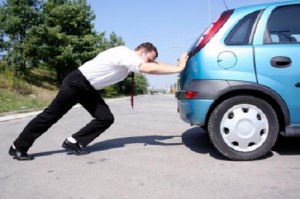
Working in traffic school we often hear nightmare stories from students who bought a used car that turned out to be a
lemon. So we decided to take a little detour from our defensive driving courses and do some legal research. Lemon laws protect new car buyers in every state in the nation, but it's far more common for used car buyers to get stuck with an unreliable vehicle, or to incur repair bills that cost more than the car. For such unfortunate consumers, it often goes downhill from there.
Used Car Lemon: Legal Rights and Actionable Steps
Owners of lemons, as these cars are often called, must still make car payments while their vehicle sits idle. One-sided arbitration clauses — built into practically every dealer's vehicle sales contract — work to keep many used car buyers from taking a case to court. Finally, a buyer may have to prove that the vehicle's problems existed prior to the sale in order to get some compensation. These factors plus the subject's complexity leave many American consumers in the lurch.
"Many of these cars are dangerous to drive," according to John Van Alst, used car fraud expert with the
National Consumer Law Center. "Even if not, when a car becomes inoperable, it becomes a liability instead of an asset."
Although it's not always the case, some of these used lemons are sold fraudulently, such as when a dealer fails to disclose the vehicle's history, misrepresents the vehicle title or tampers with the odometer. Often, these dealers prey on the most vulnerable, low-income segment of the population.
A New Twist: Used Car Lemon Laws
The frequency and severity of consumers' used car problems has led some state legislatures to pass new laws. Currently, though, only six states,
Connecticut, Massachusetts, New Jersey, New Mexico and
New York have lemon laws on the books. The laws provide a statutory used car warranty, often based upon the age or mileage of the vehicle. If the vehicle exhibits problems during the warranty period, the dealer is given a chance to repair them. If those fixes don't work after several tries, the dealer usually must either replace the car or refund the buyer's money.
At least seven states have some other form of used car buyers' rights, requiring used car warranties or setting minimum standards for the sale of used cars: They are Arizona, Connecticut, Illinois,
Maine, Nevada, New Mexico and Pennsylvania. Still other states, including North Carolina, have an Unfair and Deceptive Practices statute that can be invoked. But only those states with true used car lemon laws require the dealer to provide a replacement or refund for your car.
The Sorry State of Used Car Regulations
Van Alst feels that most states aren't very effective at protecting used car buyers from the myriad ways they can be swindled. "Most existing used car lemon laws are so limited in scope — the number of days the car is covered and the allowable mileage — that the consumer may not experience the problem or won't have a chance to act on the problem in that time period," he said.
For example, Arizona law covers a used car only if a major component breaks within 15 days or 500 miles of its purchase — whichever comes first. For new cars, though, those terms extend to two years or 24,000 miles.
By contrast, many European consumers have stronger protections. In France, for example, a car buyer may cancel the transaction up to seven days after the sale. And a 1999 European Union directive allows consumers to seek redress for any problem that makes a vehicle unfit to drive for a full two years after the purchase.
As is always the case when buying a car, the only way to fully protect yourself is to come armed with information, most easily obtained on the Internet. Many consumer advocacy sites (such as The Center for AutoSafety) discuss new car lemon laws in detail, but obtaining information on used car laws is trickier. We found Car Lemon (an attorney referral site) and Autopedia to have the broadest information on states' used vehicles lemon laws.
Is Geography Destiny?
What about U.S. consumers who don't live in a state with a used car lemon law, or whose state law doesn't cover their individual situation? In those cases, there are federal laws that may help:
- Uniform Commercial Code (UCC) — Under the UCC, a used car sale automatically includes an implied warranty that the car is fit for transportation. However, used car dealers may "disclaim" (deny) the implied warranty if they sell the vehicle "as is" — which they typically do. In the few states that prohibit dealers from disclaiming the implied warranty (such as the District of Columbia, Maryland, Massachusetts and West Virginia), the UCC can be more effective than a used car lemon law would be.
- FTC Used Car Rule — The Federal Trade Commission requires dealers who sell six or more cars per year to post a in every used car that's offered for sale. The guide must show whether the vehicle is being sold "as is" or with a used car warranty, what percentage (if any) of repair costs is covered by the dealer under the warranty, and a list of the major defects that can occur on used vehicles.
- Magnuson-Moss Warranty Act (a.k.a. Federal Lemon Law) — This law prohibits the disclaimer of implied warranties when a car is sold with an express written warranty. It also provides for the awarding of attorney fees in particular cases.
How To Prepare for Battle
In order to determine if you truly have a lemon and to build a solid argument, make sure you've taken the following steps.
Start by getting vehicle history reports from **Carfax** and **Autocheck**. These reports reveal many **hidden issues** like past accidents and branded titles on used cars. Edmunds suggests running both reports if you can, as they might show different info. Here's a key fact: U.S. states don't make insurance companies report when they fix a car, but Canada does.
Do not rely on reports alone. Take the car to a qualified mechanic
and to a body shop that can spot signs of structural damage. Make sure they put it up on a lift. As with vehicle history reports, this is best done before the vehicle purchase, but it's still critical to determine the source of the vehicle's problem after you own it.
Document the vehicle's service history and retain all work orders and receipts. Download or print a vehicle repair log from Fraud Guides or Microsoft.

If the dealer still won't provide satisfaction, or if you suspect fraud, send a complaint to the vehicle's manufacturer (in writing) and the state attorney general's office or department of consumer protection. The federal government's Consumer Action Web site provides detailed information on how and where to file complaints (including sample letters), dispute resolution services, small claims court and more.
Calling Out the Big Guns
You don't necessarily have to engage a lawyer to fight for your rights; sometimes, a quick trip to small claims court will do the trick. But a good lemon law attorney can determine whether you've got a serious case (especially when safety is an issue) and can shepherd you through the legal process. Many lemon lawyers don't charge client fees, hoping to collect instead from the defendant.
You can find lemon law specialists in your state through the National Association of Consumer Advocates. Free legal aid to low-income individuals is available through the non-profit Legal Services Corporation and National Legal Aid and Defender Association.
Pricey used cars test conventional wisdom
Always saving money at our online traffic school. Conventional wisdom says **buying used cars** saves money. But, **rising prices** in the U.S. auto resale market might **challenge** that belief.
Edmunds.com estimates the average price paid for a used, three-year old auto has risen $1,471 -- or 8.5 percent -- since last year, reaching $18,832.
The price you'll pay for used SUVs like this Chevy Tahoe may have risen substantially. What's behind the rise? Edmunds analysts believe it's a combination of bargain-hunting consumers and the rise of certified pre-owned car sales at dealerships:
"Used cars are in great demand and relatively short supply, so their prices are remarkably high," stated Edmunds.com Analyst Joe Spina. "Automakers understand that many traditional new car buyers are considering used cars, and in response are emphasizing their certified pre-owned car sales programs through which they can earn revenue on used car sales. This effort will keep used car prices high since CPO cars sell for a higher price than comparable noncertified used cars, raising the ceiling for the entire used car market."
Indeed, Edmunds.com estimates the percentage of used cars sold as CPO rose from 13.8 percent to 18.5 percent.
This data is interesting, but it doesn't look like every used car buyer is likely to encounter sharply higher used-car prices than they did last year. And when they do, I'm not sure it will be because of CPO and frugal consumers.
After all, a lot of the biggest price hikes seem to be focused in trucks and SUVs, and I'd be willing to bet that has more to do with gas prices than anything else.
After all, the resale values for trucks and SUVs, which generally get poor gas mileage fell sharply in response to the gasoline price spikes of 2008.
Due to the depressed global economy and the resulting lack of demand, gas prices have been fairly stable since then. People, as they are wont to do, have forgotten how painful those big gas bills were back in 2008, so they're more willing to buy SUVs and trucks than they were when gas prices were high.
The other big movers were American brands, which I would wager have benefitted from improved brand perception as American car buyers have taken notice of their reliability and design upgrades.
On the other hand, if your preferred car is a Japanese sedan or station wagon, you might be in luck. The Edmunds.com value estimates have the Honda Accord and the Subaru Outback coming in at a lower than last year.
We had a lot of spirited discussion in the comment section a few months ago about whether buying a new car could be financially smart if it was close to or less than the price of a used model thanks to a generous rebate or other dealer incentive.
I think in the majority of cases, buying a low-mileage used car is probably the better decision. That said, rising used car prices and higher rates on used car loans are going to change the equation a little bit on some vehicles, and refusing to acknowledge that could leave you missing out on getting a new car for the price of a used one.
So what do you think? Is it time for the frugal to consider new cars? Why do you think used cars are getting pricier? leave your comments here on our
defensive driving course blog!
Top Ten Cheapest New Cars
Buying a new car can be smarter than used when you think about **total cost**—like special deals, repair costs, gas mileage, and wear. The *great news* for practical shoppers: you can buy a **new car under $15,000** and save money! With good credit and some cash down, you might get one for less than daily takeout.
We included some choices on the list that include sedans, hatchbacks and coups. The prices are the sticker price for the cheapest version of the model, so you may be prepared to drive a stick shift and may forgo some luxuries like air conditioning.
Ranked in order of cheapest (don't confuse with Best Value) to most expensive, the winners are:
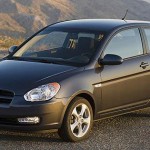
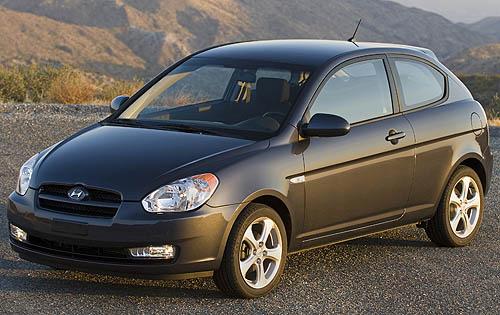
1. 2010 Hyundai Accent Blue Coupe, $10,690.00
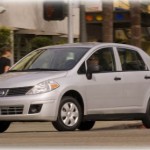
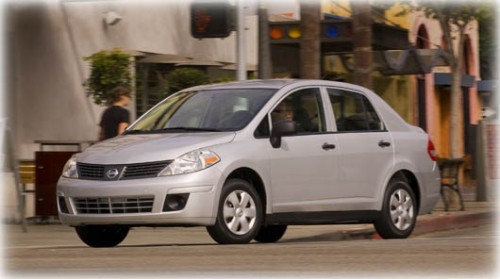
2. 2010 Nissan Versa 1.6 Base Sedan, $10,730.00
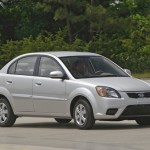
3. 2010 Kia Rio Base Sedan, $12,390.00
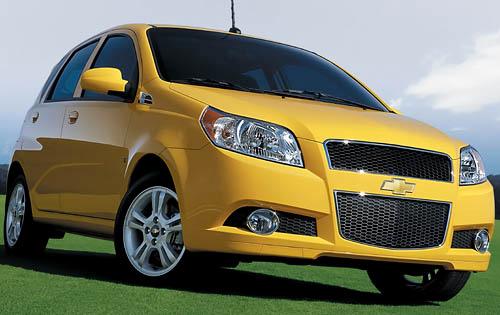
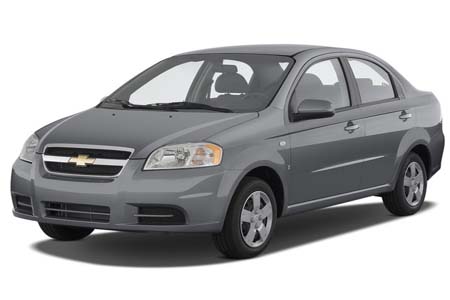
4. 2010 Chevy Aveo LS Sedan, $12,685.00
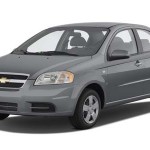
5. 2010 Chevy Aveo5 LS Hatchback, $12,835
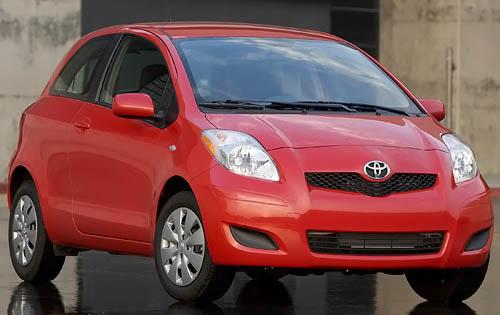
6. 2010 Toyota Yaris 3 Door Hatchback, $13,365.00
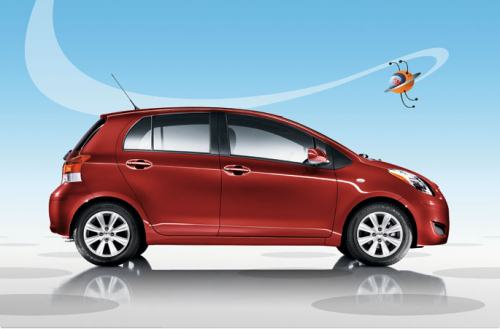
7. 2010 Toyota Yaris 5 Door Hatchback, $13,665.00
8. 2010 Kia Soul Base, $13,995.00
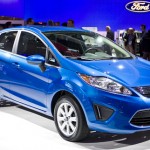
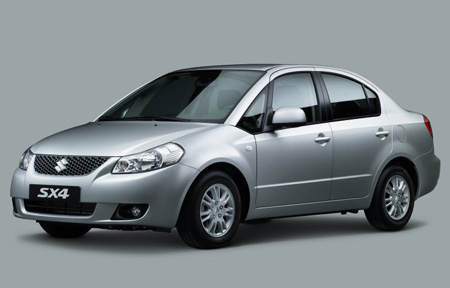
10. 2010 Suzuki SX-4 Base Sedan, $14,094.00
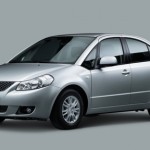
The Suzuki SX-4 is one of the better looking cars on the list that also commands great reviews. But no air conditioning would be a deal breaker for us (considering our
Defensive Driving Course Headquarters are in Los Angeles... where it hit 115F this summer).
Operating a traffic school, gives us an access to many experts and individuals with automotive expertise. A quick research has confirmed that if we were handing out the award for best value on the list, it would go the new Ford Fiesta S (which is the only 2011 model on the list). Ford packed a lot of extra goodies into the Fiesta, including power mirrors, capless gas filler, aux in / USB jacks and A/C, yet has managed to keep the price reasonable for the entry level model. Surprisingly it also offers a sportiest ride on the list. If you enjoy getting your freak on with a twisty road, this is where you should begin shopping.
Word of caution: it isn’t easy to find base models on dealer lots, since they take up as much room as loaded models, have less margin and can be hard to move. If you have to special order one, expect to pay full sticker price instead of haggling over invoice plus $500. On the other hand, sometimes a dealer can be very motivated to sell a year old entry level car, even if it’s in a higher trim level. It may take some time (and travel) to find exactly what you're looking for, but we always thought that the hunt is half the fun.
Google Cars Drive Themselves, in Traffic
MOUNTAIN VIEW, Calif. — **Folks cruising** Highway 1 from San Francisco to Los Angeles might’ve spotted **a Toyota Prius sporting** a strange funnel-shaped cylinder on top. Even trickier to catch? The person **in the driver’s seat wasn’t really driving!**
The car is a project of Google, which has been working in secret but in plain view on vehicles that can drive themselves, using artificial-intelligence software that can sense anything near the car and mimic the decisions made by a human driver.
With someone behind the wheel to take control if something goes awry and a technician in the passenger seat to monitor the navigation system, seven test cars have driven 1,000 miles without human intervention and more than 140,000 miles with only occasional human control. One even drove itself down Lombard Street in San Francisco, one of the steepest and curviest streets in the nation. The only accident, engineers said, was when one Google car was rear-ended while stopped at a traffic light. I wonder who took the blame there? I wonder if the driver could argue with a judge that they did not have to take an
online traffic school but the car computer should.
Autonomous cars are years from mass production, but technologists who have long dreamed of them believe that they can transform society as profoundly as the Internet has.
Robot drivers react faster than humans, have 360-degree perception and do not get distracted, sleepy or intoxicated, the engineers argue. They speak in terms of lives saved and injuries avoided — more than 37,000 people died in car accidents in the United States in 2008. The engineers say the technology could double the capacity of roads by allowing cars to drive more safely while closer together. Because the robot cars would eventually be less likely to crash, they could be built lighter, reducing fuel consumption. But of course, to be truly safer, the cars must be far more reliable than, say, today’s personal computers, which crash on occasion and are frequently infected.
The Google research program using artificial intelligence to revolutionize the automobile is proof that the company’s ambitions reach beyond the search engine business. The program is also a departure from the mainstream of innovation in Silicon Valley, which has veered toward social networks and Hollywood-style digital media.
During a half-hour drive beginning on Google’s campus 35 miles south of San Francisco last Wednesday, a Prius equipped with a variety of sensors and following a route programmed into the GPS navigation system nimbly accelerated in the entrance lane and merged into fast-moving traffic on Highway 101, the freeway through Silicon Valley.
It drove at the speed limit, which it knew because the limit for every road is included in its database, and left the freeway several exits later. The device atop the car produced a detailed map of the environment.
The car then drove in city traffic through Mountain View, stopping for lights and stop signs, as well as making announcements like “approaching a crosswalk” (to warn the human at the wheel) or “turn ahead” in a pleasant female voice. This same pleasant voice would, engineers said, alert the driver if a master control system detected anything amiss with the various sensors.
The car can be programmed for different driving personalities — from cautious, in which it is more likely to yield to another car, to aggressive, where it is more likely to go first.
Christopher Urmson, a Carnegie Mellon University robotics scientist, was behind the wheel but not using it. To gain control of the car he has to do one of three things: hit a red button near his right hand, touch the brake or turn the steering wheel. He did so twice, once when a bicyclist ran a red light and again when a car in front stopped and began to back into a parking space. But the car seemed likely to have prevented an accident itself.
When he returned to automated “cruise” mode, the car gave a little “whir” meant to evoke going into warp drive on “Star Trek,” and Dr. Urmson was able to rest his hands by his sides or gesticulate when talking to a passenger in the back seat. He said the cars did attract attention, but people seem to think they are just the next generation of the Street View cars that Google uses to take photographs and collect data for its maps.
The project is the brainchild of Sebastian Thrun, the 43-year-old director of the Stanford Artificial Intelligence Laboratory, a Google engineer and the co-inventor of the Street View mapping service.
In 2005, he led a team of Stanford students and faculty members in designing the Stanley robot car, winning the second Grand Challenge of the Defense Advanced Research Projects Agency, a $2 million Pentagon prize for driving autonomously over 132 miles in the desert.
Besides the team of 15 engineers working on the current project, Google hired more than a dozen people, each with a spotless driving record, to sit in the driver’s seat, paying $15 an hour or more. Google is using six Priuses and an Audi TT in the project.
The Google researchers said the company did not yet have a clear plan to create a business from the experiments. Dr. Thrun is known as a passionate promoter of the potential to use robotic vehicles to make highways safer and lower the nation’s energy costs. It is a commitment shared by Larry Page, Google’s co-founder, according to several people familiar with the project.
The self-driving car initiative is an example of Google’s willingness to gamble on technology that may not pay off for years, Dr. Thrun said. Even the most optimistic predictions put the deployment of the technology more than eight years away.
One way Google might be able to profit is to provide information and navigation services for makers of autonomous vehicles. Or, it might sell or give away the navigation technology itself, much as it offers its Android smart phone system to cellphone companies.
But the advent of autonomous vehicles poses thorny legal issues, the Google researchers acknowledged. Under current law, a human must be in control of a car at all times, but what does that mean if the human is not really paying attention as the car crosses through, say, a school zone, figuring that the robot is driving more safely than he would?
And in the event of an accident, who would be liable — the person behind the wheel or the maker of the software?
“The technology is ahead of the law in many areas,” said Bernard Lu, senior staff counsel for the California Department of Motor Vehicles. “If you look at the vehicle code, there are dozens of laws pertaining to the driver of a vehicle, and they all presume to have a human being operating the vehicle.”
The Google researchers said they had carefully examined California’s motor vehicle regulations and determined that because a human driver can override any error, the experimental cars are legal. Mr. Lu agreed.
Scientists and engineers have been designing autonomous vehicles since the mid-1960s, but crucial innovation happened in 2004 when the Pentagon’s research arm began its Grand Challenge.
The first contest ended in failure, but in 2005, Dr. Thrun’s Stanford team built the car that won a race with a rival vehicle built by a team from Carnegie Mellon University. Less than two years later, another event proved that autonomous vehicles could drive safely in urban settings.
Advances have been so encouraging that Dr. Thrun sounds like an evangelist when he speaks of robot cars. There is their potential to reduce fuel consumption by eliminating heavy-footed stop-and-go drivers and, given the reduced possibility of accidents, to ultimately build more lightweight vehicles.
There is even the farther-off prospect of cars that do not need anyone behind the wheel. That would allow the cars to be summoned electronically, so that people could share them. Fewer cars would then be needed, reducing the need for parking spaces, which consume valuable land.
And, of course, the cars could save humans from themselves. “Can we text twice as much while driving, without the guilt?” Dr. Thrun said in a recent talk. “Yes, we can, if only cars will drive themselves.”
I wonder if in the future your car will have to go to
traffic school?
Texting-and-driving bill dies
Senate hits a snag on ban for sending messages from the road. **Arizonans won't have restrictions on texting while driving** — for now, anyway.
Proposed legislation that would have prohibited typing, reading or sending text messages and e-mails while driving on a state highway died with an 11-11 vote by the Senate on Tuesday. The bill would not have prohibited talking on the phone while driving and would have allowed drivers to type a name or telephone number to make a call.
This is the second year in a row the effort to ban texting while driving has failed despite support from dozens of organizations, including cellphone-company representatives. The Arizona Citizens Defense League opposed the measure.
Legislators who voted against it acknowledged that texting while driving is dangerous, but said they opposed unnecessary government restrictions.
Sen. Ron Gould, R-Lake Havasu City, called the legislation a "nanny bill" and "feel-good legislation" that would have banned a practice already covered under current laws against reckless driving.
Supporters said the bill is about saving lives. They said parents would be able to tell children that texting while driving is illegal.
"It's such a dangerous activity to be texting while you're driving, that outlawing it would seem to be a given," said Sen. Barbara Leff, R-Paradise Valley.
Phoenix banned texting while driving within its city limits in 2007. Phoenix police Officer Luis Samudio said that about nine citations for texting while driving have been issued since the law went into effect.
"It is minimal," he said.
Read more here
If you have recently taken some type of
traffic school you know its very dangerous to text or talk while driving. Its been proven over and over. So please practice safe driving.
Pursuing good health is a laughing matter
Dr. Steven Sultanoff might not be a comedian, but he's been spreading the word about **therapeutic humor** for the past 20 years. This clinical psychologist, known more for his wit than his jokes, educates doctors and therapists on the benefits of laughter at Pepperdine University and in workshops across the state.
Over the years, Sultanoff has come up with his own model for helping people through applied wit and whimsy. He calls it Humor Matters. But it’s far more than fun and games—his approach to levity has a purpose. “It’s not like you sit down and I tell you jokes. You talk about something, then maybe I exaggerate something, and you laugh at it. And the reason I might have exaggerated it was to help you shift your thinking about whatever it was,” he says.
Sultanoff had the aha moment that would shape his career during a training session for cognitive therapy. He realized everything he was trying to accomplish—managing our thoughts, behavior, feelings and even biochemistry—could be effected with humor. He developed a three-component model: laughter, mirth and wit.
“When you laugh,” Sultanoff says, “it affects you physiologically; when you experience mirth, it affects you emotionally; and when you exercise your wit, it affects you cognitively.” He has been known to don a clown nose to change the mood during a session, and he often instructs his clients who suffer from phobias to visualize a time when they laughed so hard it literally brought tears to their eyes.
Sultanoff sees proof daily that the emotional shifts stimulated by this are a beneficial physical aid. “You feel less stressed, and it seems to increase the tolerance to pain.”
Recently, there has been much media fanfare over a growing community that believes in pairing a hearty guffaw with breathing exercises—known as laughter yoga.
Dr. Madan Kataria, a medical doctor from Mumbai, founded Laughter Yoga Clubs back in 1995. He and Sultanoff have appeared together on panels, and though their approach is different, their goal is shared. “In laughter yoga, anyone can laugh without comedy,” Kataria says. “You start by fake laughing, and then once you lose inhibitions, it becomes real—and contagious.”
It should come as no surprise that California is home to the most laughter clubs in the nation. “The last time I was in Los Angeles, I suggested they start calling it Laugh Angeles,” Kataria says, punctuating his sentence with booming ha-ha’s. Celebrities Goldie Hawn and Oprah have endorsed the shift to laughter therapies. Former ballerina and Playboy model Cynthia Toussaint is a believer as well. She founded For Grace, a nonprofit for women in pain, and selected Sultanoff to speak at the group’s third conference, Gender Matters. After decades of enduring complex regional pain syndrome—sometimes known as the suicide disease because of the constant pain—she says developing a more jestful nature has helped her weather years of suffering.
“There are many options for pain, and we need all of them,” Toussaint says. “Plus, you get to have fun.”
Medical practitioners agree humor is a welcome distraction and valuable therapeutic tool, though even Sultanoff acknowledges additional research is needed to determine if fits of giggles can ever be considered an actual cure.
Laughter being the best medicine will have to remain a cliché—for at least a little while longer.
As a side note. The Improv
Traffic School offers thier
online traffic school in a fun and simple way. We all know traffic school can be a bore but they make it fun and funny!
Cars Most Likely To Get A Ticket
Many think drivers in red cars get pulled over more, but that's not true. **Middle-aged males** who like fancy foreign brands, though, had better **stay alert**.
Men who drive a Volkswagen GTI or Mercedes-Benz CLS-63 AMG are twice as likely to get a ticket than the average driver. If they're in a Hummer, they might as well plan on it--drivers of the Hummer H2 face more than triple the chances of a citation.
"It's the combination of the male driver driving the big old Hummer and a mid-life kind of person feeling good," says Bob U'Ren, senior vice president at Quality Planning, a San Francisco-based company that validates policyholder information for auto insurers. "That's the magical combination that drives some of these things.
To determine the cars most likely to get a ticket, Quality Planning's analysts looked at traffic violation data from February 2009 through February 2010, counting the number of violations racked up by different car models. To account for the difference in number of cars on the road, they averaged the violation count per 100,000 miles driven. Vehicles that have been discontinued for more than 10 years were not included in the analysis.
The most-ticketed car on the road, the Mercedes-Benz SL-Class, is a two-door luxury convertible--suggested retail price for a SL550 Roadster is $102,600. Drivers of these cars are four times more likely to get a ticket than the average person.
Luxury coupes and sedans dominate our list: Only one SUV (the Hummer H2) and two hatchbacks (the Scion xB and Volkswagen GTI) appear on the top 10, and no minivans or wagons.
In fact, according to Quality Planning data, 8 of the 10 least-ticketed cars are SUVs and minivans. U'Ren says that's because drivers who carry multiple passengers--especially young passengers in car seats--significantly alter the way they drive. (For example, it's likely many drivers of No. 3, the Scion tC coupe, aren't toting kids.)
Our list of the cars most likely to get a ticket includes only two autos manufactured by Detroit's Big Three, both of them discontinued: the Hummer H2 and the Pontiac Grand Prix. Drivers of GM's discontinued sedan are almost twice as likely than the average commuter to be ticketed behind the wheel.
Another standout on the list: the Toyota Camry. Not known for its glamor or luxury (or looks, performance, style, etc...) it makes the list for reasons having little to do with its mainstream popularity. U'Ren says there's a large segment of Camry drivers who are proportionally disposed for violations: older women, who are less likely to be driving with kids. It's also important to remember that this segment includes the Solara coupe--a sportier version than the ho-hum Camry sedan. "Sixty percent of those drivers are female, and they're a little bit older--50 years old on average," U'Ren says. "That's the profile of the type of person that would buy and drive a Camry and Solara--and drive it quickly."
So, what to do if you do get pulled over for speeding? Don't automatically admit guilt. Don't assume you'll have to pay the full amount of the fine. And make sure you've done research about what your options are when you speak with the police officer. Many states allow discovery requests, which let drivers get police department information about their particular traffic violation--details like officer credentials, the device they used to monitor speed, traffic flow status, etc. If certain discrepancies come up, they could help reduce or remove the ticket fee, says Bonnie Sesolak, the development director for the National Motorists Association.
"Pay attention to what's going on around you when the officer pulls you over," Sesolak says. "Certainly be respectful. You can answer his questions, but you only need to answer the questions that are pertinent to why he pulled you over."
Or try chalking it up to the proverbial mid-life crisis.
If you happen to get a traffic ticket, chances are an
online traffic school will help you with your insurance. Depending on the state a
traffic school can even erase a point from your record.
Fighting Traffic Tickets – Is it a Good Idea?
**Figure Out If It's Worth It**
First, decide if battling a ticket is worth it. If a ticket means thousands of dollars in higher insurance, risk of losing your license, or other serious troubles, it might be worth the effort. But, fighting tickets isn’t always easy or worth it. Here are some simple tips for deciding:
**Understand the Law You’re Accused of Breaking**
Many police officers don’t know the law in detail— that’s for lawyers. Begin by reading the exact law you’ve allegedly broken and break it into parts. Once it's broken down, if you can show your actions didn’t fully fit the law’s exact words, you’re closer to proving your innocence. For example, here’s a stop sign law with its elements separated: “[A person] [operating a human-powered vehicle] [approaching a stop sign shall slow down] and, [if required for safety, stop before entering the intersection].” Notice, stopping is only needed if it’s for safety, and the law permits you to “cautiously make a turn or proceed through the intersection without stopping.” If a cop wrote “rolled through intersection without a complete stop,” you can argue in court that you didn’t break the law. Judges can accept this reasoning since it’s a common lawyer tactic. Remember, you’re innocent until proven guilty.
**Don’t Pay the Ticket Right Away**
When you get a ticket, don’t pay it immediately. In most places, paying means admitting guilt. Instead, find out how to get a court date.
**Think About Traffic School**
Some places let you attend traffic school to get charges dropped or points erased from your record. Research your state laws to explore this option. If online traffic school works for you, ask for it in court. Most places accepting traffic school let you do it online. Traffic school usually takes 4-12 hours, which is better than other penalties.
**Common Defenses for a Traffic Ticket**
Several typical defenses help fight tickets. These often rely on your right to question the accuser.
**The Officer Doesn’t Show Up**
The easiest win happens if the officer doesn’t show. You have the right to question them, so if they’re absent, you usually win automatically. Want to up your odds of a no-show?
- Postponing the court date can significantly increase the odds that the officer will not be present during the trial.
- Never go with the date on your ticket. That's usually a "gang date" for the officer, where the officer has scheduled all of his or her court dates at once. If you schedule for an extension that falls on a different day, chances are they aren't going to come in on their day off just for you.
- Try to choose a court date that is closer to the holidays or summer vacation days - this might increase the odds of your officer being out on vacation.
Camera Tickets and Hearsay People often think that there's little they can do with a camera based ticket, but they're amazingly easy to beat. Here are some tips:
- Courthouses will rarely go through the trouble of bringing the video or picture to court, usually resulting in an automatic dismissal of the ticket.
- Even if they do, there is no human subject to question other than the officer who viewed the tape. The second the officer opens his mouth, you just object "hearsay". Hearsay is the equivalent of "so and so told me", which courts consider unreliable evidence. After all, the officer didn't actually see you do anything, rather the officer is relying on the observations of someone/something else. As a result, the officer can't testify as to what you did wrong and obviously neither can the camera. It takes courage to do this, but it can work.
Trial by Declaration In many states, you are entitled to a trial by mail. You submit your claim as to why you are innocent in a letter, and the officer must do the same. While officers will often show up for court because it is an overtime opportunity, trial by mail is pure paperwork, and they will often not bother to submit their side of the story. When this happens, you win by default. Should you lose by mail, you have lost nothing: you can still request an in-person trial, request traffic school, or pay your fine.
The Sixth Amendment Requires a Speedy and Public Trial The sixth amendment guarantees you a speedy and public trial, and this can be an easy basis to avoid a ticket. For example, in California, a speedy trial is defined as 45 days from the time of the infraction. In many jurisdictions you must go to the courthouse in person to get a court date. Among those legal documents you are asked to sign, will be one in which you waive your right to a speedy trial.
Do not sign this document. You cannot be legally forced to waive this right. What this means is that if the court system cannot fit you in, within those 45 days, (times for your state may vary) then your case must be dismissed.
Tickets Based on Radar Guns Most radar guns need to be recalibrated every 30-60 days, and due to ignorance, lack of funding, or laziness, they rarely are. One solid argument for your case is to prove that the measurement device is faulty. In some states the officer must check the calibration after issuing the ticket - usually by using two tuning forks held in front of the radar, which vibrate at the frequencies for 35 mph and 55 mph. Verify whether this was done and documented.
Check Your Ticket for Errors While courts will often excuse minor errors on a ticket ? a misspelled name or whether your car color is maroon or dark red ? if the officer cites the wrong law on the ticket, or grossly misidentifies the highway or your make of car, you may to get your ticket dismissed.
Defenses That Don't Work The following is a short list of common defenses people often make when fighting traffic tickets that just don't work:
- You claim ignorance of the law. It doesn't matter how honestly you misunderstood what was required, it won't work.
- You argue that no one was hurt. The no-harm-no-foul rule doesn't apply in court. The only exception is whether safety is part of the law itself, and you can argue that obviously you operated your vehicle safely because no one was hurt.
- You complain that the officer selected you alone out of a dozen other potential violators. Admitting that you were in fact guilty, but that there were other guilty people present doesn't help you. You can win a "selective enforcement" defense, but it's very hard to do and requires that you demonstrate the officer had a specific and improper motive to pick on you. For instance if you filed a report against the officer and he just happened to pull you over the next day with a dozen other violators nearby, you may win.
- You give the judge a sad story. It doesn't work, judges hear this all day long and may doubt your honesty. At best this will slightly reduce your fine.
- You claim the officer is lying. Between you and the police officer, the judge is more likely to believe the officer. Unless you have specific proof, it won't work.
Hope: Intelligent Traffic System
Smart traffic systems now predict the **best routes** to dodge crowded roads. **Especially in cities**, this new tech is super handy.
While there are many routes a driver can take, it is not easy to predict which one will be the fastest. Researchers have developed an intelligent traffic system which displays information real-time about the best route to take, thereby helping drivers make the best choice on the road. Until recently, traffic information was displayed in the immediate past. The intelligent traffic system has gone one step further and will make real-time future predictions for drivers.
The researchers of a combination of universities such as the Institute of Technology in Georgia and University for Science and Technology of Shanghai have reported results obtained by using the intelligent traffic system. This is known as prediction feedback strategy (PFS). Researchers have shown demonstrations using the PFS and how it controls the flow of traffic. Even if a handful of drivers opt to use this information the traffic congestion will improve considerably. The most significant change that PFS brings about is the data provided on how to prevent traffic congestion in the future.
While feedback from the intelligent traffic system has been applied to systems with a two way route, researchers have attempted at applying it to a three way route, a more complex scenario. According to the model, drivers are given three route options to choose from. In the simulation model, the strategies are based on the overall time taken by the previous vehicle which is determined at the end of travel and the average number of vehicles on a particular road. This is then calculated with vehicles transmitting their location using a GPS to the control centre.
The newest strategy introduced by researchers, the PFS is able to predict road congestion in the future based on road congestion in the present. Compared to the two way strategy or using the model that makes predictions based on the immediate past, the PFS can overcome these other strategies and accommodate increased vehicle capacity. In earlier strategies the driver reported the road condition ahead of him based at the end of the two way route. This strategy will work well as long as there are no vehicles jammed behind the driver. PFS on the other hand, can make future predictions and effects of the route at the end of the traffic system.
As a person who works for an
online traffic school I can’t even fathom how much this system can help congested areas I would suspect it would even decrease the amount of car crashes! Stay tuned to the Improv
Traffic School blog for more updates on this type of technology.
Smart traffic systems now predict the **best routes** to dodge crowded roads. **Especially in cities**, this new tech is super handy.
While there are many routes a driver can take, it is not easy to predict which one will be the fastest. Researchers have developed an intelligent traffic system which displays information real-time about the best route to take, thereby helping drivers make the best choice on the road. Until recently, traffic information was displayed in the immediate past. The intelligent traffic system has gone one step further and will make real-time future predictions for drivers.
The researchers of a combination of universities such as the Institute of Technology in Georgia and University for Science and Technology of Shanghai have reported results obtained by using the intelligent traffic system. This is known as prediction feedback strategy (PFS). Researchers have shown demonstrations using the PFS and how it controls the flow of traffic. Even if a handful of drivers opt to use this information the traffic congestion will improve considerably. The most significant change that PFS brings about is the data provided on how to prevent traffic congestion in the future.
While feedback from the intelligent traffic system has been applied to systems with a two way route, researchers have attempted at applying it to a three way route, a more complex scenario. According to the model, drivers are given three route options to choose from. In the simulation model, the strategies are based on the overall time taken by the previous vehicle which is determined at the end of travel and the average number of vehicles on a particular road. This is then calculated with vehicles transmitting their location using a GPS to the control centre.
The newest strategy introduced by researchers, the PFS is able to predict road congestion in the future based on road congestion in the present. Compared to the two way strategy or using the model that makes predictions based on the immediate past, the PFS can overcome these other strategies and accommodate increased vehicle capacity. In earlier strategies the driver reported the road condition ahead of him based at the end of the two way route. This strategy will work well as long as there are no vehicles jammed behind the driver. PFS on the other hand, can make future predictions and effects of the route at the end of the traffic system.
As a person who works for an online traffic school I can’t even fathom how much this system can help congested areas I would suspect it would even decrease the amount of car crashes!
Things To Do In A Traffic Jam
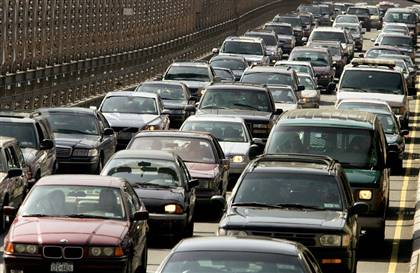
You cannot escape the inevitability of certain things in life: death, taxes and, if you live in a major city, being caught in a traffic jam. Traffic jams are something you just cannot avoid. When you think of traffic jams, what images come into your head? Images of hot days and dusty road congested with an endless queue of vehicles glinting against the warm sunlight. So here’s what you can do. You can either rant and rave and sulk the entire time bellowing unprintable words, or you can find some interesting things to do which will not only give you a couple of hours of entertainment, but the surrounding cars in the vicinity as well. Being part of an
online traffic school I advise you to choose the ladder. Once you’ve decided on the option here are some interesting tips to follow. Give yourself a complete makeover (if you are a woman). Take your makeup kit and start from the beginning; reapply foundation, eye mascara, liner, lipstick and blush on. Experiment freely, while ignoring the jokes and jibes coming from nearby cars.
Make a call to your boss or mum-in-law informing them of your predicament and mention that you will be running late. Flip out your mobile phone and text message as much as you like. There won’t be traffic patrol to pull you over this time around. Receive jokes and hear all the gossip until your battery goes dead.
Play all the games your mobile phone has to offer and set up world records that no one can come close to breaking. Become reacquainted with long lost family members and friends. Call up Aunty Jane and ask how Uncle Ernie’s ulcer is doing or listen to Aunty Emilia complain about heart palpitations. This is a good way to regain popularity with family members and learn more about medical diagnosis.
Begin a conversation with the old lady sitting in the next vehicle. She may be as bored as you. Get household tips and ask for recipes. You can jot down whatever she may be saying and publish these under your name. This might even make you famous on the primetime cooking channel!
Alternatively look out for a bored girl in a nearby car and begin a conversation about makeup, entertainment and soap operas. Get the latest gossip on love affairs, domestic battles and heartbreaks in the television world. Learn about the latest fashion, hairdos, newest hunks and villains, wedding ceremonies and funeral rituals.
Clean the glove compartment you have been putting off doing for a while now. Sort out your receipts, lottery tickets, chewing gum packs, tissue packs, various papers and parking tickets. If you have got hunger pangs, order a burger or pizza delivery. Give the location of where you are stuck at. Explain that the highway has become your second home now, at least during rush hours.
If you are still bored, improve your mathematical skills by memorizing number plates of vehicle plates in the vicinity, multiply these numbers and total them. Exercise your brain well!
Finally, when the traffic starts back up, don’t speed! If you do and get caught chances are a
traffic school will help you with your insurance but JUST DON’T DO IT!
Scientist Find Your Brains Traffic Cop
Scientists just found a new protein called MEC-17, and it's like a traffic cop for brain cells. Researchers think MEC-17 might help with studying diseases like Alzheimer's, Parkinson's, and Huntington's. Inside the brain, tiny tubes known as microtubules guide nutrients, proteins, and waste where they need to go. They also help with cell growth and messaging between brain cells. Scientists know that brain degeneration happens when these microtubules change. It’s super cool because it might help unlock secrets to many brain diseases! **Isn’t that fascinating?**
If a drug can have an impact on microtubules along its transport, this can lead to degenerative research of diseases. Scientists have now found that MEC-17 displays certain marks on microtubules. Marks created on these tiny tubes direct it where it should transport proteins and so on to which part of the brain and in what direction. Depending on whether it is a sending signal or receiving signal, microtubules showed more marks in some cases.
MEC-17 was first discovered during the study of human cancer cells and other organism’s nerve cells in zebrafish and C. elegans, a nematode worm. For instance, in research done on zebrafish, neuromuscular defects were noticed with the depletion of MEC-17 and in nematode worm, its sensation touch was affected. Now that scientists understand the use of MEC-17 a little better, it is hoped that research can lead to a drug being developed to block or to enhance it. I wonder if scientist will be able to develop a
traffic school for our cells? LOL!
How To Avoid A Speed Trap
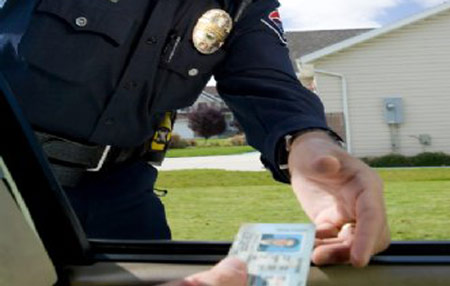
It may seem like every day is a battle while driving on the road. You race across town to get to places on time .. avoiding cars that are driving too slow or too fast. In most cases you may fall into the latter category since you're always trying to make it to your destination on time. And then BAM a speed trap...
Most of you may have experienced being in a speed trap and it sucks getting that hefty
traffic ticket which usually derives you NO mercy especially if you're going fast on residential roads.
Although we are in no way encouraging you to beat the system and go fast through town here are some tips on how to minimize getting caught in "THE SPEED TRAP."
Note: We do not condone speeding.
1. Don't speed. But if you are then look out for typical speed trap spots like heading down hills, rounding curves.
2. Utilize services online that will help you on the road. Folks are getting hip to speed traps around their town and are using the world wide web to help their fellow drivers:
The Speed Trap Exchange website [http://speedtrap.org/] helps you find speed traps along your route; before embarking on a trip do a little research and take the list with you.
Another tool to avoid speed traps and apparently favorite amongst soccer moms can be found at Trapster.com. This application can be downloaded to your cell phone and will send you real-time alerts about locations of a speed trap. What's even better is that it is hands free so it also avoids you getting a ticket for holding your cell phone to check. Visit Trapster.com for all the info.
3. Buy a Radar detector. Note to Truck Drivers: By federal law, radar detectors are illegal in commercial vehicles (such as trucks) in all states. Radar "jammers" are also illegal in all states.
4. Seems that the best tool on the road is to have knowledge of the road you're traveling so educate yourself on the maximum speed limits in all the states you'll be visiting as speed laws vary from state to state. Visit: http://www.nhtsa.gov/people/injury/enforce/speedlaws501/introduction.htm
So enjoy the road with these little tips on avoiding speed traps but most of all drive safely ... not too fast. Also, if you happen to need it
online traffic school or
defensive driving course could be the best way to fix your driving record.
Defensive Driving In Hurricanes
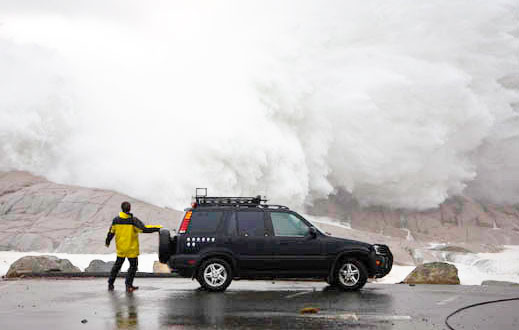
Mother Nature strikes when you least expect it ... our
Improv Traffic School Team has come up with some tips on driving during a Hurricane.
Driving Tip #1 DON"T DRIVE
But it you have to .....
Driving Tip #2 Make sure you have a full tank of gas before you hit the open road!
Driving Tip #3 Make sure you have flood insurance!
Driving Tip #4 Pack the following:
- * Your cell phone [make sure it's charged!]
- * Essential Medicines
- * Flashlights and batteries
- * Old school Radio
- * Food and water
Driving Tip #5 Have alternate routes of exit through your town in case your familiar roads are shut down for flooding.
Driving Tip #6 Let your family know, whether you get along with them or not, what your plan is so you have someone that has tabs on you!
Driving Tip #7 Don't drive your bike during a hurricane! Watch this ... wait for it around the 50 second mark!
http://www.youtube.com/watch?v=jUqI0VecYn4
Driving Tip #8 Watch out for high winds!




 Live Chat