CA Highways and Freeways: What to Expect
I'm sorry, but you didn't provide the text that needs rephrasing. Could you please provide the text so that I can assist you further?
Highways and Freeways are the backbone of the United States’ infrastructure. Between the toll roads and the rest stops you find the American dream in the form of 3-lane paved concrete road. When you’re traveling in California, it’s nearly impossible to get around without cruising the countryside on one of these famous interstate CA highways.
So, what exactly should you expect during your cross-state road trip?
You may find your share of potholes, detours, crazed mountain folk, and road construction when you’re driving up the PCH or navigating through the desert. So, we’re giving you a road map to what to expect from California’s highways and freeways.
[framed_box]
I-5
Interstate-5 is a heavily used north to south highway that stretches across the entire state of California. This freeway directly and indirectly connects every major metropolitan city in the Golden State. Despite being filled with traffic when passing around cities, I-5 is known for its scenic views of central California. Just be sure to watch out for crazed mountain folk! Just kidding - but we’re sure they’re out there.
[/framed_box]
[framed_box]
I-8
Running along Mexico’s border, you’ll see your fair share of sand and dirt. But, that doesn’t stop this interstate from being a breathtaking experience! This freeway is often used for travelers coming or going from San Diego.
On this route, you can pass through the historic town of Yuma on your way to Arizona. Although, the only historical fact about Yuma I know is seeing the film 3:10 to Yuma. You will also pass by the Instagram worthy sand dunes and beautiful sunsets through this desert filled freeway.
[/framed_box]
[framed_box]
I-10
If you’re beach bound coming from Arizona, I-10 is the route for you. You can stay on this highway all the way from Phoenix to Santa Monica. You’ll be so close to the coast, you could practically drive straight onto the beach. Most of this trip is through the desert between the two bordering states, so you can expect flat lands, dried up cacti, and bumpy roads.
If you’re making the drive at night, you can pull over on a side road and look up at the milky way. There’s hardly ever cloud coverage, so you can have a perfect view of the galaxy at night. You don't need fancy scenery when you have the stars!
[/framed_box]
[framed_box]
I-80
Also known as the Dwight D. Eisenhower highway, I-80’s stretch will get you from San Francisco across the country to
New Jersey. You can gain access to this historic highway by entering through the bay area. This concrete path will take you through the countryside of Northern California and well-known landmarks, such as The Central Valley and the Sierra Nevada.
But, be on the lookout for speed limit signs! I-80 has a reduced speed of 65 MPH. Unlike the usual 70 MPH throughout rural California.
[/framed_box]
[framed_box]
“The 101” or “101”
Arguably the most popular highway in all of California. The 101 is among the longest highways in the state. It’ll take you from Oregon to Los Angeles. Along this route, you can expect to find historic landmarks, California staples, the serene countryside beauty, tourist destinations, highway patrol, and even the Golden Gate Bridge.
If you had to sum up all of California into a stretch of road, it’ll be the 101. You can also see the Pacific Ocean along most of this drive, because it runs near the coast.
When you’re cruising through the countryside on a highway or freeway, remember not to speed. We know the temptation can be there. We’ve been down the PCH during sunset. If you ARE slapped with a speeding ticket, remember to enroll in an
online traffic school California. Doing so can wipe away the speeding ticket's points from your driving record, you won’t have to suffer from increased insurance rates, and you can prove to yourself that you are a safe driver. Safe enough for some insurance rate deductions!
[/framed_box]
Is Olympic Bobsledding as Dangerous as Speeding?
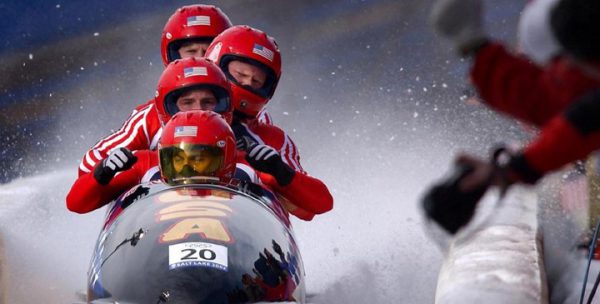
We’ve all had that moment. Sitting at a red light on dry, empty pavement. The road ahead stretched out for miles on end, dissolving over the horizon, beckoning you, seducing you—to slam your foot onto the accelerator and start speeding.
Maybe you’re running late and can’t stand the thought of missing Toyotathon. Maybe you just long to hear the engine roar louder than the wind around you, your vision distorting as your hands clench the wheel and knuckles whiten. The crosswalk timer ticks down as you wait for the light to change. Your heart racing as your lips tremble, then open, and you shakily utter, “Hey Siri, play Danger Zone on Spotify.” Then a split second of inquisition: there’s nothing wrong with a little bit of speeding, right? How dangerous could it be? After all, Olympic bobsledders go really fast. Why can’t I?
[framed_box]
Bobsledding or Speeding?
This is actually a very common question. When approached with this topic, most if not all drivers rationalize speeding in a motor vehicle by comparing it to the bravery and engineering, logistical, and co-ordinational ingenuity of Olympic Bobsledding.
While not logically or morally sound, this is a tactic employed by many decent folks, most of the time just trying to get to where they need to go and finding ways to justify the means of doing so, regardless of the safety of themselves or others.
[/framed_box]
[framed_box]
The Cold, Hard Data
According to the National Highway Traffic Safety Administration (NHTSA), speeding was the cause of 9,557 deaths in 2015. In contrast, there are only a handful of recorded bobsled deaths at Olympic sanctioned events or training exercises. And this is in a sport that involves drivers and riders in thin, aerodynamic body suits and a helmet, hurtling down an unforgiving, serpentine track at over 90 mph in a light metal-bodied sled they can barely see out of.
Even us amateurs with our “airbags” and “seatbelts” operate vehicles at a higher risk of fatality than these brave men and women. Not to mention the risk of injuring or killing someone else at our fault.
[/framed_box]
[framed_box]
The Truth
Setting aside this risk of physical injury or death still leaves us with very little to gain. While an Olympic Bobsledder is paid to represent their country, practice for months and months on end, and stand to win glory, honor, and a priceless medal with some cash, us gas guzzling, rubber tire handling, government safety regulated plebeians stand to win nothing but a few extra minutes wherever we’re going. But more likely, a ticket—or even jail time.
[/framed_box]
[framed_box]
The Solution
It is disrespectful and egregiously offensive to compare our self-conceived prerogative to speed with the prestige of the world’s finest athletes. It is incumbent upon us to yield our most carnal desires; our needs for speeds, to the recognition of the limitation of our abilities.
However, when we fall victim to our self-desires of going over the speed limit and we’re slapped with a traffic ticket, there is a light at the end of the tunnel. That light is Myimprov.com. Your
traffic school online. You don’t have to succumb to increased insurance rates because you have a ticket.
By enrolling into our traffic school online, you can prove to everyone that you are a safe driver. Safe drivers have lower insurance rates and clean driving records. You should stop speeding. But, when you are given a ticket for not controlling yourself, just remember there is a solution.
[/framed_box]
Caltrans – Getting Around CA Without a Car
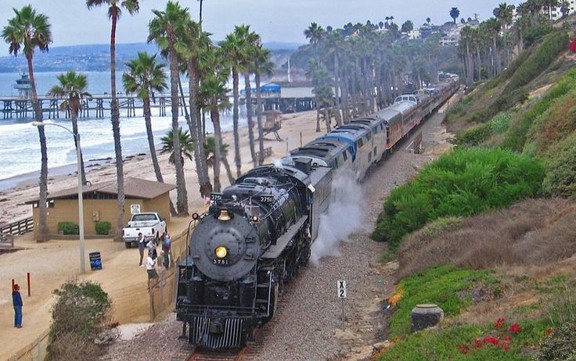
If you don't have a valid driver license in California, we strongly recommend that you take the steps to getting it reinstated. For some, this may require taking - and passing - a
traffic school online to have points reduced. For others, there may be more extenuating circumstances that may need to be addressed, like checking out Caltrans.
As you start the process to reclaiming your license, know that the state of California does have other ways for you to get around. And while these means of transportation aren't as convenient as getting into your own car to get from Point A to Point B, they can provide a viable solution as you bide your time between license reinstatement. Here's a look at some of the best ways to get around in California without a vehicle:
[framed_box]
Planes and Trains
California is a big state, spanning about 164,000 square miles. That said, if you need to make a longer trip, say from San Francisco to San Diego, it's more than just a hop down the street. There's where the likes of planes and trains can come in handy. California is home to several large, international airports that can make getting up and down the coast a breeze. There are major airports in San Diego, San Francisco, Los Angeles and Anaheim, among others that can help you get from big city to big city quickly and often affordably.
If you fear flying or airfare is just too much for your budget, another ideal option is the light rail train system. The train literally runs up and down the coast, from San Francisco to San Diego. California also has a nice Amtrak rail system, so that too can be an option for getting around from place to place.
[/framed_box]
[framed_box]
Buses
Most of the big cities, such as San Francisco and Los Angeles, have public bus transportation offering to help people get around town. While these buses are on fixed routes and don't travel outside of the city limits, they do offer an option for someone who just needs to get from their city apartment to their downtown office, for instance.
[/framed_box]
[framed_box]
Ride Sharing
One of the nicest things about ride sharing services like Uber and Lyft is that they're more affordable than a taxi cab and they're on demand, so you won't have to call and wait for one to pick you up. However, if you're taking an Uber or Lyft on a daily basis, the costs are still going to add up over time. Try to think of ride sharing services as a temporary solution to getting around California without a license. Yes, they're cheaper than a taxi cab, but they're still far more expensive than most public transportation offerings.
[/framed_box]
[framed_box]
Walk or Bike
If your destination is only a few miles away, we'd encourage you to take advantage of the nice year-round California weather and get some exercise in the process by either walking or biking to your destination. The big cities tend to be more walkable, as everything is packed in more closely together.
Like we noted in the opening, while it is feasible to get around California without a car, the size of the state and spacing between major cities can make it difficult without a viable vehicle. That's why we encourage you to do what's necessary to get your license back if it's been suspended or you haven't renewed it. Try to think of the options we've listed above as temporary solutions until you can get back behind the wheel of a car. For more information, contact us today.
[/framed_box]
Officer Gives Heartwarming Surprise
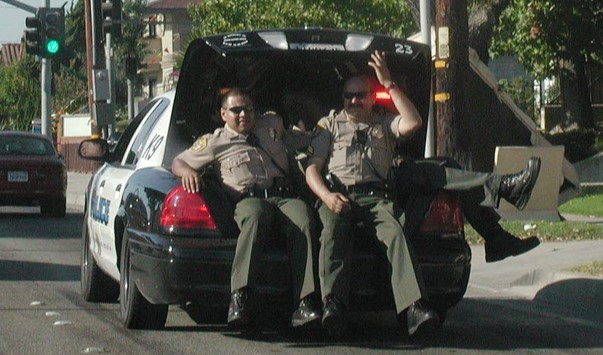
If you have been wondering where all the humanity in our world went, all it takes is a bit of digging to find the good people. They are everywhere and there was recently
a story that popped up from the St. Louis area. A man was driving his 5-year-old niece home from her chemo appointment when he was pulled over by a officer for a routine traffic stop. On the surface, this may not sound like a good story, but the situation takes a positive turn.
Matthew Manley was the man who was pulled over and when he saw the police car, he immediately knew what he had done wrong. He had been delaying the transfer of his new license plates for a bit of time and he knew that this would result in getting a citation, which is something you learn in a
MO Driver Improvement course. Manley had been driving his niece back and forth to chemotherapy for cancer treatment every day which did not make the day any easier.
After the officer cited him a ticket for his license plates, he then went back to the police car and started rummaging through his trunk. Manley did not know what to think and even sent a text to his wife Dana because he was a bit scared! He was timid thinking about what was going to happen next. Manley was nervous until the police officer, Shawn Birdsong, returned to his vehicle and had a pink backpack in his hands. He gave the bag to Manley and said that it was for his niece and he hoped that it would help brighten her spirits.
Inside the bag was a note from the officer Shawn Birdsong to Manley's niece that said he hoped she felt better soon. There were also some clothes, toys, and art supplies contained inside the bag. Manley was so moved by the act that he not only thanked the officer for his kindness, but he also shared the story on his Facebook page and thanked the officer again there. This was such a heartwarming act that meant so much to the Manley family and the little girl.
The Facebook post eventually reached Birdsong again and he then called the Manley family to thank them. Since then, he has called back to check on the little girl 3 or 4 times. He has gone above and beyond his role by showing this compassion for the little girl. He had the backpack in his truck at the time because he was participating in Project Backpack St. Louis which puts together backpacks with comfort items and necessities for children. He saw it as the perfect opportunity to help make the day of this little girl a bit better, especially since she was going through such a trying and difficult time.
If you are looking to stay out of trouble while driving, consider taking a course through the
best traffic school online and remember to show compassion to others all season long.


 Live Chat