Do smart cars make driving less fun?
**Want to master navigating the roads safely and avoid tickets? A defensive driving school can be your best bet!** Statistics reveal that driving courses reduce car accidents by 20%. Imagine sailing smoothly through traffic with confidence, like a superhero with X-ray vision, spotting dangers before they hit! According to the NHTSA, learning defensive techniques cuts the risk of crashes. And hey, it's not just for those who've gotten tickets—everyone benefits. For instance, practicing safe following distances and understanding right-of-way rules can make anyone a pro on the road. Plus, there's often an insurance discount waiting at the finish line. So, gear up and get ready to drive safer, smarter, and stress-free!
 What used to be a thing of fantasy or science fiction is now on a fast track of becoming a reality.
More and more cars now have "smart car" features, ranging from sophisticated navigation systems to smart braking controls. These “smart” technologies include: electronic stability control systems to prevent skids; technology that answers text messages so you can keep your eyes on the road; radar that warns of other vehicles and objects that might cause a crash based on your speed and proximity; adaptive cruise control that adjusts speed to keep a safe distance between vehicles (one of the main
defensive driving techniques) ; and sensors that help you navigate into parallel-parking spaces.
Some futurists predict a day when technology will connect intelligent vehicles with high-tech highways to provide a seamless flow of traffic.
Google also has been working on self-driving cars that use artificial-intelligence software. Still years from commercial production, the prototypes have shown promise. Seven Google test cars have driven 1,000 miles without a human in control.
Such cars could open up new transportation possibilities for people who are disabled or otherwise unable to drive. It's even possible that "smart car" technology could lead to cheaper car-insurance rates.
But will all these changes steal the fun from driving? Does it take fun out of driving?
Would love to hear your thoughts.
Traffic School Rule Change – Court Dismissal Changing to Conviction
ATTENTION CALIFORNIA DRIVERS
 Traffic School Rule Change - Court Dismissal Changing to Conviction
Traffic School New Policy
Traffic School Rule Change - Court Dismissal Changing to Conviction
Traffic School New Policy Effective July 1, 2011, California courts must report traffic safety violations as convictions. If the driver is eligible and completes a Traffic Violator School (TVS) course, the conviction will be masked on the driver record. The driver record will be checked to determine a driver’s eligibility to participate in a traffic school course.
A TVS conviction will
not be masked if: • There is a prior TVS dismissal/conviction within the previous 18 months. • The conviction is a major (2 point) violation. • The driver holds a commercial driver license or was operating a commercial vehicle, at the time of the violation. A traffic school abstract of conviction will be the basis for assignment of negligent operator points on a person’s driving record.
Background The courts currently offer a driver cited for a traffic safety violation the option to attend a traffic school. When a driver completes the course, the court dismisses the violation and reports the dismissal to the DMV, preventing negligent operator points from being assigned, and the abstract from being the basis for suspension, revocation, or commercial disqualification actions.
What does it mean? – Many courts used to allow drivers to attend traffic school more than once every 18 month. This option is now taken away from the courts and will be regulated by the DMV. Courts also will not have an option to refer a defendant to traffic school for a more serious violation like DUI, Reckless Driving Etc.
Melrose Place Star Pleads Not Guilty to Manslaughter

The star from the original
Melrose Place continues to make headlines following her DUI car crash last June in New Jersey, which resulted in the death another motorist.
Amy Locane-Bovenizer is facing manslaughter charges.
The 39-year-old mother of two pleaded not guilty to aggravated manslaughter and assault by auto charges, reports say.
Somerset County prosecutors say Locane-Bovenizer's SUV hit the vehicle of 60-year-old
Fred Seeman as he was turning into his driveway, breaking 10 of his ribs and killing his wife.
Officers detected alcohol on Locane-Bovenizer's breath and arrested her, but she was shortly freed after posting $50,000 bail.
We talked about this subject before, but it never ceases to amaze and anger us. We come across many people from different walks of life in our
Traffic School.
Celebrities often drop by our Hollywood classes, showing that even stars get traffic tickets. Everyone slips up with speeding now and then. But fame brings **big responsibilities.** Reckless driving, especially drunk driving, isn’t OK for anyone. It's even worse seeing a star in the news for it. Seriously, if you're having a few drinks, hire a limo—you can totally afford it!
Insurance Reduction for New York Drivers
New York drivers fork out some of the steepest insurance fees in the nation. Lucky for them, New York is one of the rare states that **requires** insurers to lower premiums. The catch? Drivers need to finish a NY DMV-approved **Defensive Driving Course**. Here’s the kicker: no need to sit in a classroom for six hours! **Online options**, like the Improv Defensive Driving Course, let you **learn at your own pace**. Check out these frequently asked questions about the course.
Q. After completing the Defensive Driving Course (aka as PIRP - Point and Insurance Reduction Course), how do I receive the insurance reduction?
A. Upon completion
Improv's Defensive Driving course, we will issue you certificate of completion. If you present your certificate to your insurance company or agent within 90 days after course completion, your liability and collision premium reduction will begin immediately, retroactive to the date you completed the course. If you present your certificate more than 90 days after course completion, the insurer may issue the premium discount effective from the date presented.
Q. Will the PIRP course prevent my insurance company from raising my premiums?
A. No. Insurance reduction does not prevent general premium increases, or premium increases due to violations or accidents. However It provides a 10% reduction for three years, from the base rate of your current liability, no-fault and collision premiums.
Q. What if more than one person named on a policy completes the PIRP course?
A. The insurance premium reduction applies to all motor vehicles principally operated by the motorist who completes the course. The reduction can be applied to only one driver for each covered vehicle.
Q. If I complete a DMV approved motorcycle safety/accident prevention course, does the insurance reduction benefit extend to my automobile coverage?
A. Yes. The reduction applies to the liability and collision insurance premiums for both your motorcycle and automobile.
Q. Will young operators (under 18) and drivers participating in assigned risk pool receive the insurance premium discount?
A. Yes. Any insured driver who is the principal operator and completes a Point & Insurance Reduction Program course will receive the reduction.
Q. If a youthful operator is already receiving a driver education reduction, will the PIRP discount also be applied?
A. Check with your insurance company or agent to find out if both reductions will be given at the same time
New Car Buying Tips: Dealer Add-Ons
New Car Buying Tips
Dealer add-ons - a value service or a rip-off?
Once during a fun trip to a car dealership, we tried to buy a Ford Fusion Hybrid. A tiny paper was stuck beside the window sticker, showing some extra costs.
This innocent sheet of paper contained two seemingly "valuable" add-ons, adding $600 to the sticker price of the vehicle. In the industry, this list of add-ons is called the "supplemental sticker " We call it the "rip-off sticker", you judge for yourself.
After-Market Add-Ons
This deceiving practice allows dealers to advertise a very low price for a vehicle (sometimes below a sticker). Then use a supplemental sticker to add high-profit items that hold little or no value to the consumer. In our experiment case, the sticker added two products: an interior "protection" package, and an "Express Code Marking System."
The interior protection package is a chemical sprayed on the vehicle's upholstery protect it from stains. Grand-Total: $195. At first glance, seems like a bargain, who would want stains on their brand new upholstery? But being scholars of a
Defensive Driving School, we believe in research and facts. A quick search online found a bottle of 3M Scotchgard Auto Interior Fabric Protector for about $9 on 3M's website. This product promises the same advantages as the stuff sprayed onto your upholstery at the dealership, but costs $186 less.
The second product was the Express Code Marking System. This marking system consisted of a special label placed on key body parts of the vehicle that if removed, would leave the imprint of an ultraviolet identification number. It wouldn't notify the police, ruin the part or make any sort of noise. The dealer was charging $400 for this product. Now do you really think that someone who is about to steal your car will pause and look if your car is code marked? Chances are, if someone wants to take your car and chop it for parts they will... the fact that they won't be able to re-sell parts won't give you much comfort. Certainly not $400 worth of comfort. In our humble opinion, if anyone should pay for this service, it should be your insurance company. Your money would be much better spent taking an
insurance discount course and saving additional $$$ on your auto premium. Many states mandate insurance carriers to offer you an additional discount for taking a
defensive driving course.
My Used Car’s a Lemon! Am I Stuck With It?
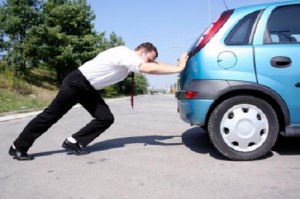
Working in traffic school we often hear nightmare stories from students who bought a used car that turned out to be a
lemon. So we decided to take a little detour from our defensive driving courses and do some legal research. Lemon laws protect new car buyers in every state in the nation, but it's far more common for used car buyers to get stuck with an unreliable vehicle, or to incur repair bills that cost more than the car. For such unfortunate consumers, it often goes downhill from there.
Used Car Lemon: Legal Rights and Actionable Steps
Owners of lemons, as these cars are often called, must still make car payments while their vehicle sits idle. One-sided arbitration clauses — built into practically every dealer's vehicle sales contract — work to keep many used car buyers from taking a case to court. Finally, a buyer may have to prove that the vehicle's problems existed prior to the sale in order to get some compensation. These factors plus the subject's complexity leave many American consumers in the lurch.
"Many of these cars are dangerous to drive," according to John Van Alst, used car fraud expert with the
National Consumer Law Center. "Even if not, when a car becomes inoperable, it becomes a liability instead of an asset."
Although it's not always the case, some of these used lemons are sold fraudulently, such as when a dealer fails to disclose the vehicle's history, misrepresents the vehicle title or tampers with the odometer. Often, these dealers prey on the most vulnerable, low-income segment of the population.
A New Twist: Used Car Lemon Laws
The frequency and severity of consumers' used car problems has led some state legislatures to pass new laws. Currently, though, only six states,
Connecticut, Massachusetts, New Jersey, New Mexico and
New York have lemon laws on the books. The laws provide a statutory used car warranty, often based upon the age or mileage of the vehicle. If the vehicle exhibits problems during the warranty period, the dealer is given a chance to repair them. If those fixes don't work after several tries, the dealer usually must either replace the car or refund the buyer's money.
At least seven states have some other form of used car buyers' rights, requiring used car warranties or setting minimum standards for the sale of used cars: They are Arizona, Connecticut, Illinois,
Maine, Nevada, New Mexico and Pennsylvania. Still other states, including North Carolina, have an Unfair and Deceptive Practices statute that can be invoked. But only those states with true used car lemon laws require the dealer to provide a replacement or refund for your car.
The Sorry State of Used Car Regulations
Van Alst feels that most states aren't very effective at protecting used car buyers from the myriad ways they can be swindled. "Most existing used car lemon laws are so limited in scope — the number of days the car is covered and the allowable mileage — that the consumer may not experience the problem or won't have a chance to act on the problem in that time period," he said.
For example, Arizona law covers a used car only if a major component breaks within 15 days or 500 miles of its purchase — whichever comes first. For new cars, though, those terms extend to two years or 24,000 miles.
By contrast, many European consumers have stronger protections. In France, for example, a car buyer may cancel the transaction up to seven days after the sale. And a 1999 European Union directive allows consumers to seek redress for any problem that makes a vehicle unfit to drive for a full two years after the purchase.
As is always the case when buying a car, the only way to fully protect yourself is to come armed with information, most easily obtained on the Internet. Many consumer advocacy sites (such as The Center for AutoSafety) discuss new car lemon laws in detail, but obtaining information on used car laws is trickier. We found Car Lemon (an attorney referral site) and Autopedia to have the broadest information on states' used vehicles lemon laws.
Is Geography Destiny?
What about U.S. consumers who don't live in a state with a used car lemon law, or whose state law doesn't cover their individual situation? In those cases, there are federal laws that may help:
- Uniform Commercial Code (UCC) — Under the UCC, a used car sale automatically includes an implied warranty that the car is fit for transportation. However, used car dealers may "disclaim" (deny) the implied warranty if they sell the vehicle "as is" — which they typically do. In the few states that prohibit dealers from disclaiming the implied warranty (such as the District of Columbia, Maryland, Massachusetts and West Virginia), the UCC can be more effective than a used car lemon law would be.
- FTC Used Car Rule — The Federal Trade Commission requires dealers who sell six or more cars per year to post a in every used car that's offered for sale. The guide must show whether the vehicle is being sold "as is" or with a used car warranty, what percentage (if any) of repair costs is covered by the dealer under the warranty, and a list of the major defects that can occur on used vehicles.
- Magnuson-Moss Warranty Act (a.k.a. Federal Lemon Law) — This law prohibits the disclaimer of implied warranties when a car is sold with an express written warranty. It also provides for the awarding of attorney fees in particular cases.
How To Prepare for Battle
In order to determine if you truly have a lemon and to build a solid argument, make sure you've taken the following steps.
Start by getting vehicle history reports from **Carfax** and **Autocheck**. These reports reveal many **hidden issues** like past accidents and branded titles on used cars. Edmunds suggests running both reports if you can, as they might show different info. Here's a key fact: U.S. states don't make insurance companies report when they fix a car, but Canada does.
Do not rely on reports alone. Take the car to a qualified mechanic
and to a body shop that can spot signs of structural damage. Make sure they put it up on a lift. As with vehicle history reports, this is best done before the vehicle purchase, but it's still critical to determine the source of the vehicle's problem after you own it.
Document the vehicle's service history and retain all work orders and receipts. Download or print a vehicle repair log from Fraud Guides or Microsoft.

If the dealer still won't provide satisfaction, or if you suspect fraud, send a complaint to the vehicle's manufacturer (in writing) and the state attorney general's office or department of consumer protection. The federal government's Consumer Action Web site provides detailed information on how and where to file complaints (including sample letters), dispute resolution services, small claims court and more.
Calling Out the Big Guns
You don't necessarily have to engage a lawyer to fight for your rights; sometimes, a quick trip to small claims court will do the trick. But a good lemon law attorney can determine whether you've got a serious case (especially when safety is an issue) and can shepherd you through the legal process. Many lemon lawyers don't charge client fees, hoping to collect instead from the defendant.
You can find lemon law specialists in your state through the National Association of Consumer Advocates. Free legal aid to low-income individuals is available through the non-profit Legal Services Corporation and National Legal Aid and Defender Association.
Pricey used cars test conventional wisdom
Always saving money at our online traffic school. Conventional wisdom says **buying used cars** saves money. But, **rising prices** in the U.S. auto resale market might **challenge** that belief.
Edmunds.com estimates the average price paid for a used, three-year old auto has risen $1,471 -- or 8.5 percent -- since last year, reaching $18,832.
The price you'll pay for used SUVs like this Chevy Tahoe may have risen substantially. What's behind the rise? Edmunds analysts believe it's a combination of bargain-hunting consumers and the rise of certified pre-owned car sales at dealerships:
"Used cars are in great demand and relatively short supply, so their prices are remarkably high," stated Edmunds.com Analyst Joe Spina. "Automakers understand that many traditional new car buyers are considering used cars, and in response are emphasizing their certified pre-owned car sales programs through which they can earn revenue on used car sales. This effort will keep used car prices high since CPO cars sell for a higher price than comparable noncertified used cars, raising the ceiling for the entire used car market."
Indeed, Edmunds.com estimates the percentage of used cars sold as CPO rose from 13.8 percent to 18.5 percent.
This data is interesting, but it doesn't look like every used car buyer is likely to encounter sharply higher used-car prices than they did last year. And when they do, I'm not sure it will be because of CPO and frugal consumers.
After all, a lot of the biggest price hikes seem to be focused in trucks and SUVs, and I'd be willing to bet that has more to do with gas prices than anything else.
After all, the resale values for trucks and SUVs, which generally get poor gas mileage fell sharply in response to the gasoline price spikes of 2008.
Due to the depressed global economy and the resulting lack of demand, gas prices have been fairly stable since then. People, as they are wont to do, have forgotten how painful those big gas bills were back in 2008, so they're more willing to buy SUVs and trucks than they were when gas prices were high.
The other big movers were American brands, which I would wager have benefitted from improved brand perception as American car buyers have taken notice of their reliability and design upgrades.
On the other hand, if your preferred car is a Japanese sedan or station wagon, you might be in luck. The Edmunds.com value estimates have the Honda Accord and the Subaru Outback coming in at a lower than last year.
We had a lot of spirited discussion in the comment section a few months ago about whether buying a new car could be financially smart if it was close to or less than the price of a used model thanks to a generous rebate or other dealer incentive.
I think in the majority of cases, buying a low-mileage used car is probably the better decision. That said, rising used car prices and higher rates on used car loans are going to change the equation a little bit on some vehicles, and refusing to acknowledge that could leave you missing out on getting a new car for the price of a used one.
So what do you think? Is it time for the frugal to consider new cars? Why do you think used cars are getting pricier? leave your comments here on our
defensive driving course blog!
Top Ten Cheapest New Cars
Buying a new car can be smarter than used when you think about **total cost**—like special deals, repair costs, gas mileage, and wear. The *great news* for practical shoppers: you can buy a **new car under $15,000** and save money! With good credit and some cash down, you might get one for less than daily takeout.
We included some choices on the list that include sedans, hatchbacks and coups. The prices are the sticker price for the cheapest version of the model, so you may be prepared to drive a stick shift and may forgo some luxuries like air conditioning.
Ranked in order of cheapest (don't confuse with Best Value) to most expensive, the winners are:
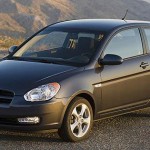
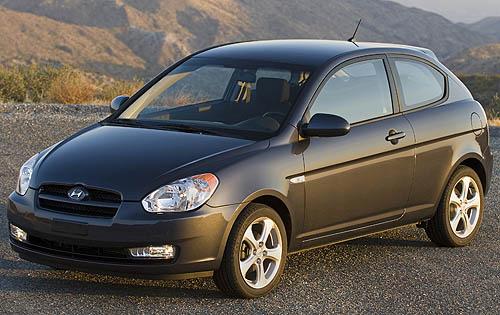
1. 2010 Hyundai Accent Blue Coupe, $10,690.00
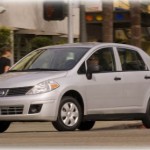
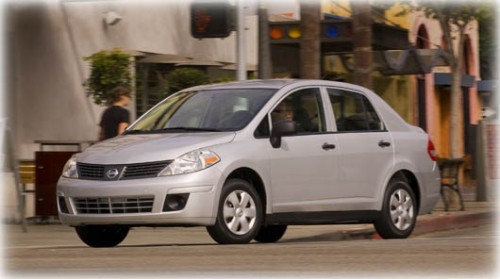
2. 2010 Nissan Versa 1.6 Base Sedan, $10,730.00
3. 2010 Kia Rio Base Sedan, $12,390.00

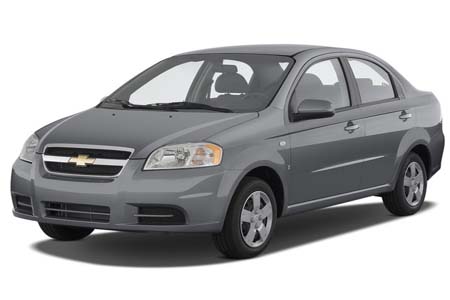
4. 2010 Chevy Aveo LS Sedan, $12,685.00
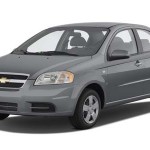
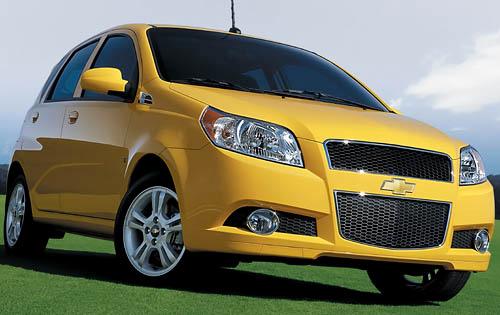
5. 2010 Chevy Aveo5 LS Hatchback, $12,835
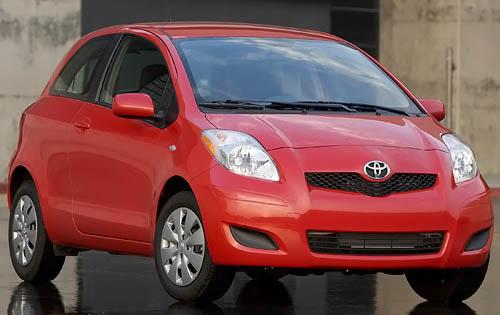
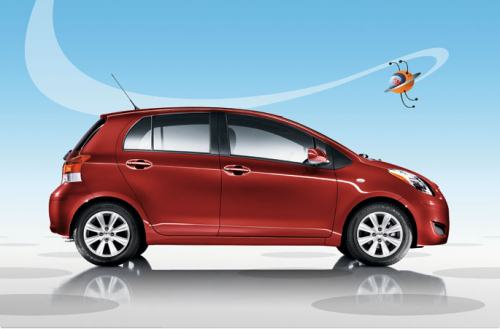
6. 2010 Toyota Yaris 3 Door Hatchback, $13,365.00
7. 2010 Toyota Yaris 5 Door Hatchback, $13,665.00
8. 2010 Kia Soul Base, $13,995.00
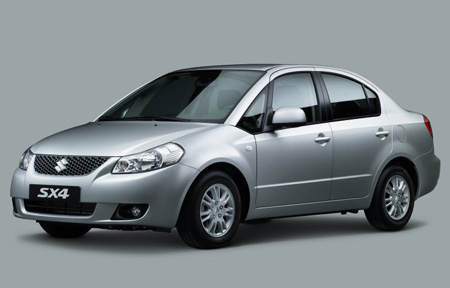
10. 2010 Suzuki SX-4 Base Sedan, $14,094.00
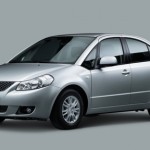
The Suzuki SX-4 is one of the better looking cars on the list that also commands great reviews. But no air conditioning would be a deal breaker for us (considering our
Defensive Driving Course Headquarters are in Los Angeles... where it hit 115F this summer).
Operating a traffic school, gives us an access to many experts and individuals with automotive expertise. A quick research has confirmed that if we were handing out the award for best value on the list, it would go the new Ford Fiesta S (which is the only 2011 model on the list). Ford packed a lot of extra goodies into the Fiesta, including power mirrors, capless gas filler, aux in / USB jacks and A/C, yet has managed to keep the price reasonable for the entry level model. Surprisingly it also offers a sportiest ride on the list. If you enjoy getting your freak on with a twisty road, this is where you should begin shopping.
Word of caution: it isn’t easy to find base models on dealer lots, since they take up as much room as loaded models, have less margin and can be hard to move. If you have to special order one, expect to pay full sticker price instead of haggling over invoice plus $500. On the other hand, sometimes a dealer can be very motivated to sell a year old entry level car, even if it’s in a higher trim level. It may take some time (and travel) to find exactly what you're looking for, but we always thought that the hunt is half the fun.




 Live Chat