Fighting Traffic Tickets – Is it a Good Idea?
**Figure Out If It's Worth It**
First, decide if battling a ticket is worth it. If a ticket means thousands of dollars in higher insurance, risk of losing your license, or other serious troubles, it might be worth the effort. But, fighting tickets isn’t always easy or worth it. Here are some simple tips for deciding:
**Understand the Law You’re Accused of Breaking**
Many police officers don’t know the law in detail— that’s for lawyers. Begin by reading the exact law you’ve allegedly broken and break it into parts. Once it's broken down, if you can show your actions didn’t fully fit the law’s exact words, you’re closer to proving your innocence. For example, here’s a stop sign law with its elements separated: “[A person] [operating a human-powered vehicle] [approaching a stop sign shall slow down] and, [if required for safety, stop before entering the intersection].” Notice, stopping is only needed if it’s for safety, and the law permits you to “cautiously make a turn or proceed through the intersection without stopping.” If a cop wrote “rolled through intersection without a complete stop,” you can argue in court that you didn’t break the law. Judges can accept this reasoning since it’s a common lawyer tactic. Remember, you’re innocent until proven guilty.
**Don’t Pay the Ticket Right Away**
When you get a ticket, don’t pay it immediately. In most places, paying means admitting guilt. Instead, find out how to get a court date.
**Think About Traffic School**
Some places let you attend traffic school to get charges dropped or points erased from your record. Research your state laws to explore this option. If online traffic school works for you, ask for it in court. Most places accepting traffic school let you do it online. Traffic school usually takes 4-12 hours, which is better than other penalties.
**Common Defenses for a Traffic Ticket**
Several typical defenses help fight tickets. These often rely on your right to question the accuser.
**The Officer Doesn’t Show Up**
The easiest win happens if the officer doesn’t show. You have the right to question them, so if they’re absent, you usually win automatically. Want to up your odds of a no-show?
- Postponing the court date can significantly increase the odds that the officer will not be present during the trial.
- Never go with the date on your ticket. That's usually a "gang date" for the officer, where the officer has scheduled all of his or her court dates at once. If you schedule for an extension that falls on a different day, chances are they aren't going to come in on their day off just for you.
- Try to choose a court date that is closer to the holidays or summer vacation days - this might increase the odds of your officer being out on vacation.
Camera Tickets and Hearsay People often think that there's little they can do with a camera based ticket, but they're amazingly easy to beat. Here are some tips:
- Courthouses will rarely go through the trouble of bringing the video or picture to court, usually resulting in an automatic dismissal of the ticket.
- Even if they do, there is no human subject to question other than the officer who viewed the tape. The second the officer opens his mouth, you just object "hearsay". Hearsay is the equivalent of "so and so told me", which courts consider unreliable evidence. After all, the officer didn't actually see you do anything, rather the officer is relying on the observations of someone/something else. As a result, the officer can't testify as to what you did wrong and obviously neither can the camera. It takes courage to do this, but it can work.
Trial by Declaration In many states, you are entitled to a trial by mail. You submit your claim as to why you are innocent in a letter, and the officer must do the same. While officers will often show up for court because it is an overtime opportunity, trial by mail is pure paperwork, and they will often not bother to submit their side of the story. When this happens, you win by default. Should you lose by mail, you have lost nothing: you can still request an in-person trial, request traffic school, or pay your fine.
The Sixth Amendment Requires a Speedy and Public Trial The sixth amendment guarantees you a speedy and public trial, and this can be an easy basis to avoid a ticket. For example, in California, a speedy trial is defined as 45 days from the time of the infraction. In many jurisdictions you must go to the courthouse in person to get a court date. Among those legal documents you are asked to sign, will be one in which you waive your right to a speedy trial.
Do not sign this document. You cannot be legally forced to waive this right. What this means is that if the court system cannot fit you in, within those 45 days, (times for your state may vary) then your case must be dismissed.
Tickets Based on Radar Guns Most radar guns need to be recalibrated every 30-60 days, and due to ignorance, lack of funding, or laziness, they rarely are. One solid argument for your case is to prove that the measurement device is faulty. In some states the officer must check the calibration after issuing the ticket - usually by using two tuning forks held in front of the radar, which vibrate at the frequencies for 35 mph and 55 mph. Verify whether this was done and documented.
Check Your Ticket for Errors While courts will often excuse minor errors on a ticket ? a misspelled name or whether your car color is maroon or dark red ? if the officer cites the wrong law on the ticket, or grossly misidentifies the highway or your make of car, you may to get your ticket dismissed.
Defenses That Don't Work The following is a short list of common defenses people often make when fighting traffic tickets that just don't work:
- You claim ignorance of the law. It doesn't matter how honestly you misunderstood what was required, it won't work.
- You argue that no one was hurt. The no-harm-no-foul rule doesn't apply in court. The only exception is whether safety is part of the law itself, and you can argue that obviously you operated your vehicle safely because no one was hurt.
- You complain that the officer selected you alone out of a dozen other potential violators. Admitting that you were in fact guilty, but that there were other guilty people present doesn't help you. You can win a "selective enforcement" defense, but it's very hard to do and requires that you demonstrate the officer had a specific and improper motive to pick on you. For instance if you filed a report against the officer and he just happened to pull you over the next day with a dozen other violators nearby, you may win.
- You give the judge a sad story. It doesn't work, judges hear this all day long and may doubt your honesty. At best this will slightly reduce your fine.
- You claim the officer is lying. Between you and the police officer, the judge is more likely to believe the officer. Unless you have specific proof, it won't work.
Cell Phone Use While Driving: New Level of Fail
Ian Charles Mason, 34, from Jamul, California, ignored warnings from law enforcement about the dangers of distracted driving. Working at a comedy traffic school, I always tell folks not to use their phones while driving. Mason ignored this advice and ended up losing $121,860 and a 55-pound bag of marijuana, landing him in jail.
Fate was not on the good side of Mason on the 21st of September, when an officer observed Mason blatantly violating the California Vehicle Code rule by talking on his cell phone while driving. He was pulled over by Officer Campbell who noticed that Mason seemed to display signs of intoxication and subsequently arrested him for driving under the influence.
The vehicle was searched and it turned out that there were six plastic bags stored inside the trunk. These large bags contained 55 pounds of marijuana, each packed in a smaller one pound bag. The Humboldt County Drug Task Force was at once notified and they quickly responded. Officers also found Masons’ cash stash hidden below the rear seat of his vehicle. His cash and 55 pounds of marijuana were seized as asset forfeiture.
Everyone knows it’s illegal to carry marijuana for the intent of sale (without the proper medical licenses) but it’s another thing to get caught for it because of talking on your cell phone and driving. This is exactly what happened to Ian Charles Mason; he soon found himself sitting in the Humboldt County Jail. So, for those driving on roadways, refrain from using your cell phones while behind the wheel. I will try and drive that point home again and again here on our
Defensive Driving Course website because especially in California drivers just do not seem to get the point.
Worried About Rising Gas Prices? Be Prepared!
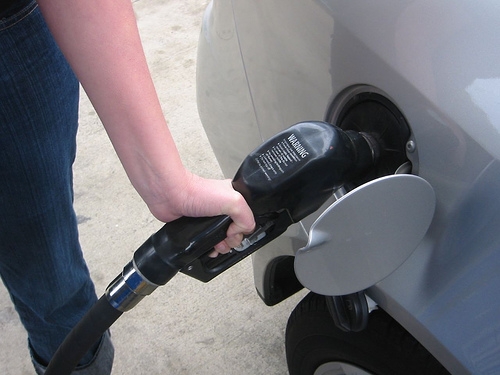
Unleaded regular's hovering around $3 per gallon - which is high, but manageable. What if it goes back up to over $3 per gallon - or even $4 per gallon? Here are a few things to think about in the way of hedging your bets and insulating yourself and your family from the economic shocks that could very well be just around the corner:
Evaluate your fleet:
If you currently drive a gas-hungry vehicle, the time to consider replacing it with a more efficient one is before gas-hungry vehicles become virtually worthless overnight - as would happen if gas prices head south of $4 per gallon.
People who are driving 17 mpg SUVs and pick-ups when gas prices suddenly spike will be left holding the keys to vehicles almost no one else wants, either.
Meanwhile, it'll be a seller's market for fuel-efficient cars. Those who don't have one will have to pay top dollar to get one.
Act pre-emotively and you'll come out on top. Fail to act and you'll be stuck with a vehicle that may cost $100 to fill-up that isn't worth a third of what you paid for it.
If you absolutely must have a truck because of the work that you do or the area where you live, consider buying a diesel-powered pick-up to replace your gas-burning one. It's true diesels cost more to buy - and the fuel is often more expensive than gas. But at $4 or $5 per gallon, the economics of owning a diesel truck that gets 30 mpg vs. a gas truck that's in the teens back flips in your favor. Plus, a diesel-powered vehicle can last two or three times as long as an otherwise similar gas-powered vehicle. If you only have to buy a new vehicle once every ten or 12 years vs. once every eight or so, that'll save you some bucks, too.
Pare down your fleet:
Some families have more vehicles than people. That's fine, provided you can easily afford all those vehicles - and not just the cost to feed them fuel. People often forget all the peripheral costs of ownership, like insurance, taxes and, of course, necessary maintenance. If you keep multiple vehicles, the total costs can end up being quite high - even if you're not actually driving the cars much.
If you can get by with two cars instead of three - or one car instead of two - the savings now can be considerable. And they'll be even more so in a world of $4 gasoline.
Another savvy move is to cash out the equity you may have in excess vehicles. By selling off a surplus car or two, you can sock away several thousand dollars - which could come in very handy on the day that fuel prices rocket to a buck (or three) more per gallon than they are right now.
Investing in a low-bucks used economy car is another smart move. The glitter surrounding a new electric car or hybrid may be dazzling - but it'll take many years to work off the cost ($41k for a new Chevy Volt) of buying one, even at $4 or $5 per gallon. A $4,000 used Corolla that gets 35 miles per gallon could ease the pinch of $50 fill-ups considerably.
Evaluate your job/where you work:
Many of us spend two hours (or more) every workday getting from home to our jobs and back home again. We bought into this because of the math. The lower cost of living in the 'burbs offset the cost of fuel spent commuting, etc... Well, it used to.
But the equation changes when gas prices double or triple. All of a sudden, instead of spending $40 per week for fuel, you might be spending $80. For many families, the additional unexpected expense might be the straw that breaks the camel's back. And there's a double-whammy involved. Once gas prices sail past $4 per gallon, those far-flung suburban homes become less and less desirable - and their value falls.
This is already happening. But if we get to $4 or $5 fuel, the downturn in the housing market could become a collapse. Few people can afford a big mortgage - and $400 per month for gas on top of it.
So if you're already close to the edge, money-wise, and know that a significant increase in your commuting costs could put extreme stress on your budget - begin thinking about options before a theoretical risk becomes an immediate crisis. Ask about telecommuting (if possible). Discuss ride-sharing with co-workers and friends. Maybe even consider moving closer to where you work. Once we get to $4 or $5 gas, your options will not be nearly as good as they are now.
Save elsewhere:
None of us can control the cost of fuel; if the sign says $4 per gallon and we need to fill up, that's what we'll pay. However, we do have control over other expenses. And we can compensate for increased energy costs by reducing what we spend on other things.
Many of us, for example, could easily get by without things like video cell phones and PDAs. Sure, electronic gadgets are fun - and handy. But the question should be: Are they necessary? And if the answer is "no" then the next question ought to be: Do I prefer having some money in the bank to cushion against possible upticks in energy costs (which can't be evaded) or am I willing to risk being strapped for money if that happens in order to have the gadgets I want but don't really need?
One last thing. Did you know that in most cases you can save money on your car insurance if you take an
online traffic school class or
defensive driving course? It works perfect for people with bad driving records and there are even
comedy traffic schools online to make taking a class even easier. The more money you have in the bank - and the lower your monthly expenses for other things - the less $4 or even $5 per gallon fuel can hurt you.
How To Avoid A Speed Trap
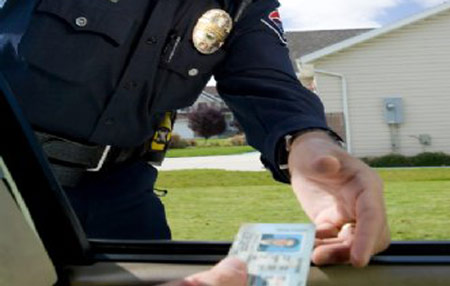
It may seem like every day is a battle while driving on the road. You race across town to get to places on time .. avoiding cars that are driving too slow or too fast. In most cases you may fall into the latter category since you're always trying to make it to your destination on time. And then BAM a speed trap...
Most of you may have experienced being in a speed trap and it sucks getting that hefty
traffic ticket which usually derives you NO mercy especially if you're going fast on residential roads.
Although we are in no way encouraging you to beat the system and go fast through town here are some tips on how to minimize getting caught in "THE SPEED TRAP."
Note: We do not condone speeding.
1. Don't speed. But if you are then look out for typical speed trap spots like heading down hills, rounding curves.
2. Utilize services online that will help you on the road. Folks are getting hip to speed traps around their town and are using the world wide web to help their fellow drivers:
The Speed Trap Exchange website [http://speedtrap.org/] helps you find speed traps along your route; before embarking on a trip do a little research and take the list with you.
Another tool to avoid speed traps and apparently favorite amongst soccer moms can be found at Trapster.com. This application can be downloaded to your cell phone and will send you real-time alerts about locations of a speed trap. What's even better is that it is hands free so it also avoids you getting a ticket for holding your cell phone to check. Visit Trapster.com for all the info.
3. Buy a Radar detector. Note to Truck Drivers: By federal law, radar detectors are illegal in commercial vehicles (such as trucks) in all states. Radar "jammers" are also illegal in all states.
4. Seems that the best tool on the road is to have knowledge of the road you're traveling so educate yourself on the maximum speed limits in all the states you'll be visiting as speed laws vary from state to state. Visit: http://www.nhtsa.gov/people/injury/enforce/speedlaws501/introduction.htm
So enjoy the road with these little tips on avoiding speed traps but most of all drive safely ... not too fast. Also, if you happen to need it
online traffic school or
defensive driving course could be the best way to fix your driving record.
DMV “Points” For Non-Moving Violations?
Did you know **state DMVs** hand out "points” for more than just moving violations? This little-known fact can surprise many drivers. If a driver racks up too many points, they might face license suspension! For instance, in California, points are added for actions like speeding or running a red light, but there's more. Accidents, insurance lags, and even some parking infractions count. According to the Insurance Institute, about 20% of drivers don't realize this. Imagine getting a letter saying your license is on the line! Always check your record and keep those points low to avoid trouble. Safe driving is more than avoiding tickets—it's about staying alert to all rules. Buckle up for a lesser-known secret of the road!
In Virginia and Maryland, for example one can get points – as well as a beefy fine – for violating carpool restrictions, or driving unbuckled.
The logic behind the points system up to now has been that it provides an objective means of ranking drivers according to their propensity to drive safely – or not. Various moving violations that enhance the risk of an accident – for example, running a red light – cause a certain number of demerit points to be assigned to that driver’s record. Accumulate too many points within a given period of time – the limit is usually 12-15 or so within a calendar year – and the DMV can suspend or revoke the offender’s license.
Insurance companies use the number of points on a driver’s DMV record to adjust insurance rates up or down. The more points, the more you pay. Drivers with 12 points or more are often stuck in the so-called “SR-22? high-risk group that typically has to pay $2,000 or more annually for coverage.
Arguably, the points system has many flaws - the most glaring one being the assignment of demerit points for simple "speeding," which often means you're guilty of nothing more serious than running afoul of a speed trap, which may be no reflection on your competence or safety behind the wheel.
But at least up to now the general rule has been that the offense must involve a moving violation that could put
others at risk.
Handing out points just because you haven’t got the mandatory number of bodies in your vehicle (HOV violation) turns that concept on its head. The person may be a scofflaw deserving of a fine. But his offense has got absolutely nothing to do with the quality of his
driving. A multiple carpool lane violator could rack up a pile of points on his record – which to any insurance agent or DMV clerk would look much the same as the record of a habitual red light runner or DWI offender.
Is that reasonable – or
ridiculous?
Seat belt laws are a similar case in point. It’s no longer sufficient merely to issue fines to those who refuse (for whatever reason) to buckle up. Most state governments have passed legislation that imposes demerit points in addition to the fines, simply for failing to wear a seatbelt.
There have even been calls to issue tickets to
passengers who aren’t buckled.
But driving while unbuckled is no more a threat to others than is baring too much skin – or wearing tacky clothes. Maybe it’s not the best idea, but does it rise to the level of a moving violation?
What it ultimately comes down to is whether we want a government – or a Salvation Army cajoling us to adopt certain “good for us” behaviors. The old-school outlook on government is that government’s job is to protect citizens from other citizens – not from ourselves. But more and more, the government is stepping in to cajole us to adopt certain behaviors and actions it thinks we should, even though these actions (whether it’s not wearing a seatbelt or smoking cigarettes) don't directly affect anyone else.
On a purely practical level, too, the use of big sticks such as the DMV points system to hencpeck and pester people over matters peripheral to their driving muddies the waters as effectively as a Mississippi paddle-wheeler. If “offenses” such as not having the proper number of warm bodies in one’s car are thrown in with genuinely dangerous actions such as red light-running and reckless driving, the DMV points system becomes less and less a barometer of safe driving and more and more an instrument of social coercion.
Maybe that’s what it’s all about, in the final analysis. There’s big money at stake – because with a greater variety of offenses on the books that can result in “bad driving records,” our friends in the insurance industry have an easier time jacking up our rates. And with more pretexts for harassment by the state, our friends in government will have more tools available to extract money from our hides via traffic tickets and court costs.
That seems to be the the lay of the land.
What do you think? At least a
defensive driving course is still cheap enough to help those with too many points.


 Live Chat