





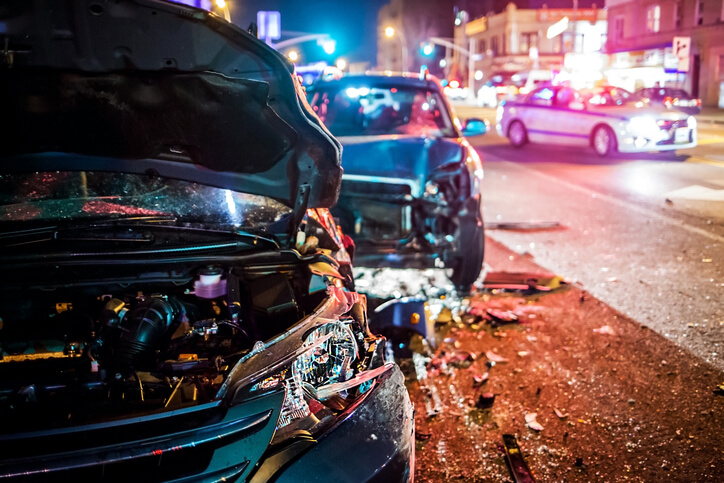
What to Do After a Car Accident in New York? Do These Steps:
Involved in a car accident in New York? This guide covers the crucial steps, legal requirements, and how to manage insurance claims to protect your rights. Car accidents in New York are largely due to driver negligence, including distracted driving, speeding, DUI, and fatigue. Distracted driving is consistently the top cause of crashes in New York, involving activities like texting and using GPS. Speeding increases accident likelihood and severity, contributing to about one-third of fatal crashes, and environmental factors like poor road conditions and hazardous weather also contribute to loss of control in vehicles. Most accidents are preventable and stem from driver negligence.
If you are involved in an accident, remain at the scene and wait for the arrival of emergency responders, as their response time is critical for assisting victims and managing the crash site. After a motor vehicle accident, individuals may obtain a Collision Report from the local precinct of occurrence. For example, if the accident happened in the town of Clarkstown or the town of Hyde Park, you should visit the respective local precinct for documentation. The Motor Vehicle Collisions data tables contain information from all police reported motor vehicle collisions in NYC.
Key Takeaways
-
After a car accident in New York, it is crucial to remain at the scene, assess injuries, call 911, and document details for insurance purposes. Leaving the scene of a collision before exchanging information with other motorists is illegal under New York State Vehicle and Traffic Law.
-
Legal requirements mandate notifying the police for accidents resulting in injuries or exceeding $1,000 in property damage, and the MV-104 report must be filed with the DMV within ten days. Failure to file the MV-104 Motorist Accident Report within 10 days can result in suspension of your driver’s license.
-
Exchanging information with other parties at the accident scene is legally required, and thorough documentation of injuries and damages is essential for insurance claims and legal protection. Police updates and images related to accidents are often shared on Facebook, and mapping information from Google Maps can help identify problematic roads.
New York City’s Vision Zero program, launched in 2014, aims to decrease traffic fatalities through education and street redesigns. The NYPD implemented TrafficStat in April 1998 to improve traffic safety, and the Traffic Accident Management System (TAMS) was implemented in July 1999 to collect traffic data uniformly across the City. The Finest Online Records Management System (FORMS) replaced TAMS in March 2016 to allow electronic entry of MV-104AN data fields. Thanks to these citywide safety initiatives, New York City’s traffic-related fatalities reached historic lows in the first half of 2025, despite over 19,000 collisions recorded in the first quarter of that year.
On Sunday, December 18, 2025, in the town of Clarkstown, Bravo Nondo, age 45, was struck and killed by a vehicle while outside of his car on Interstate 87. The driver of the vehicle was Gregg M. Albaum, an off-duty NYPD officer. Emergency responders arrived quickly at the scene to provide assistance. The investigation is ongoing, and an update will be provided as new information emerges.
On December 14, 2025, a two-vehicle head-on collision occurred in the town of Hyde Park, NY, on State Route 9. Alijah M Johnson, age 28, was killed in the crash. The driver of the Ford F-150 involved in the Hyde Park accident sustained serious injuries and was taken to the hospital. The investigation into this head-on collision is ongoing, with assistance from the New York State Police Collision Reconstruction Unit. An update will be provided as more details become available.
Drivers in New York must follow the “Move Over” law, which requires them to slow down and change lanes for stopped vehicles on the roadway. Safety tips like buckling up, staying focused, obeying laws, and vehicle maintenance can significantly reduce risks. Defensive driving involves anticipating the unexpected, maintaining a safe following distance, and scanning surroundings. Drowsy driving reduces reaction time similarly to drunk driving, and impaired driving from alcohol or drugs significantly impairs judgment. Failure to yield right-of-way is a major factor in accidents at intersections, and following too closely is a primary cause of rear-end collisions in heavy traffic. New York City’s general speed limit is 25 MPH, which should be lowered further to 5 MPH when turning.
Introduction to Car Accidents
Car accidents are an unfortunate reality for many motorists traveling throughout New York. Every year, thousands of vehicle collisions occur on city streets, highways, and the York State Thruway, leading to property damage, injuries, and sometimes tragic fatalities. The New York State Police and local precincts are dedicated to responding quickly to these incidents, ensuring the safety of everyone involved and beginning the process of investigation and reporting. According to the New York State Department of Motor Vehicles, the most common causes of accidents include distracted driving, speeding, and failure to obey traffic laws. If you find yourself involved in a car accident, your first priority should always be safety—move your vehicle to a secure location if possible, check for injuries, and exchange information with other drivers. Promptly contacting the police and filing an official report helps protect your rights and ensures that all property damage and injuries are properly documented for insurance and legal purposes.
Immediate Steps After a Car Accident in New York
The first moments following a motor vehicle accident are critical. Staying at the scene is not just a legal obligation but a matter of safety. If possible, move to a safer area away from traffic to prevent further injuries or damage. Once you’re in a secure location, assess the situation calmly.
After confirming your safety, inspect yourself and others for injuries. Even if you feel fine, call 911 for medical assistance, as some injuries may not be immediately noticeable. The arrival of emergency responders is crucial, as their prompt arrival can be critical for providing immediate treatment and managing the accident scene.
Each driver should check for injuries and exchange information, including names, contact details, and insurance information.
Stay composed and document everything you can. Take photographs of the scene, note the condition of all vehicles involved, and gather witness information. These actions will be invaluable when filing reports and insurance claims later.
Updates may be provided as more information becomes available from authorities or ongoing investigations.
Understanding the Accident Scene
When a crash occurs on New York roads, emergency responders such as the New York State Police and ambulance services are dispatched to the scene to provide immediate assistance. The preliminary investigation at the accident scene involves assessing the extent of damage, identifying all motorists and vehicles involved, and gathering initial information about how the incident happened. Sometimes, the investigation remains ongoing as police collect further evidence, interview witnesses, and reconstruct the events leading up to the collision—especially on busy routes like the York State Thruway. As a motorist, you may be required to provide additional details or testimony to help clarify the circumstances of the accident. To protect yourself and others, always remain alert, follow traffic laws, and avoid distractions while driving. Being cooperative and providing accurate information during the investigation helps ensure a fair and thorough process, while also supporting your own safety and legal standing in New York State.
Legal Requirements for Reporting a Car Accident
In New York, the legal requirements for reporting a car accident are strict. If someone is injured or killed, you must notify the police immediately. Additionally, if the accident results in property damage exceeding $1,000, contacting the police is mandatory. This ensures that a proper report is made, which is crucial for insurance and legal purposes.
Filing a motor vehicle accident report with the DMV is also required if the property damage exceeds $1,000. This report must be submitted within ten days of the accident, ensuring all legal obligations are met. Not doing so can lead to penalties and complications with insurance claims.
Filing MV-104 Report
The MV-104 form must be filed with the DMV within ten days of any motor vehicle accident causing injury, death, or significant property damage involving motor vehicles. This form captures crucial details about the accident, including the parties involved, vehicle information, and the circumstances leading to the collision.
Mail the MV-104 report to the specified DMV address, ensuring all sections are completed accurately to avoid any delays in processing. This step is essential for legal compliance and facilitating your insurance claims.
Police Report Requirements
In New York, a police report is necessary when there are injuries, fatalities, or damage to property where the owner cannot be located. When contacting the police, provide clear and concise information about the accident, including the location, number of vehicles involved, and any injuries. This helps create an accurate record of the incident, which is vital for legal and insurance purposes.
The police report serves as an official document that can support your case if there are disputes over fault or damages. It ensures that all involved parties are properly accounted for after a serious accident. Individuals may obtain a Collision Report from the local precinct of occurrence after a motor vehicle accident.
Exchanging Information at the Scene
Exchanging information at the scene of a collision is a legal requirement in New York. Provide your name, address, driver’s license number, vehicle registration, and insurance details to the other drivers. Include your insurance policy number and its effective date.
Not exchanging information can lead to legal consequences. Gather as many details as possible from the other parties, including their contact information and insurance details. This information will be crucial when filing reports and insurance claims.
If the accident only involves property damage, this exchange suffices, and a police report isn’t mandatory.
Handling Property Damage and Parked Vehicles
Addressing property damage after a motor vehicle accident in New York State requires prompt action. If you damage a parked vehicle, New York traffic law mandates that you attempt to locate the owner or report the incident to the police, ensuring the owner can take necessary actions regarding the New York state vehicle
In cases where the owner cannot be found, contacting the police is essential. This step demonstrates your responsibility and helps avoid potential legal issues.
Remember, vehicle collisions involving only property damage do not need to be reported to the police unless specific conditions apply.
Injuries and Medical Attention
In the event of injuries or fatalities, inform the police and call for medical assistance. Some injuries, such as whiplash or internal bleeding, may not show immediate symptoms, making a medical evaluation crucial. Mental health issues, like PTSD, can also arise after a car accident and should be addressed promptly.
Documenting all injuries and medical treatments is vital for legal and insurance purposes. The MV-104 report captures important details about the accident and the involved parties, aiding in substantiating claims and ensuring all injuries are accounted for.
Keep detailed records of all related expenses, including medical bills, to support your case.
Insurance Claims Process
Filing an insurance claim after a vehicle collision involves several steps. Report to your insurance company promptly to facilitate the claims process. Photographs of the accident scene and vehicle damages serve as vital evidence.
Accurate communication with your insurer is crucial. Provide specifics about the vehicles, damages, and injuries. Medical documentation linking injuries to the incident is vital for substantiating claims. Consulting with a New York car accident lawyer can help ensure your rights are upheld, especially when dealing with insurance companies.
Legal Implications and Traffic Law
Understanding the legal implications of a motor vehicle accident is important. It is illegal to leave the scene of an accident, regardless of the damage extent. Doing so can lead to criminal charges and complicate insurance claims.
A reportable crash in New York State is one that results in a fatality, personal injury, or property damage exceeding $1,000. Knowing these thresholds helps you meet all legal obligations, avoiding penalties and ensuring smooth claim processes.
Getting a Copy of Your Crash Report
Obtaining a copy of your crash report is crucial after an accident. This document provides an official record and opinion on fault, which can be critical for insurance and legal purposes.
You can obtain a crash report online by paying a search fee of $7.00 and a report fee of $15.00 per report. Alternatively, you can order by mail by completing the MV-198C form and sending it along with the necessary fees.
DMV Crash Re-examination Program
The DMV’s crash re-examination program targets drivers involved in three or more reportable crashes within 18 months. This program assesses New York State driving competency and ensures road safety.
Drivers selected for re-evaluation receive a letter requesting an interview at a DMV office, potentially involving eye tests, written tests, and road tests. This thorough evaluation ensures only competent drivers remain on the road, enhancing overall traffic safety.
Repairing and Replacing Your Vehicle
After a car accident in New York, one of the first concerns for motorists is addressing the damage to their vehicle. Depending on the severity of the collision, your car may need repairs or, in some cases, may be declared a total loss. Start by contacting your insurance provider to report the incident and begin the claims process. Your insurer will typically assign an adjuster to inspect the vehicle, assess the damage, and provide an estimate for repairs or replacement. To streamline your claim, keep detailed records of all communications, including emails, phone calls, and any written correspondence. You can also access your official accident report through the Collision Report Retrieval Portal, which provides essential information needed for your claim. By staying organized and proactive, you can help ensure that your vehicle is repaired or replaced as quickly and efficiently as possible, minimizing the disruption caused by the accident.
Protecting Your Rights
Protecting your rights after an accident involves several steps. Choosing an experienced lawyer can significantly impact the outcome, as they understand local laws and insurance practices. Gathering witness statements and other evidence can support your case, especially if fault is contested.
Being proactive in protecting your rights ensures you receive fair treatment and compensation.
Handling the Aftermath
The period following a car accident can be overwhelming, especially if there are injuries or fatalities involved. Your health and safety should always come first—seek medical treatment for any injuries, no matter how minor they may seem. The police will conduct a thorough investigation, which may include interviewing witnesses, reviewing surveillance footage, and analyzing data from your vehicle’s onboard computer system to determine the cause of the accident. As a motorist, it’s important to cooperate fully with the investigation and provide any requested information, such as photos, witness statements, and other relevant details. The New York State Department of Motor Vehicles offers online resources to help you navigate the aftermath, including guidance on reporting requirements and next steps. By staying informed and responsive, you can help ensure a smooth resolution to the incident and protect your rights throughout the process.
Staying Safe on New York Roads
Staying safe on New York roads requires vigilance, preparation, and a commitment to responsible driving. The New York State Police recommend several key safety tips: always wear your seatbelt, avoid distractions like texting or using your phone, and obey all traffic laws. Defensive driving courses, such as those offered by IMPROV Traffic School, provide valuable education on hazard recognition and accident avoidance, helping motorists reduce their risk of being involved in a crash. Utilize technology like GPS and real-time traffic apps to plan your route and avoid congested or hazardous areas, especially when traveling southbound on the York State Thruway or other major highways. Be mindful of changing road conditions, including construction zones and inclement weather, and adjust your driving accordingly. By following these tips and staying alert, you can protect yourself, your passengers, and other motorists, making New York’s roads safer for everyone.
Summary
To sum up, knowing the immediate steps to take after a car accident, understanding legal requirements, and handling property damage and injuries are crucial. Being prepared ensures you can navigate the complexities of New York’s traffic laws confidently.
Remember, each step you take, from exchanging information to filing reports and seeking medical attention, plays a pivotal role in protecting your rights and ensuring a fair resolution. Stay informed and proactive to handle any vehicle collision effectively.
Frequently Asked Questions
What should I do immediately after a car accident in New York?
It is essential to remain at the scene of the accident, ensure safety by moving to a secure location if necessary, check for injuries, and contact 911 for medical assistance. Taking these steps promptly can help manage the situation effectively.
When is it mandatory to contact the police after an accident?
It is mandatory to contact the police after an accident if there are injuries, fatalities, or if property damage exceeds $1,000. Ensure you comply with this requirement for proper documentation.
What information should be exchanged at the accident scene?
It is essential to exchange names, addresses, driver’s license numbers, vehicle registration details, insurance policy numbers, and the effective dates of those policies at the accident scene. This information is crucial for facilitating communication and resolving any claims that may arise from the incident.
How can I obtain a copy of my crash report?
To obtain a copy of your crash report, you can request it online by paying a search and report fee, or you can order it by mail using the MV-198C form.
What is the DMV crash re-examination program?
The DMV crash re-examination program mandates the evaluation of drivers who have been involved in multiple reportable crashes within an 18-month period to assess their driving competency. This initiative aims to enhance road safety by ensuring that potentially unsafe drivers receive the necessary scrutiny.

