How Long Do Points Stay on Your License in NY?
2026 Update: New York's point look-back window changed on February 16, 2026. Points now count toward your suspension total for 24 months from the violation date, extended from the prior 18-month window. If any information you've read cites 18 months for suspension calculations, it reflects the old rules.
The Two Timelines You Need to Know
Points in New York operate on two separate timelines, and confusing them is one of the most common mistakes drivers make.
For suspension and DRA purposes: Points count for 24 months from the date of the violation (changed from 18 months as of February 16, 2026). Any violation dated within the last 24 months is actively factoring into your point total for DMV enforcement purposes.
For your driving record: The violation itself stays on your driving record for 3 years after conviction. Even after points stop counting toward suspension calculations, the underlying offense remains visible, to insurers, employers, and courts.
For alcohol- and drug-related offenses: These are the exception to both timelines above. A DWI, DWAI, or drug-related conviction stays on your driving record for 10 years and carries its own mandatory consequences separate from the point system.
How Points Are Calculated
Three things govern how points accumulate on your New York license:
- You must be convicted of a moving violation, points are not assessed at the time of the ticket
- Points are assigned based on the date of the violation, not the date of conviction
- Any violation dated within the last 24 months counts toward your active point total for suspension and DRA purposes
The practical implication of point 2 is significant: if you were ticketed in January but not convicted until July, the January date is what matters for your point window, not July.
How Long Different Things Stay on Your Record
|
Item
|
How Long It Stays
|
|
Moving violation conviction
|
3 years from conviction date
|
|
Points counting toward suspension / DRA
|
24 months from violation date
|
|
Alcohol- or drug-related conviction
|
10 years
|
|
License suspension or revocation
|
Up to 4 years
|
|
PIRP course completion
|
10 years (noted on abstract)
|
What Happens as Points Accumulate
New York's penalties escalate in stages as your point total grows:
6+ points within 18 months → Driver Responsibility Assessment (DRA) You'll receive a fee bill from the DMV, separate from any fines, payable annually for three years. The base rate is $100/year for 6 points, plus $25/year for each additional point. Failing to pay suspends your license.
10+ points within 24 months → Suspension review hearing Under the updated 2026 rules, reaching 10 points within 24 months triggers a DMV suspension review (down from the prior threshold of 11 points within 18 months). At the hearing, the DMV determines whether to suspend your license.
Mandatory suspension regardless of points Some offenses result in immediate license suspension or revocation with no point threshold required. These include DWI/DWAI convictions, refusing a chemical test, three speeding violations within 18 months, driving without insurance, and leaving the scene of a crash involving injury.
Points Assigned for Common Violations
|
Violation
|
Points
|
|
Speeding 1–10 mph over
|
3
|
|
Speeding 11–20 mph over
|
4
|
|
Speeding 21–30 mph over
|
6
|
|
Speeding 31–40 mph over
|
8
|
|
Speeding 40+ mph over
|
11
|
|
Cell phone / portable electronic device
|
5
|
|
Reckless driving
|
5
|
|
Passing a stopped school bus
|
8 (increased Feb 2026)
|
|
Speeding in a construction zone
|
8 flat (changed Feb 2026)
|
|
DWI / drug-related conviction
|
11 (new Feb 2026)
|
|
Aggravated Unlicensed Operation
|
11 (new Feb 2026)
|
|
Failure to yield right-of-way
|
3
|
|
Tailgating / following too closely
|
4
|
|
Improper passing
|
3
|
|
Leaving scene of property damage accident
|
3
|
|
Leaving scene of personal injury accident
|
5 (increased Feb 2026)
|
|
Failure to exercise due care
|
5 (increased Feb 2026)
|
|
Railroad crossing violation
|
5
|
|
Child safety restraint violation
|
3
|
Violations that do NOT add points: Parking violations, bicycle violations, pedestrian violations, equipment violations, weight or emissions violations, and unregistered/uninsured driving.
Disclaimer: Official point system information is still being updated across NY DMV resources and some figures may not yet fully reflect the February 16, 2026 changes. Values marked (new/increased/changed Feb 2026) are sourced from the official NY DMV press release. Confirm current point values at dmv.ny.gov or by calling your local DMV office.
The Effect of the 24-Month Window in Practice
The shift from 18 to 24 months has a real impact on drivers who received tickets in 2024 and early 2025. Under the old rules, a violation from 20 months ago would no longer count toward your suspension total. Under the current rules, it does.
If you received any violations between roughly February 2024 and August 2024, those tickets that may have felt "expired" are now back in your active window. Combined with any new violations, they count toward the 10-point suspension threshold.
The best way to know exactly where you stand is to check your abstract through MyDMV.
How to Reduce Points on Your NY License
The only active tool available to New York drivers for reducing their point total is the Point and Insurance Reduction Program (PIRP), a DMV-approved defensive driving course.
Completing PIRP instructs the DMV not to count up to 4 points toward your suspension calculation. It does not remove the violation or conviction from your record, those stay for 3 years (or 10 years for alcohol-related offenses). But for the purpose of determining whether your license should be suspended, those 4 points are excluded.
Important limitations:
- PIRP point reduction applies only to violations within the 18 months before your course completion date
- It cannot reduce your point total below zero
- It does not apply to mandatory suspensions (DWI, DWAI, three speeding violations in 18 months)
- It does not prevent or reduce a Driver Responsibility Assessment already in progress
- You can use PIRP for point reduction once every 18 months
In addition to point reduction, completing PIRP qualifies you for a 10% discount on auto insurance premiums (liability, no-fault, and collision) for 3 years, required by New York State law for all licensed insurers. You can take PIRP once every 3 years for the insurance discount.
Disclaimer: Actual insurance savings vary by carrier, policy, and coverage levels. The 10% discount is required by NY law, but specific dollar savings are estimates based on general research and are not guaranteed. Contact your insurer for figures specific to your policy.
Is Olympic Bobsledding as Dangerous as Speeding?

We’ve all had that moment. Sitting at a red light on dry, empty pavement. The road ahead stretched out for miles on end, dissolving over the horizon, beckoning you, seducing you—to slam your foot onto the accelerator and start speeding.
Maybe you’re running late and can’t stand the thought of missing Toyotathon. Maybe you just long to hear the engine roar louder than the wind around you, your vision distorting as your hands clench the wheel and knuckles whiten. The crosswalk timer ticks down as you wait for the light to change. Your heart racing as your lips tremble, then open, and you shakily utter, “Hey Siri, play Danger Zone on Spotify.” Then a split second of inquisition: there’s nothing wrong with a little bit of speeding, right? How dangerous could it be? After all, Olympic bobsledders go really fast. Why can’t I?
[framed_box]
Bobsledding or Speeding?
This is actually a very common question. When approached with this topic, most if not all drivers rationalize speeding in a motor vehicle by comparing it to the bravery and engineering, logistical, and co-ordinational ingenuity of Olympic Bobsledding.
While not logically or morally sound, this is a tactic employed by many decent folks, most of the time just trying to get to where they need to go and finding ways to justify the means of doing so, regardless of the safety of themselves or others.
[/framed_box]
[framed_box]
The Cold, Hard Data
According to the National Highway Traffic Safety Administration (NHTSA), speeding was the cause of 9,557 deaths in 2015. In contrast, there are only a handful of recorded bobsled deaths at Olympic sanctioned events or training exercises. And this is in a sport that involves drivers and riders in thin, aerodynamic body suits and a helmet, hurtling down an unforgiving, serpentine track at over 90 mph in a light metal-bodied sled they can barely see out of.
Even us amateurs with our “airbags” and “seatbelts” operate vehicles at a higher risk of fatality than these brave men and women. Not to mention the risk of injuring or killing someone else at our fault.
[/framed_box]
[framed_box]
The Truth
Setting aside this risk of physical injury or death still leaves us with very little to gain. While an Olympic Bobsledder is paid to represent their country, practice for months and months on end, and stand to win glory, honor, and a priceless medal with some cash, us gas guzzling, rubber tire handling, government safety regulated plebeians stand to win nothing but a few extra minutes wherever we’re going. But more likely, a ticket—or even jail time.
[/framed_box]
[framed_box]
The Solution
It is disrespectful and egregiously offensive to compare our self-conceived prerogative to speed with the prestige of the world’s finest athletes. It is incumbent upon us to yield our most carnal desires; our needs for speeds, to the recognition of the limitation of our abilities.
However, when we fall victim to our self-desires of going over the speed limit and we’re slapped with a traffic ticket, there is a light at the end of the tunnel. That light is Myimprov.com. Your
traffic school online. You don’t have to succumb to increased insurance rates because you have a ticket.
By enrolling into our traffic school online, you can prove to everyone that you are a safe driver. Safe drivers have lower insurance rates and clean driving records. You should stop speeding. But, when you are given a ticket for not controlling yourself, just remember there is a solution.
[/framed_box]
New Year’s Resolution – Visit These Towns in the U.S.

Is your New Year's resolution to get out of the house more? It's time to hop in the car for a road trip (but try not to get too excited, you don't want to earn any
speeding ticket points along the way). Sure, you can post a selfie in Times Square or next to the Grand Canyon ... just like a million other people. Instead, track down some of the USA's hidden gems and take a photo of yourself in front of some names almost too strange to be believed.
[framed_box]
Frankenstein, Missouri
This unincorporated community was probably not named after the infamous fictional doctor who could reanimate the dead. Instead, it likely comes from the name of one of their first pioneer founders, Godfried Franken. However, locals are good sports about the name. In fact, many residents took part in the reality-blurring movie 'Frankenstein, Missouri,' which was filmed there.
[/framed_box]
[framed_box]
Boring, Oregon
Located along the northern edge of the state in the Cascade foothills, Boring, Oregon is anything but its namesake. It was built on the site of Union Army veteran William Boring's homestead when he and his family settled there in 1856. If you visit the area, check out the Boring Lava Field north of town, get some fresh air on nearby Mount Hood, and keep an eye out for film crews. Jack Black is supposedly producing a 'serial killer comedy' set in colorful Boring, Oregon.
[/framed_box]
[framed_box]
Paw Paw, West Virginia
This town is located in a bend of the Potomac River bordering the Green Ridge State Forest. The town's founders named the site after, not a beloved grandpa, but the Pawpaw Tree. The fruits of this tree, which look like mangoes, were prized by American settlers who loved its banana custard-like flavor. If you'd like to experience the taste yourself, you can find pawpaw preserves in local markets.
[/framed_box]
[framed_box]
Hell, Michigan
This town, located about 15 miles outside of Ann Arbor, certainly has an unfortunate-sounding name. There are two theories about how it came about. Some say a pair of visiting Germans came by one sunny day and declared the place was 'hell,' the German word for 'bright.' Others say the name came from hellish levels of mosquitoes that greeted early settlers. While you're there, play something from town native Michael Katon and The Helltown Bluesband.
[/framed_box]
[framed_box]
Red Shirt, South Dakota
Fans of Star Trek may want their photos taken by this town in the Pine Ridge Reservation on their way to Badlands National Park. However, this Ogala village wasn't named after the ill-fated extras on that beloved sci-fi TV series. Instead, it was named in honor of Chief Red Shirt, who led the Ogala and Lakota to settle in the region in the 1870s.
[/framed_box]
[framed_box]
Waterproof, Louisiana
If you've ever been to Louisiana, you understand what a bold claim the name makes. This village, on the banks of the Mississippi, was ironically struck by drought in 2008. Despite it's small population (currently just over 600), Waterproof has been the birthplace of several celebrities including 1961's Miss USA Sharon Renee Brown and football player John Henry Johnson. And the name? In the 1830s, wagons struggled to cross the flooded river. Waterproof was built on a small hillock of land that never submerged.
[/framed_box]
[framed_box]
Looneyville, USA
Do you ever feel like you're living in Crazytown? You may be! There are actually four in the USA, three of them located in Texas, West Virginia, and New York and named after various settlers with 'Looney' as a last name. The fourth is, naturally, in Florida. While visiting, keep your eyes peeled for real-life examples of Floridaman.
[/framed_box]
How long do points stay on your license in NY?
2026 Update: New York's point look-back window changed on February 16, 2026. Points now count toward your suspension total for 24 months from the violation date, extended from the prior 18-month window. If any information you've read cites 18 months for suspension calculations, it reflects the old rules.
The Two Timelines You Need to Know
Points in New York operate on two separate timelines, and confusing them is one of the most common mistakes drivers make.
For suspension and DRA purposes: Points count for 24 months from the date of the violation (changed from 18 months as of February 16, 2026). Any violation dated within the last 24 months is actively factoring into your point total for DMV enforcement purposes.
For your driving record: The violation itself stays on your driving record for 3 years after conviction. Even after points stop counting toward suspension calculations, the underlying offense remains visible, to insurers, employers, and courts.
For alcohol- and drug-related offenses: These are the exception to both timelines above. A DWI, DWAI, or drug-related conviction stays on your driving record for 10 years and carries its own mandatory consequences separate from the point system.
How Points Are Calculated
Three things govern how points accumulate on your New York license:
- You must be convicted of a moving violation, points are not assessed at the time of the ticket
- Points are assigned based on the date of the violation, not the date of conviction
- Any violation dated within the last 24 months counts toward your active point total for suspension and DRA purposes
The practical implication of point 2 is significant: if you were ticketed in January but not convicted until July, the January date is what matters for your point window, not July.
How Long Different Things Stay on Your Record
|
Item
|
How Long It Stays
|
|
Moving violation conviction
|
3 years from conviction date
|
|
Points counting toward suspension / DRA
|
24 months from violation date
|
|
Alcohol- or drug-related conviction
|
10 years
|
|
License suspension or revocation
|
Up to 4 years
|
|
PIRP course completion
|
10 years (noted on abstract)
|
What Happens as Points Accumulate
New York's penalties escalate in stages as your point total grows:
6+ points within 18 months → Driver Responsibility Assessment (DRA) You'll receive a fee bill from the DMV, separate from any fines, payable annually for three years. The base rate is $100/year for 6 points, plus $25/year for each additional point. Failing to pay suspends your license.
10+ points within 24 months → Suspension review hearing Under the updated 2026 rules, reaching 10 points within 24 months triggers a DMV suspension review (down from the prior threshold of 11 points within 18 months). At the hearing, the DMV determines whether to suspend your license.
Mandatory suspension regardless of points Some offenses result in immediate license suspension or revocation with no point threshold required. These include DWI/DWAI convictions, refusing a chemical test, three speeding violations within 18 months, driving without insurance, and leaving the scene of a crash involving injury.
Points Assigned for Common Violations
|
Violation
|
Points
|
|
Speeding 1–10 mph over
|
3
|
|
Speeding 11–20 mph over
|
4
|
|
Speeding 21–30 mph over
|
6
|
|
Speeding 31–40 mph over
|
8
|
|
Speeding 40+ mph over
|
11
|
|
Cell phone / portable electronic device
|
5
|
|
Reckless driving
|
5
|
|
Passing a stopped school bus
|
8 (increased Feb 2026)
|
|
Speeding in a construction zone
|
8 flat (changed Feb 2026)
|
|
DWI / drug-related conviction
|
11 (new Feb 2026)
|
|
Aggravated Unlicensed Operation
|
11 (new Feb 2026)
|
|
Failure to yield right-of-way
|
3
|
|
Tailgating / following too closely
|
4
|
|
Improper passing
|
3
|
|
Leaving scene of property damage accident
|
3
|
|
Leaving scene of personal injury accident
|
5 (increased Feb 2026)
|
|
Failure to exercise due care
|
5 (increased Feb 2026)
|
|
Railroad crossing violation
|
5
|
|
Child safety restraint violation
|
3
|
Violations that do NOT add points: Parking violations, bicycle violations, pedestrian violations, equipment violations, weight or emissions violations, and unregistered/uninsured driving.
Disclaimer: Official point system information is still being updated across NY DMV resources and some figures may not yet fully reflect the February 16, 2026 changes. Values marked (new/increased/changed Feb 2026) are sourced from the official NY DMV press release. Confirm current point values at dmv.ny.gov or by calling your local DMV office.
The Effect of the 24-Month Window in Practice
The shift from 18 to 24 months has a real impact on drivers who received tickets in 2024 and early 2025. Under the old rules, a violation from 20 months ago would no longer count toward your suspension total. Under the current rules, it does.
If you received any violations between roughly February 2024 and August 2024, those tickets that may have felt "expired" are now back in your active window. Combined with any new violations, they count toward the 10-point suspension threshold.
The best way to know exactly where you stand is to check your abstract through MyDMV.
How to Reduce Points on Your NY License
The only active tool available to New York drivers for reducing their point total is the Point and Insurance Reduction Program (PIRP), a DMV-approved defensive driving course.
Completing PIRP instructs the DMV not to count up to 4 points toward your suspension calculation. It does not remove the violation or conviction from your record, those stay for 3 years (or 10 years for alcohol-related offenses). But for the purpose of determining whether your license should be suspended, those 4 points are excluded.
Important limitations:
- PIRP point reduction applies only to violations within the 18 months before your course completion date
- It cannot reduce your point total below zero
- It does not apply to mandatory suspensions (DWI, DWAI, three speeding violations in 18 months)
- It does not prevent or reduce a Driver Responsibility Assessment already in progress
- You can use PIRP for point reduction once every 18 months
In addition to point reduction, completing PIRP qualifies you for a 10% discount on auto insurance premiums (liability, no-fault, and collision) for 3 years, required by New York State law for all licensed insurers. You can take PIRP once every 3 years for the insurance discount.
Disclaimer: Actual insurance savings vary by carrier, policy, and coverage levels. The 10% discount is required by NY law, but specific dollar savings are estimates based on general research and are not guaranteed. Contact your insurer for figures specific to your policy.
These Are the Worst States to Get Caught Speeding
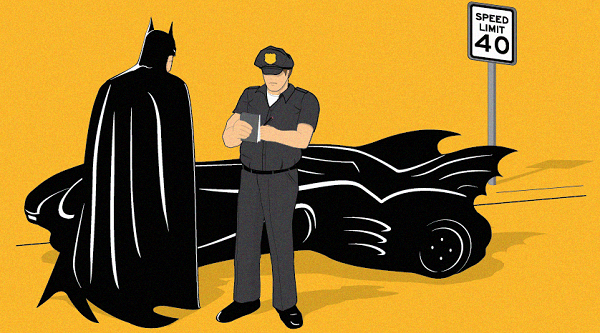
The US is an enormous country and state laws can vary drastically, even among neighboring states! What carries a small penalty in one state might set you back $1,000 by crossing a border seconds later. The legal jurisdiction on American roads is a confusing web, with counties, municipalities, and states applying different laws on the streets which they patrol. Even though the interstate system is federally funded, it is managed within the states by the state governments themselves. All of this leads to the fact that not all speeding fines are created equal in America. The following states are the worst offenders when it comes to massive fines, license suspensions, and speed traps.
California
Not only is California huge and highly-populated, but the dominant car culture leads to tens of millions of drivers on the roads all the time. It’s notorious for having many officers patrolling for speeders, and a ticket can increase the already high insurance premiums in the state to unsustainable levels.
Virginia
Anytime you’re going 20 mph or more over the posted speed limit, or 80 mph or more no matter
what the speed limit is, Virginia considers it reckless driving. They might try to hit you with a $2,500 fine and even jail time!
New York
As if driving there wasn’t already a nightmare, traffic cops in New York City love to penalize drivers and levy fines that will inject the city’s massive budget with much-needed revenue. The state issues the third most traffic tickets in the entire country. Depending on the court and your driving record, you may be able to take a
NY Defensive Driving course to stop the speeding ticket's points from going on your record.
Massachusetts
The Bay State is geographically small and densely populated, which means that it’s relatively easy for the state police to rely on speed traps. Once you’re caught, the fine structure for most Massachusetts tickets is notoriously elaborate. They also have incredibly high filing fees for anyone daring to fight a ticket through the legal system.
Georgia
Georgians love their cars and trucks, and police officers in Georgia love handing out heavy fines to speeders. Some tickets can carry fines up to $1,000, especially if you were caught speeding in a school or work zone.
New Hampshire
New Hampshire advises the country to “Live Free or Die.” They just don’t want you to live too freely with your foot on the gas pedal, apparently. Speeding through the beautiful lakes and mountain scenery of the Granite State can net you fines of up to $1,000.
Washington D.C.
No, it’s not technically a state, and yes, it still counts. How could it not when District cops issue more than 400,000 speeding tickets a year for a city with a population just north of half a million? Because D.C. has no state government to set a budget, this job falls to the US congress. With little federal money available for city services, administrators rely on ticket fees to cover some expenses.
Vermont
When you’re traveling through Vermont’s mountainous terrains and relatively open roads, you’re probably not expecting severe speed traps. That’s how they get you, as many tiny towns in the state are infamous for having speed limits drop abruptly with law enforcement waiting nearby.
Connecticut
Connecticut has a bunch of state police officers trying to catch speeders, they just don’t want you to know that’s what they’re doing. The force has a large fleet of unmarked police vehicles, often in models that differ from the traditional Crown Victoria’s and Impalas most of us are familiar with.
New Jersey
The most densely populated state in the union is also home to the most speed traps of any state. What makes it worse is that the
New Jersey Turnpike is a major thoroughfare through the Northeast and Mid-Atlantic, making it likely that you must drive there!
No matter what state you were in when you were issued a speeding ticket, the first thing that you should do is schedule a traffic school or defensive driving course. While the states levy significant fines and license penalties for drivers who are caught, many of them will agree to dismiss the ticket if you successfully complete a defensive driving or
traffic school course. In fact, you should schedule a class even if you haven’t been issued a traffic ticket. You could be eligible for an insurance discount just for taking the initiative to be a safer driver!
How Much is a New Jersey Speeding Ticket?
[framed_box]
Speeding Tickets in Different States:
[/framed_box]

If you drive over the speed limit, you run the risk of getting pulled over for speeding. When you are pulled over, the police officer has the discretion to issue you a warning or write you a ticket. If you were one of the unlucky ones who received a ticket, you may find yourself wondering how much a New Jersey speeding ticket will cost you. The fine associated with the speeding ticket is not the only expense you will incur because of the ticket. You may decide to participate in traffic school if you are eligible or you may take allow the ticket to hit your driving record and have surcharges issued by the state for poor driving. Here are a few of the ways that a New Jersey speeding ticket can cost you and the expenses associated with the ticket.
The Cost of the Speeding Ticket Itself

If you are caught speeding, the amount you are fined varies based on where you were speeding and how many miles over the speed limit you were going. For a simple speeding violation, one where you are going one to nine miles over the speed limit, your fine will be $85. If you are 15 to 19 miles per hour over the speed limit, the fine increases to $180. And if you are 30 to 39 miles per hour over the speed limit, your fine will be $240 to $260. Additionally, there are factors that increase fines. If you are in a construction zone, in a safe corridor, in a school zone or speeding through a crosswalk, your fines will increase. If you are looking to find out what the exact fine is for your violation, be sure to check out this chart. Also, keep in mind that these are standard fines. If you go to court and appeal the ticket, the judge has the discretion to throw the ticket out or reduce your fine amount.
New Jersey SPEEDING TICKET COST TABLE
| 1 - 9 m.p.h. |
$85.00 |
$140.00 |
2 Points |
| 10 - 14 m.p.h |
$95.00 |
$160.00 |
2 Points |
| 15 - 19 m.p.h. |
$105.00 |
$180.00 |
4 Points |
| 20 - 24 m.p.h. |
$200.00 |
$360.00 |
4 Points |
| 25 - 29 m.p.h. |
$220.00 |
$380.00 |
4 Points |
| 30 – 34 m.p.h. |
$240.00 |
$400.00 |
5 Points |
| 35+ m.p.h. |
$260.00 |
$420.00 |
5 Points |
*If you are caught speeding in a work zone, safe corridor, or 65 mph zone, your fine will be doubled!
Points

The state of New Jersey uses a point system. If you are given traffic tickets or involved in car accident, you receive points on your driving record. The number of points you receive for a speeding ticket varies, based on how many miles over the speed limit you were going. You receive two points if you are 1-14 miles per hour over the speed limit, four points if you are 15 to 29 miles per hour over and five points if you are 30 miles per hour over the speed limit or more. If you exceed more than six points in a three year period, the state of New Jersey will issue you a $150 surcharge plus $25 for each additional point. These fines remain in effect yearly until your points drop below six and if you fail to pay, you can lose your license. If you go a year with no infractions, you lose three points, which is the best way to reduce your points.
Traffic School Costs
Another way to reduce the number of points you have on your driving record is to take traffic school or a defensive driving course. In New Jersey, you can take
NJ traffic school to remove two points from your record once every five years. Because of this, you may wish to participate in driving school if you have received a speeding ticket. In New Jersey, the lowest price allowed by law for this course is $20. There is no maximum cost allowed by law. Additionally, once you complete one of these courses, insurance companies may reduce your insurance by up to ten percent for two to five years.
If you are pulled over for speeding, research shows that being honest with the cop about why you are speeding, as well as being polite and courteous, are the best ways to avoid a ticket. However, no matter how honest or polite you are, some days a cop has a no-tolerance stance and will issue you a ticket. When this occurs, that speeding ticket will cost you. Learning how much will help you budget so you can pay off the fine and the associated costs.
Different States Speeding Ticket
How Much is A Speeding Ticket in Arizona?
[framed_box]
Speeding Tickets in Different States:
[/framed_box]
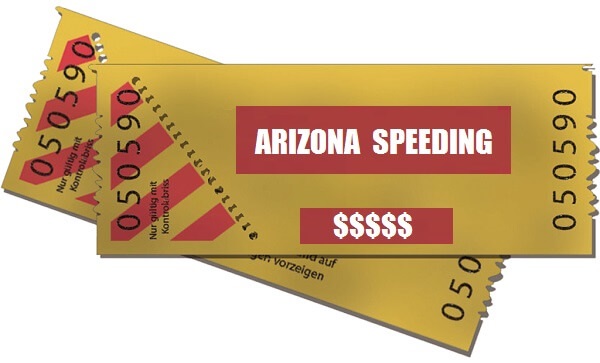
The state of Arizona makes use of several unique methods to nab speeders. Arizona drivers must be aware of stationary traffic cameras, officer radar guns, unmarked police cars and beyond. If you are pulled over for speeding, you will likely receive a fine as well as points on your driving record/license.
Understanding Arizona Speeding Fines, Traffic School, and Criminal Penalties
It is important to note that specific speeding fines differ by city and county. As an example, someone caught speeding in Flagstaff will not face the same fine as someone who is nabbed speeding in Tucson. Additionally, those who have not been caught speeding in the past will likely face less of a fine than those who have received multiple speeding tickets.
Begin your online course today to get rid of that ticket.
The table below displays the top 5 counties
Arizona drivers get caught speeding in. Traffic school prices differ based on individual court diversion fees. Take a look at the ultimate savings here:
| Maricopa |
|
|
|
|
10-14 mph |
$250 |
$203.95 - $265.95 |
|
15-19 m.p.h. |
$300 |
$203.95 - $265.95 |
|
20+ mph |
$350-$450 |
$203.95 - $265.95 |
|
Traffic Camera |
$165-$200 |
$203.95 - $265.95 |
| Cochise |
|
|
|
|
10-14 mph |
$250 |
$103.95 - $253.95 |
|
15-19 m.p.h. |
$300 |
$103.95 - $253.95 |
|
20+ mph |
$350-$450 |
$103.95 - $253.95 |
|
Traffic Camera |
$165-$200 |
$103.95 - $253.95 |
| Mohave |
|
|
|
|
10-14 mph |
$250 |
$103.95 - $228.95 |
|
15-19 m.p.h. |
$300 |
$103.95 - $228.95 |
|
20+ mph |
$350-$450 |
$103.95 - $228.95 |
|
Traffic Camera |
$165-$200 |
$103.95 - $228.95 |
| Pima |
|
|
|
|
10-14 mph |
$250 |
$103.95 - $233.95 |
|
15-19 m.p.h. |
$300 |
$103.95 - $233.95 |
|
20+ mph |
$350-$450 |
$103.95 - $233.95 |
|
Traffic Camera |
$165-$200 |
$103.95 - $233.95 |
| Pinal |
|
|
|
|
10-14 mph |
$250 |
$103.95 - $233.95 |
|
15-19 m.p.h. |
$300 |
$103.95 - $233.95 |
|
20+ mph |
$350-$450 |
$103.95 - $233.95 |
|
Traffic Camera |
$165-$200 |
$103.95 - $233.95 |
For complete list of AZ Court Diversion Fees:
Click Here
[framed_box]
Show Arizona the Money
Police officers are required to follow nuanced guidelines when determining the value of a speeding ticket. However, in some instances, the officer will consider the driver's level of resistance/compliance when determining the cost of the speeding ticket. In other instances, the officer will follow the specific formula that determines the cost of a speeding ticket. If it is determined that you were driving more than 10 miles per hour beyond the speed limit, the financial penalty for your ticket will rise quite dramatically.
A speeding ticket for driving 10 miles per hour beyond the speed limit runs $250. This cost increases $50 for every 5 miles per hour beyond 10 miles per hour above the speed limit.
A speeding ticket for driving 20 miles per hour over the posted speed limit can be increased by $200 more than the initial $250 fee. Driving at such a fast rate of speed can also result in the suspension of the driver's license. It is even possible for the license to be revoked when the
traffic stop occurs.
The amount of the speeding ticket can be changed according to whether the driver was nabbed speeding by one of the state's stationary
traffic cameras. This style of speeding ticket is sent through the mail. It requires the driver to pay a set cost of $165 along with an additional $30 in fees and surcharges.
[/framed_box]
[framed_box]
Show Traffic School the Money - It's CHEAPER!

It is usually less expensive to take and pay for
AZ defensive driving course, not have any points added to your driving record and avoid having your insurance rates up than to pay your ticket, have points added to your record and have your auto rates increase dramatically.
[/framed_box]
[framed_box]
Eligibility and More

Arizona allows residents to enroll in traffic school once every 12 months. When you take the course, it will only dismiss one traffic related offense. Be sure to look up fines and points for all violations (if you received more than one) before you tell the Traffic School which offense you want the school to dismiss.
Top violations:
Speeding: 3 points
Running a red light or stop sign: 4 points
Failure to yield: 4 points
[/framed_box]
[framed_box]
Criminal Speeding
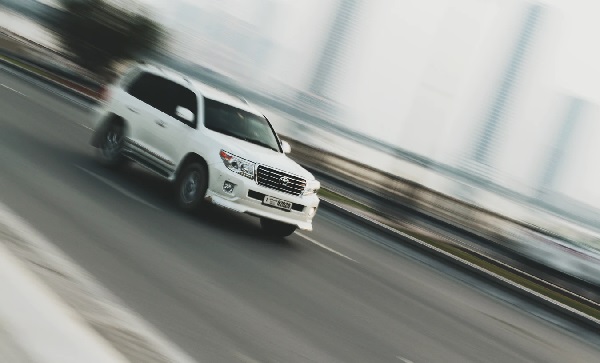
Speeding at an excessive rate, known as “criminal speeding”, can result in upwards of 30 days in jail and a $500 fine. Additional penalties for criminal speeding include paying to have the vehicle retrieved from the space it was towed to. Criminal speeding occurs when a driver goes 85 miles per hour or more anywhere in Arizona. A driver exceeding 35 miles per hour near a school crossing can also be found guilty of criminal speeding.
A driver who exceeds the posted speed limit by 20 miles per hour in a residential or business area can also be found guilty of criminal driving. If no speed is posted in a residential or business area, one driving 45 miles per hour or more beyond the speed limit will face the possibility of a criminal speeding charge. Aside from fines and possible jail time, such a charge can also impact one's ability to legally operate a motor vehicle.
[/framed_box]
How to Not be a Good Defensive Driver
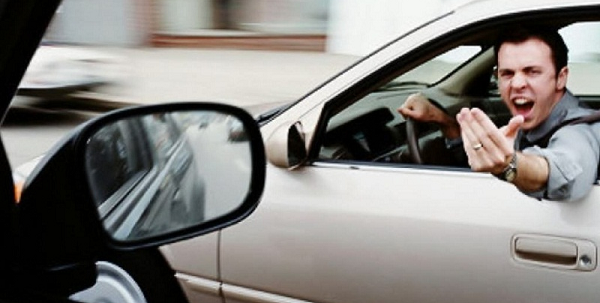
Believe it or not, our defensive driving school has a number of students who call in and ask us how not to be a good defensive driver. Here are the steps:
Common Risky Driving Behaviors to Seriously Avoid
Step 1: Do not use a seatbelt.
Who needs them? They don’t save lives! If anything, they tether us to these death machines called vehicles!
Step 2: Use your cell phone while driving.
Life is too short to waste any valuable phone time while you are driving. Bonus points if you can take a call, listen to your music, text your boyfriend, and/or update your Facebook / Instagram / Snapchat all at one time. You are a multi-tasking aficionado!
Step 3: Do your makeup while driving.
Life is a runway, so we all need to make sure to look pretty all the time and some days you just don’t have time to get ready in the morning, before leaving the house. Go ahead and do your makeup in the car. This is what car mirrors were made for – looking at your beautiful face and doing makeup!
Step 4: Eat food while driving.
Doing just about anything while driving is pretty amazing because multi-tasking is awesome, but eating is the absolute best because food! Bonus points if you can hold your burger in one hand and an ice cream in the other hand and you can steer the steering wheel with your knees.
Step 5: Live the Fast & Furious life.
Life is too short to get anywhere slowly! There is a reason the Fast & Furious movies were so popular. Faster is always better! Going fast gets your heart beating faster and the adrenaline going. Who cares if you got a meaty speeding ticket that only
traffic school will be able to dismiss! Now, you feel so alive! That’s what YOLO is all about! Bonus points if every time somebody pulls up next to you at a red light, you propose a race down the street. A little friendly competition never hurt anybody.
Step 6: Drive the normal speed limit or faster during inclement weather.
There may be water on the road, due to heavy rain, but that doesn’t mean that you should drive slower or have to spend more of your very valuable time getting to the places that you need to go. Nobody has time to slow down. Who cares if you start to hydroplane and lose control of your vehicle! That’s all a part of living life on the edge!
Step 7: Flip off and bad mouth all the bad drivers.
Did somebody cut you off or pull in front of you and drive extreeeeemely slow? Of course, the logical thing to do is stare them down to make sure they know that you have an issue with them, blow your horn at them for about a minute or two non-stop to make sure that they are aware that they did something wrong, flip them off, and say every single curse word that you have in your repertoire. Bonus points, if you get them to pull over and proceed to get into a fist fight with them. Nothing like road rage to wake you up in the morning!
Step 8: Always tailgate the person in front of you.
There’s no such thing as being too close to the vehicle in front of you. Who cares that they might slam on their breaks at any point, causing you to rear end them.
Step 9: Never use your turn signal.
Change lanes as much as your little heart desires and never use your signal ever. Why warn other drivers about where you plan on maneuvering your giant squishable metal machine? You got to keep the rest of the drivers on their toes! Bonus points if you never look in your blind spot before changing lanes. That way other drivers can dodge you, too!
Step 10: Drive during the night time without your headlights on.
Two words: Ninja mode!
Afternote: Please be a good driver and DO NOT do anything on this list.
Distracted Driving Not The Only Roadway Hazard
Loads of chatter lately about the **risks of distracted driving**. The National Transportation Safety Board's December report reveals that more **crashes** now happen because of people not paying attention to the road than those caused by drunk driving.
However, just because distracted driving is dangerous that doesn't mean that it is the only hazard facing today's drivers. In fact, some of the most rampant causes of accidents are the things we take for granted. Like our own ability as a driver.
According to the National Highway Traffic Safety Administration although traffic fatalities have been declining, more than one third of all vehicle crashes are still caused by nothing more complicated than speeding. That's right, the speed of your vehicle, which you control, is the most likely cause of your next accident.
A new report by the Governors Highway Safety Association, called Survey of the States: Speeding and Aggressive Driving, states that speeding, and aggressive driving are still causing a number of traffic fatalities every year. The report goes as far as to suggest that all states make laws which specifically address aggressive driving and speeding. However, the report also points out that public indifference to the hazard is what has caused the problem in the first place.
Apparently not enough people have attended
traffic school, or they would understand just how dangerous speeding and aggressive driving are. There is never a good time to exceed the posted speed limit. And as for driving aggressively, if you can't control your own feelings how can you expect to be able to control a 4,000 pound piece of metal, plastic and glass?
Speed limits are not just a good idea, they are the law. Plus, safe speeds are determined by evaluating how well a vehicle can handle a particular stretch of road without the driver losing control.
Things To Do In A Traffic Jam
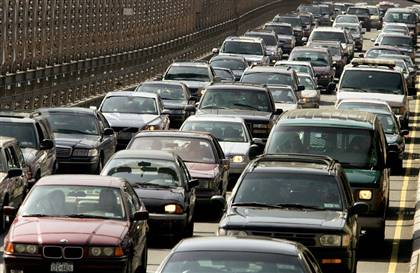
You cannot escape the inevitability of certain things in life: death, taxes and, if you live in a major city, being caught in a traffic jam. Traffic jams are something you just cannot avoid. When you think of traffic jams, what images come into your head? Images of hot days and dusty road congested with an endless queue of vehicles glinting against the warm sunlight. So here’s what you can do. You can either rant and rave and sulk the entire time bellowing unprintable words, or you can find some interesting things to do which will not only give you a couple of hours of entertainment, but the surrounding cars in the vicinity as well. Being part of an
online traffic school I advise you to choose the ladder. Once you’ve decided on the option here are some interesting tips to follow. Give yourself a complete makeover (if you are a woman). Take your makeup kit and start from the beginning; reapply foundation, eye mascara, liner, lipstick and blush on. Experiment freely, while ignoring the jokes and jibes coming from nearby cars.
Make a call to your boss or mum-in-law informing them of your predicament and mention that you will be running late. Flip out your mobile phone and text message as much as you like. There won’t be traffic patrol to pull you over this time around. Receive jokes and hear all the gossip until your battery goes dead.
Play all the games your mobile phone has to offer and set up world records that no one can come close to breaking. Become reacquainted with long lost family members and friends. Call up Aunty Jane and ask how Uncle Ernie’s ulcer is doing or listen to Aunty Emilia complain about heart palpitations. This is a good way to regain popularity with family members and learn more about medical diagnosis.
Begin a conversation with the old lady sitting in the next vehicle. She may be as bored as you. Get household tips and ask for recipes. You can jot down whatever she may be saying and publish these under your name. This might even make you famous on the primetime cooking channel!
Alternatively look out for a bored girl in a nearby car and begin a conversation about makeup, entertainment and soap operas. Get the latest gossip on love affairs, domestic battles and heartbreaks in the television world. Learn about the latest fashion, hairdos, newest hunks and villains, wedding ceremonies and funeral rituals.
Clean the glove compartment you have been putting off doing for a while now. Sort out your receipts, lottery tickets, chewing gum packs, tissue packs, various papers and parking tickets. If you have got hunger pangs, order a burger or pizza delivery. Give the location of where you are stuck at. Explain that the highway has become your second home now, at least during rush hours.
If you are still bored, improve your mathematical skills by memorizing number plates of vehicle plates in the vicinity, multiply these numbers and total them. Exercise your brain well!
Finally, when the traffic starts back up, don’t speed! If you do and get caught chances are a
traffic school will help you with your insurance but JUST DON’T DO IT!


 Live Chat